Wabi-Sabi Isn't 'Rustic Decor': The Philosophy Behind Japan's Most Misused Word

Wabi-sabi has become global shorthand for beige linen and distressed wood, but the actual concept is a fifteenth-century philosophy rooted in Zen practice and tea ceremony. This article separates the decor trend from the real thing: what wabi and sabi each mean, why kintsugi and everyday aesthetics matter, and how to borrow Japanese concepts without flattening them into a mood board. Essential reading before you tattoo a kanji you haven't fully understood.
The wabi sabi meaning most people carry around is wrong in a specific way: it treats a spiritual and ethical stance as a color palette. Wabi-sabi is not beige linen, chipped bowls, or artfully distressed wood. It is a way of paying attention, rooted in Zen practice and refined through tea ceremony, that trains you to find beauty in what is impermanent, incomplete, and modest. That distinction matters now more than ever, because the word has become a global shorthand for a look rather than a discipline.
How a Philosophy Became a Product Category
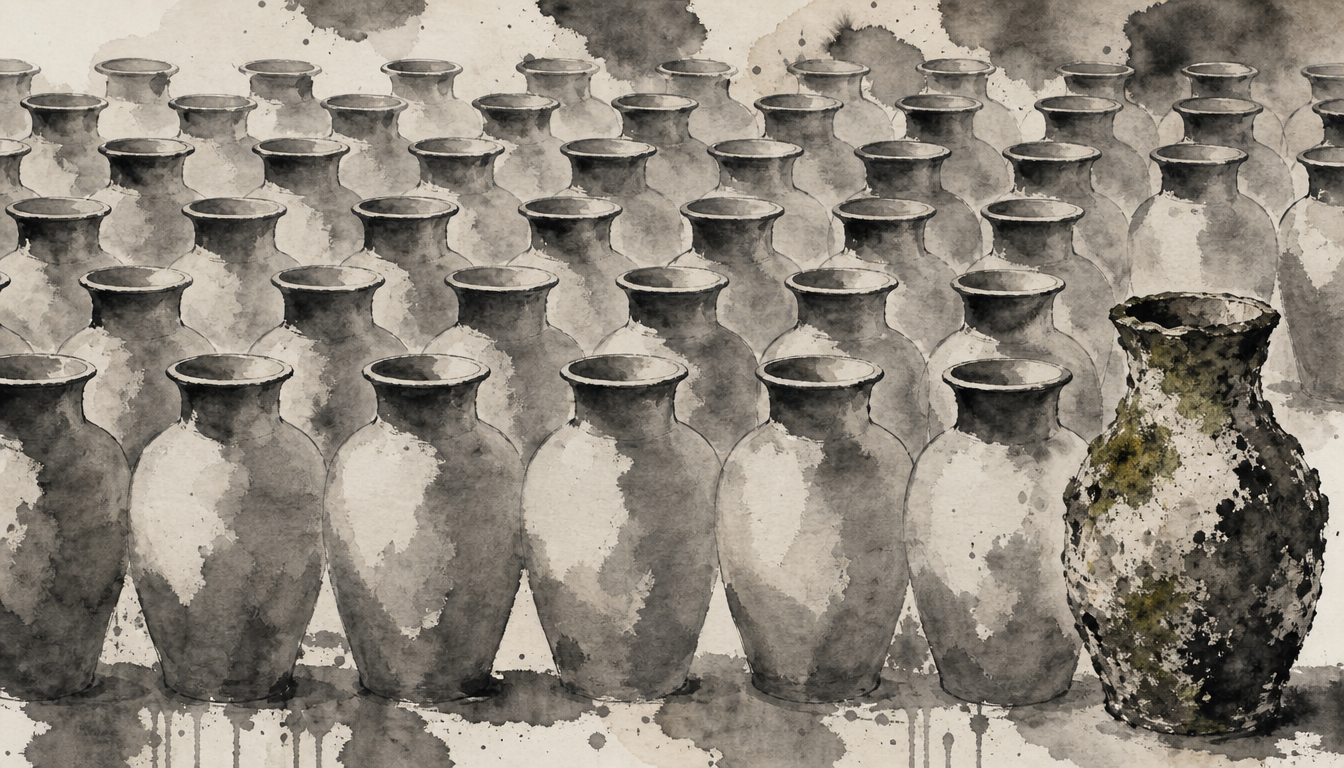
Search for wabi-sabi today and you will mostly find interiors. Warm white walls, raw plaster, aged brass, linen drapes. The design world has thoroughly absorbed the term, and commercial writing openly frames it through "restraint, patina, tonal depth" and refined material choices. None of that is dishonest, but it describes an outcome, not the philosophy that produced it.
The concept itself is old. EBSCO's research overview dates wabi-sabi to the fifteenth century and notes that even specialists struggle to define it, partly because the meanings of wabi and sabi have shifted over time. The same overview describes wabi-sabi as recognizing that nothing is permanent, embracing the imperfections that come with age, and rejecting the assumption that new things are inherently better or that a damaged object has lost its worth.
Notice what is missing from the interiors version: the rejection of newness. A freshly manufactured "wabi-sabi vase" produced to look weathered inverts the idea entirely. The philosophy values wear that was earned. The market sells wear that was applied.
References: EBSCO Research Starters: Wabi-sabi, Quiet Luxury Calm

Discover Your Soul Kanji
Experience the depth of Japanese characters: each kanji carries timeless meaning, guiding your life's path.
No credit card required • 2-minute process
The Real Wabi Sabi Meaning: Two Words, Two Different Griefs
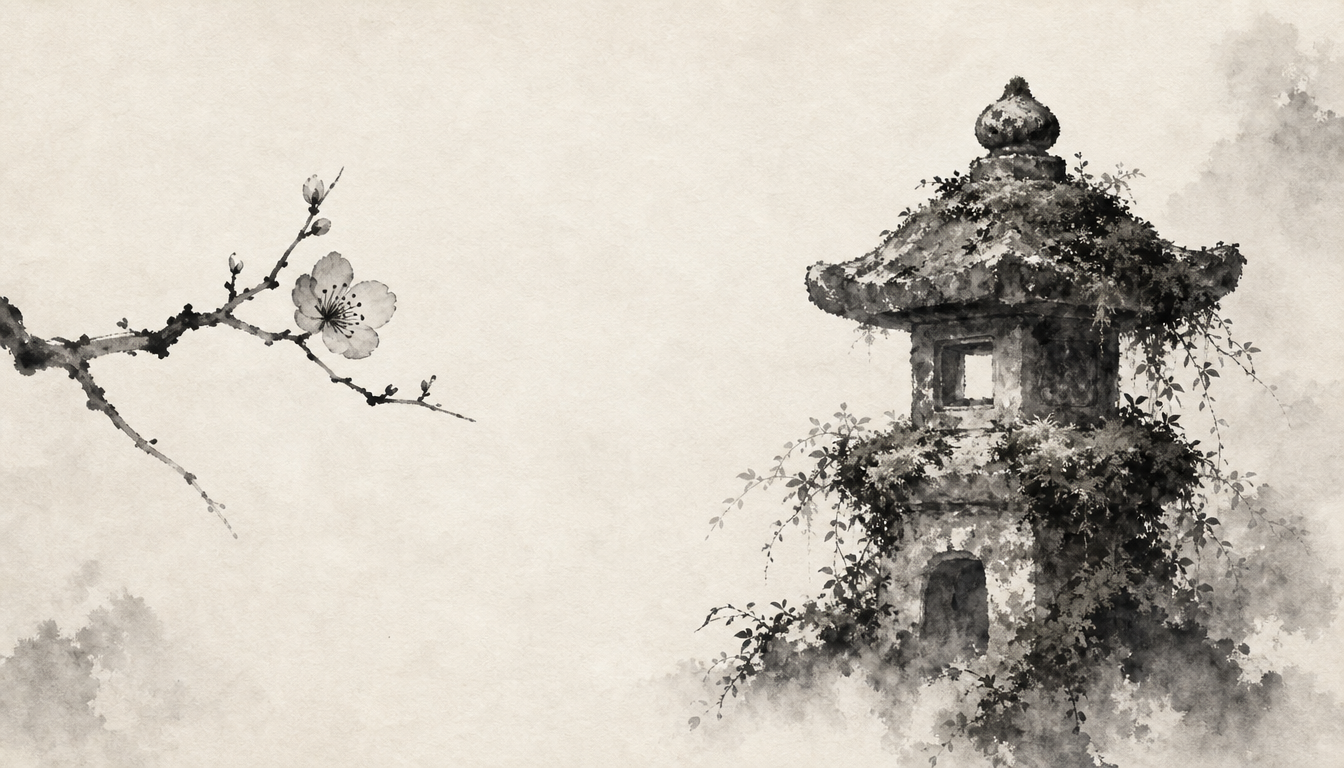
English speakers usually encounter wabi-sabi as one hyphenated unit. In Japanese, they are separate ideas that were joined later, and understanding them separately changes how the whole concept lands.
Wabi
Wabi originally carried a sense of loneliness and deprivation, the feeling of living apart from comfort and abundance. Over centuries that negative charge was transmuted. Poverty of means became richness of attention. A bare room with one flower asks more of you than a room full of treasures.
Sabi
Sabi points at time. It is the quality something acquires as it ages, weathers, and thins out. Rust on iron, moss on stone, the softened edge of a wooden step walked on for a hundred years. Sabi is not decay as failure. It is decay as evidence of having existed.
Put together, they describe an aesthetic of subtraction and duration. The diagram below maps how the two halves overlap to produce the full concept.
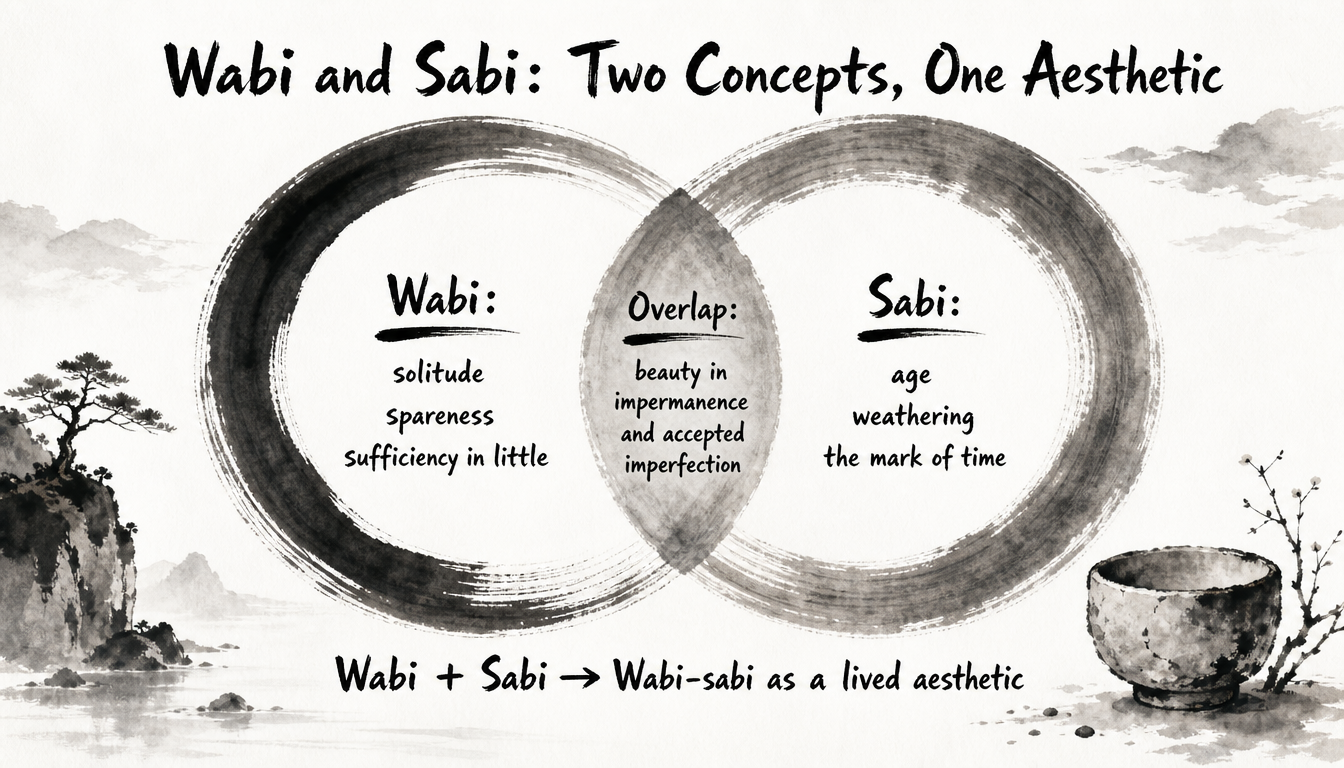
This is why the word resists translation. English has "rustic," "shabby chic," and "minimalist," and all three miss, because none of them contain grief or reverence. Wabi-sabi holds both.
References: GOOD LUCK TRIP: Wabi-sabi
Why Zen and Tea Are Not Optional Background
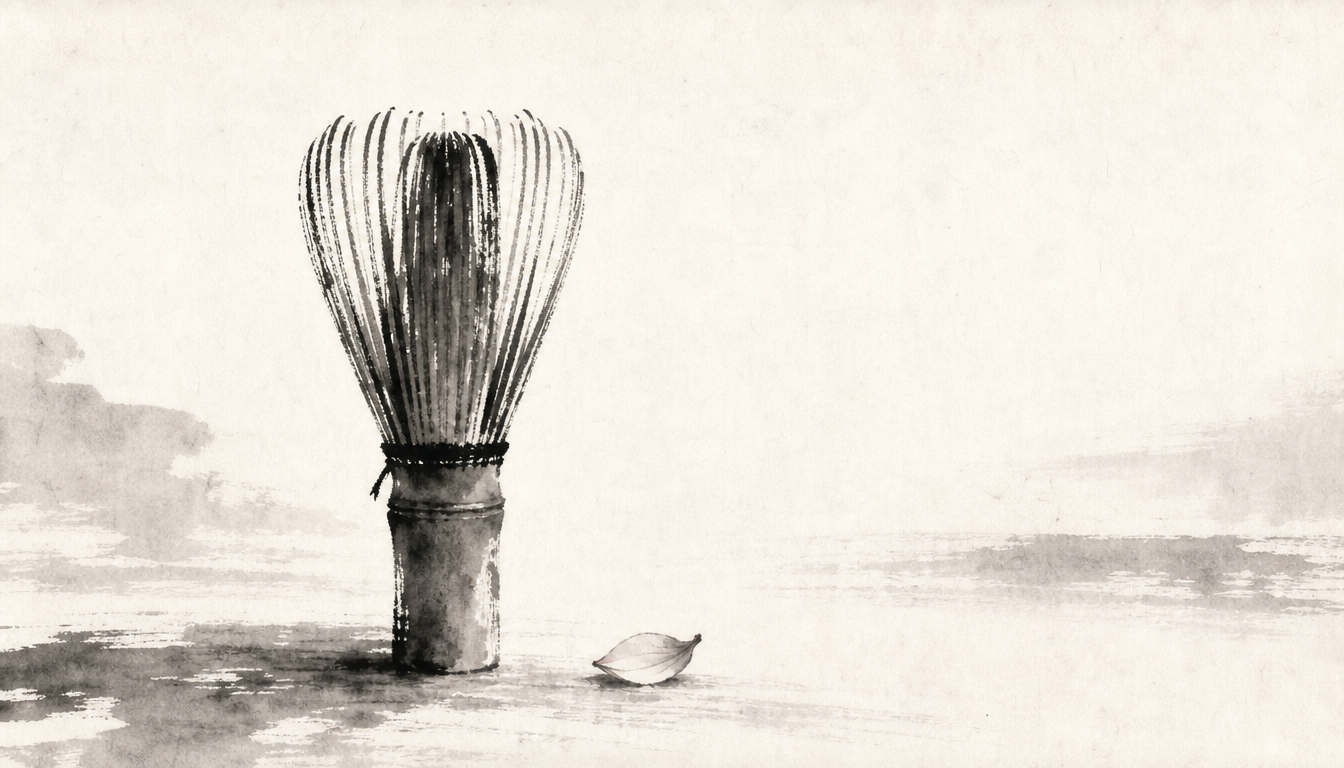
Strip wabi-sabi of its religious and ethical context and you are left with decor. OpenStax's philosophy text is direct about this: Japanese aesthetics often incorporates Zen Buddhism to encourage mindful attention to the beauty of things around us, and it focuses on the small and impermanent, such as cherry blossoms and tea ceremonies, rather than the large-scale grandiose masterpieces favored by traditional European aesthetics.
The text also quotes Okakura Kakuzo, who described the Japanese tea ceremony as "founded on the adoration of the beautiful among the sordid facts of everyday existence." That phrase does a lot of work. Wabi-sabi is not an escape from ordinary life into a curated sanctuary. It is a method for finding beauty inside ordinary life, including the parts that are dull, worn, or inconvenient.
OpenStax goes further, noting that in Japanese culture everyday aesthetic practices function as a moral and religious form of self-cultivation. The philosopher Yuriko Saito's work on everyday aesthetics decenters works of art so that questions of taste and beauty connect to how people live and how they affect the environment.
That reframing has a practical consequence. If aesthetics is self-cultivation, then wabi-sabi asks something of you. It is a practice, not a purchase.
References: OpenStax, Introduction to Philosophy 8.5: Aesthetics
The Decor Version vs. the Philosophical Version
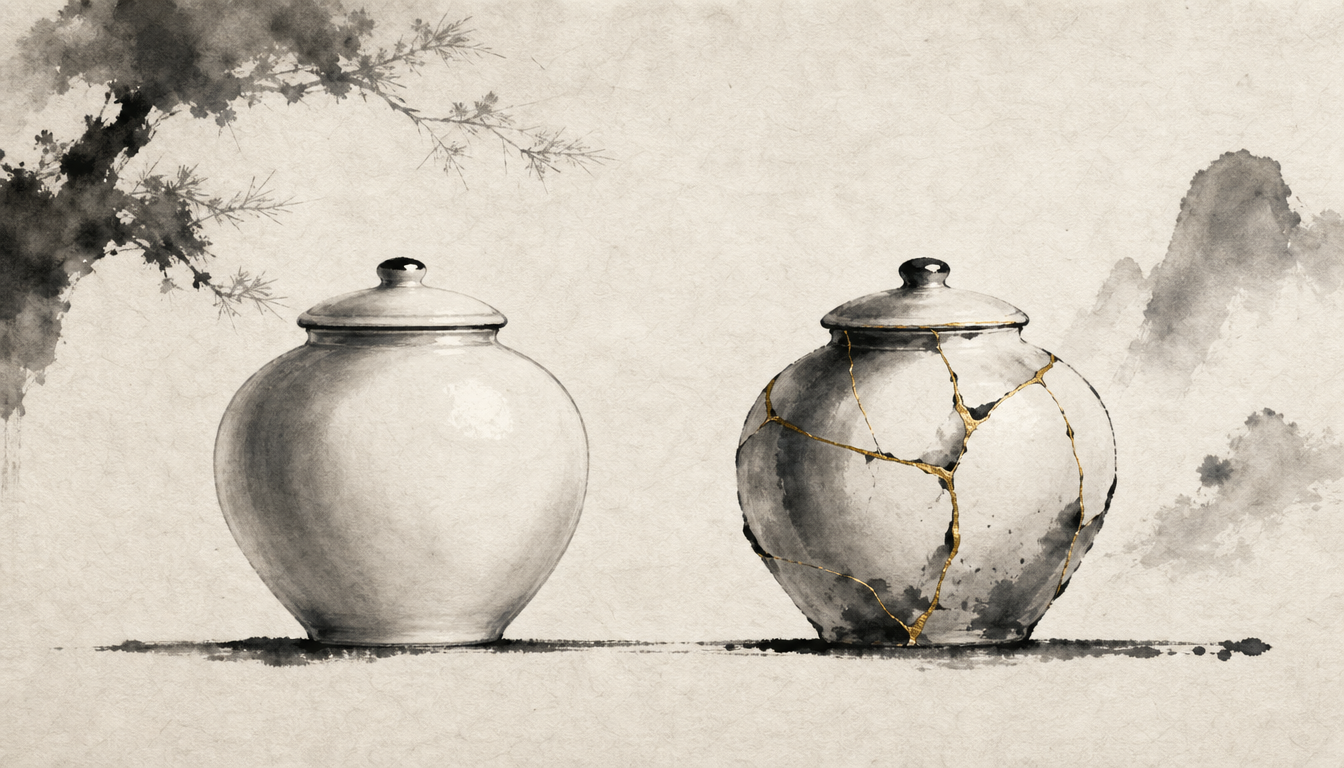
Both versions of wabi-sabi circulate freely, and it helps to see them side by side rather than argue that one simply cancels the other.
| Dimension | Commercial "Wabi-Sabi" | Philosophical Wabi-Sabi |
|---|---|---|
| Source of imperfection | Manufactured, applied as finish | Earned through use and time |
| Relationship to newness | New objects styled to look old | Rejects the assumption that new is better |
| Core activity | Selecting and arranging | Attending and accepting |
| Goal | A calm-looking room | Self-cultivation, moral and spiritual |
| Attitude to damage | Discard if too broken | Repair and honor the repair |
Kintsugi, the practice of mending broken pottery with lacquer mixed with gold, silver, or platinum, illustrates the last row precisely. Mayo Clinic Connect describes it as putting broken pieces back together over months and, rather than hiding the damage, highlighting the cracks in precious metal. The same source frames it as a philosophy of embracing human flaws and life's fragility, an approach to life in which adversity becomes something beautiful and resilient.
No decor trend requires months of repair work. That gap is the whole argument.
References: Mayo Clinic Connect: The Japanese art form of kintsugi
The Honest Counterargument

Cultural concepts travel, and they change when they travel. Purism has its own failure mode: insisting that only Japanese people may use a Japanese idea flattens a living tradition into a museum exhibit. Wabi-sabi itself absorbed Chinese Zen influence and evolved across centuries of Japanese use. It was never sealed.
There is also evidence the concept does useful work abroad. A trade journal piece in Optician used wabi-sabi as a framework for corporate sustainability, arguing that accepting imperfection lets companies pursue gradual environmental improvement instead of stalling while they wait for a perfect solution. That is a real application of the philosophy, not a decorative one, and it happened far from any tea room.
So the problem is not that wabi-sabi crossed borders. The problem is compression. When a word arrives without its context, people use it confidently while meaning something narrower than they think. That is harmless in a furniture catalog. It becomes costly when someone tattoos a Japanese concept on their body, or names a business, or builds a personal philosophy on a definition that a Japanese speaker would not recognize.
References: Jones, S., Optician (2025)
How to Use Japanese Concepts Without Flattening Them
The fix is not to stop borrowing. It is to slow down at the point of translation. A practical sequence looks like this.
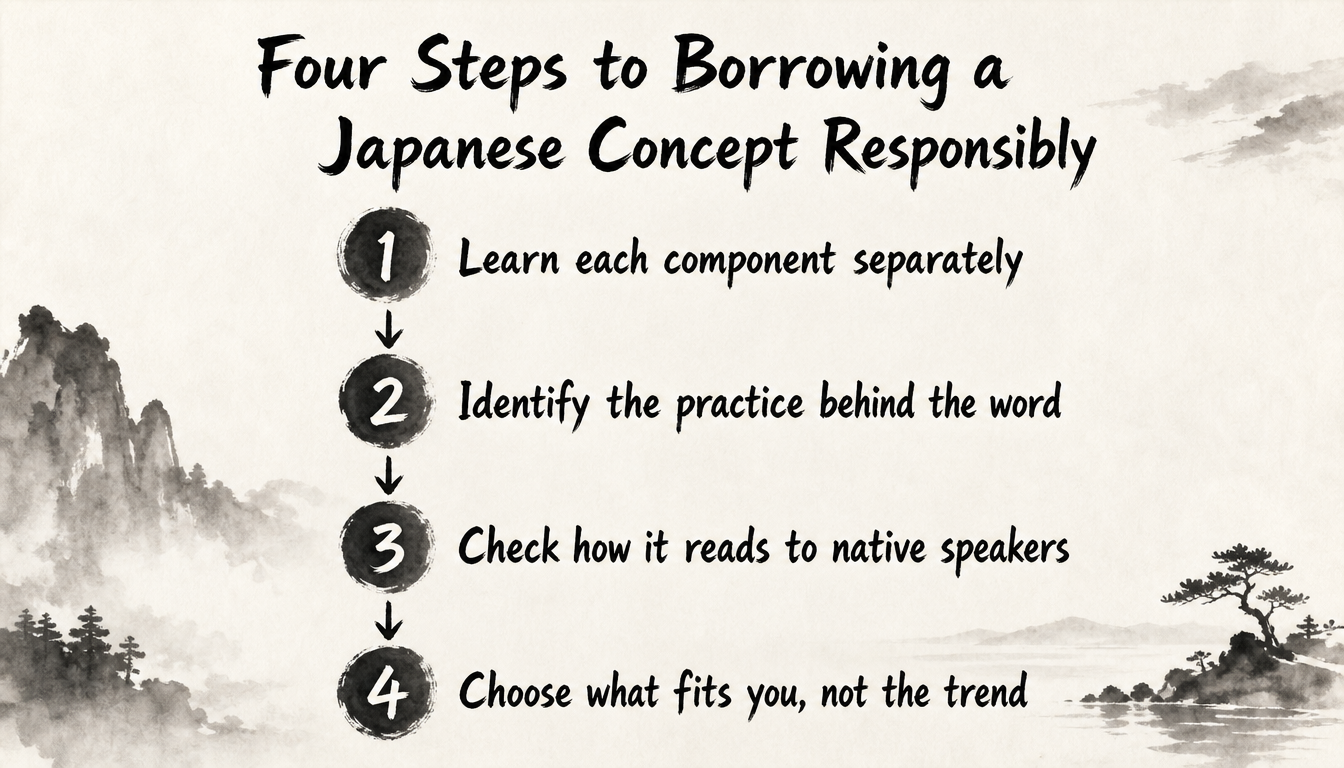
- Learn both halves. Compound concepts like wabi-sabi have components with separate histories. Look them up individually before you commit.
- Find the practice, not the look. Ask what someone actually does when they live by the idea. If the answer is only "buys things," you have the marketing version.
- Check how it reads in Japan. Many words that feel profound in translation are ordinary, dated, or slightly off in daily Japanese use.
- Choose something that fits you, not the trend. A concept you understand and can explain will outlast one you picked from a mood board.
That last step is where personalization matters. If wabi-sabi appeals to you because of what it says about impermanence and accepted flaws, there may be a character that speaks to your particular temperament more precisely than a borrowed trend word. Tools such as Oracle Kanji Writer approach this from the personal side: you enter your name, birthdate, and blood type, and the service recommends a Soul Kanji chosen to reflect your inner qualities, delivered with pronunciation, primary and nuanced meanings, and compound words that show how the character behaves in real Japanese. Because Japanese creators curate the selections, the results are meant to read as beautiful and meaningful in Japan, which is the exact check most kanji tattoos never receive.
Downloadable kanji art from the same process gives you something to sit with before making anything permanent. Used well, it turns a vague attraction to Japanese aesthetics into a specific, defensible choice.
Where This Goes Next
Expect the interiors trend to keep expanding and keep diluting. Expect a parallel, smaller movement of people who dig past the surface, learn the Zen and tea-ceremony roots, and use the concept as OpenStax describes it, as self-cultivation rather than styling. Both will use the same word.
Your practical move is to decide which version you are participating in, and to say so honestly. Liking the aesthetic is fine. Claiming the philosophy while owning only the aesthetic is what makes the word hollow.
The genuine wabi sabi meaning asks you to accept impermanence, to value what has aged, and to find beauty in the unremarkable facts of your own daily life. That is available to anyone, in any country, without buying a single object. If you take one thing from this: before you wear a Japanese word, learn what it costs to mean it. What concept would actually describe how you move through the world?
Discover Your Soul Kanji
Experience the depth of Japanese characters: each kanji carries timeless meaning, guiding your life's path.
No credit card required • 2-minute process