Kanji of the Day Vol.5 | "Kanji 和 (Wa): The Harmony Kanji Uniting Peace, Balance & Spirit"

The kanji wa (和) carries the soul of Japanese culture — harmony, balance, softness, and Japan itself. In this Vol.5 of Kanji of the Day, we unpack its meaning, its ancient origin from grain meeting mouth, its stroke order, its role in daily Japanese life, and what it signifies as a personal symbol or tattoo. A guide for anyone drawn to authentic kanji and Eastern philosophy.
Kanji 和 (Wa): The Harmony Kanji Uniting Peace, Balance & Spirit
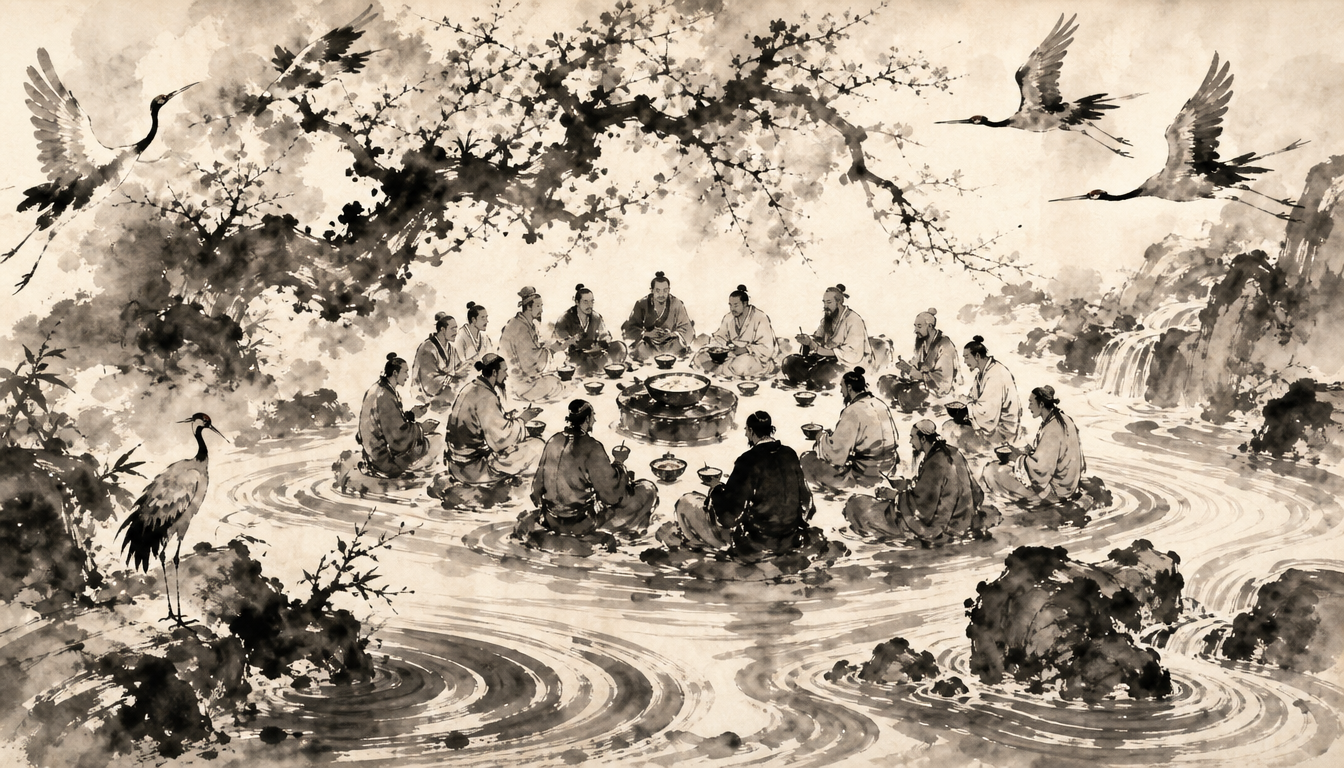
The kanji wa (和) is one of the most quietly powerful characters in the Japanese language. At first glance it looks simple — just eight strokes — but it carries the weight of an entire civilization's philosophy of harmony, balance, and belonging. For tattoo seekers, mindfulness practitioners, and anyone drawn to Japanese aesthetics, understanding the kanji wa means understanding the soft architecture beneath Japanese culture itself.
In this Vol.5 of Kanji of the Day, we'll unpack the meaning, the ancient origin, and the lived philosophy of 和 — so when you choose it, you choose it knowingly.
Discover Your Soul Kanji
Experience the depth of Japanese characters: each kanji carries timeless meaning, guiding your life's path.
No credit card required • 2-minute process
Quick Facts: The Kanji Wa at a Glance
| Item | Detail |
|---|---|
| Kanji | 和 |
| Primary Readings | On'yomi: ワ (wa), オ (o) / Kun'yomi: やわ-らぐ (yawa-ragu), なご-む (nago-mu) |
| Core Meaning | Harmony, peace, softness, Japan(ese) |
| Category | Cultural philosophy / Common-use kanji (Jōyō) |
| Related Concepts | 平和 (heiwa, peace), 調和 (chōwa, harmony), 合気 (aiki, joined spirit) |
| Contrasting Concept | 個 (ko, the individual), 争 (sō, conflict) |
| Cultural Weight | Foundational — often called the soul of Japanese society |
Wa as a Japanese Cultural Concept: Harmony, Unity, and Social Conformity
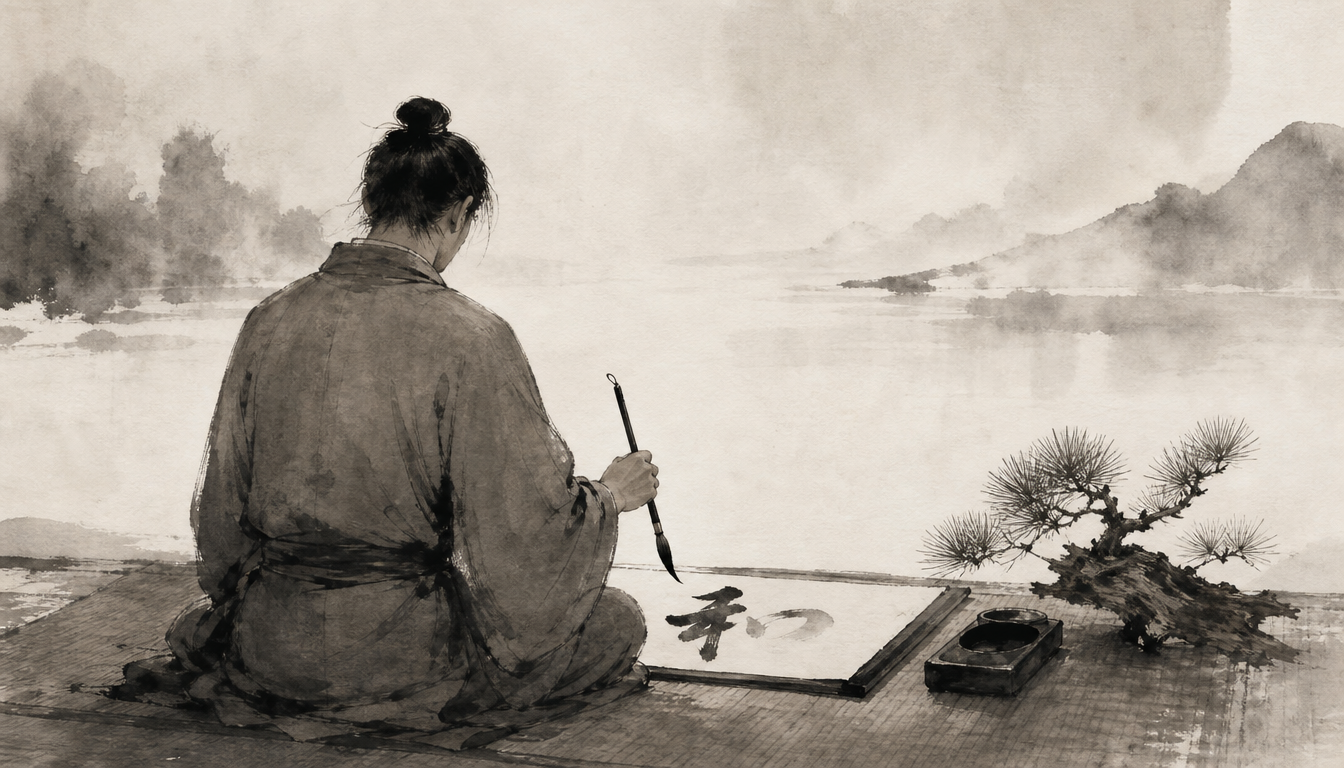
In English, we translate 和 simply as "harmony," but the concept runs far deeper. Wa is the silent agreement that the group's peace matters more than any individual's noise. It is the reason trains run quietly, the reason a Japanese meal arranges five colors on one plate, and the reason a tea master spends decades perfecting how to pour water.
Historically, the idea was codified at the dawn of the Japanese state. Prince Shōtoku Taishi introduced the Seventeen Article Constitution in 604 CE, and the very first article declared "Harmony is to be valued" (以和為貴), promoting resolution through consensus rather than authoritarian rule (Japanese Rituals). That single line set the tone for fourteen centuries of Japanese ethics — disagreement is fine, but disrupting the social fabric is not.
The Two Faces of Wa
Wa has a luminous side and a shadow side, and honest writers acknowledge both.
- The luminous side: mutual respect, attentive listening, the art of reading the air (空気を読む), and craftsmanship that flows from collective patience.
- The shadow side: pressure to conform, reluctance to voice dissent, and the suppression of individuality in service of group cohesion.
This duality is part of what makes the kanji wa such a meaningful personal symbol. Choosing it is not choosing blandness — it is choosing the disciplined art of fitting in without disappearing.
Wa in Daily Japanese Life
You can see wa expressed in small, observable behaviors: bowing, queueing without complaint, lowering one's voice on public transit, and the careful exchange of business cards with both hands. According to a Tokyo Good Manners Project survey, only 24 percent of Tokyo residents think people in Tokyo have good manners, while 65 percent of foreigners find that the people of Tokyo have good manners (CulturallyOurs). That gap is wa in action — the Japanese hold themselves to an invisible standard, and outsiders feel the result as grace.
Wa is not the absence of friction. It is the cultivated practice of moving through friction without breaking the thread that connects people.
The Kanji Wa (和): Character Composition, Stroke Order, and Historical Origins
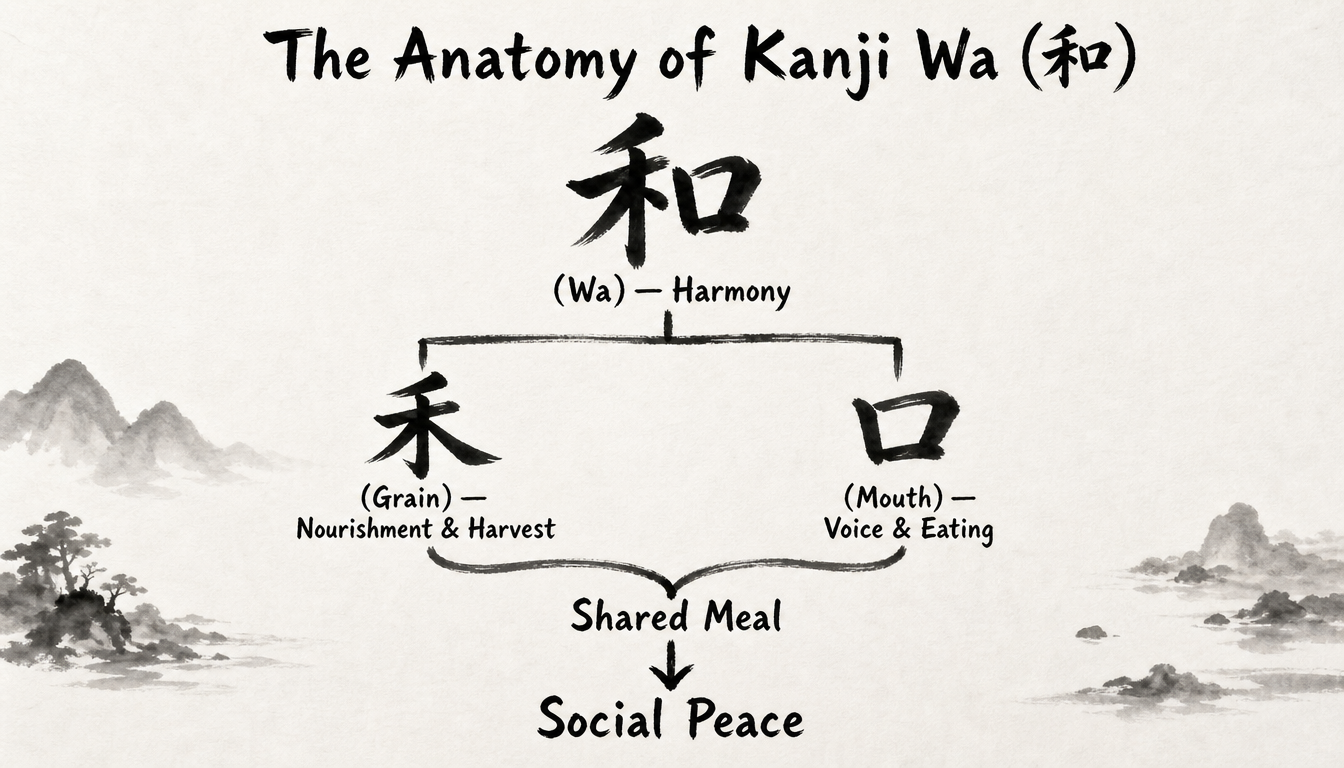
The character 和 is built from two elements that together tell a small, beautiful story.
The Two Components
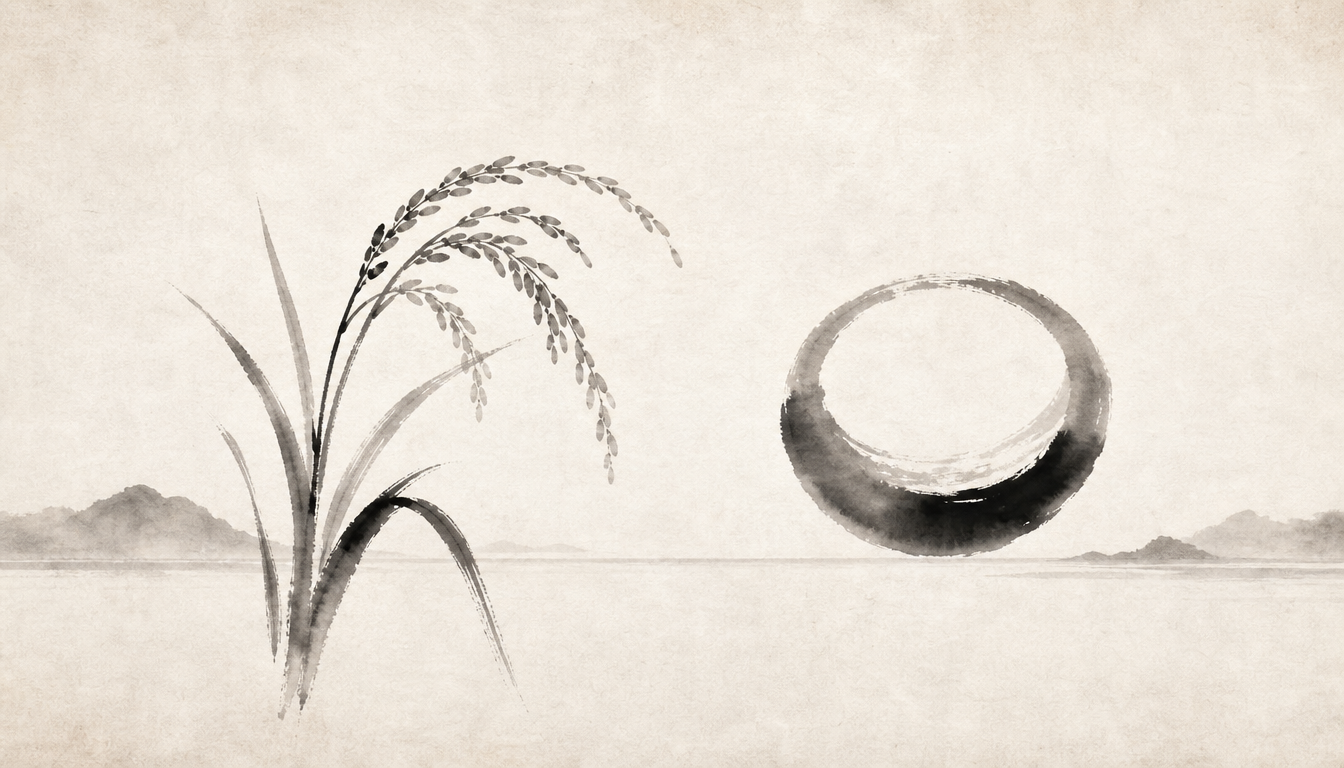
- 禾 (nogihen) — the left radical, depicting a stalk of grain bending under the weight of its ripe head. It is the symbol of rice, harvest, and sustenance.
- 口 (kuchi) — the right element, meaning "mouth."
Read together, the kanji wa pictures grain meeting mouth — food shared, voices in agreement around a meal. The mainstream scholarly reading traces this to the ancient idea that when a community eats together from the same harvest, peace naturally follows. Some classical interpretations also connect 口 to spoken voices joining in pleasant accord, like instruments tuned to the same key.
Either reading lands in the same place: harmony is something produced when bodies and voices are nourished in common.
Stroke Order (8 strokes)
The kanji wa is written in eight strokes, left component first, right component second:
- Short horizontal stroke at the top of 禾
- Descending diagonal from upper-left
- Long horizontal across the middle of 禾
- Vertical stroke down the center of 禾
- Left-sweeping stroke from the vertical
- Right-sweeping stroke completing 禾
- Vertical-then-hook forming the left side of 口
- Horizontal-and-turn closing the box of 口
Writing 和 by hand is itself a practice in wa: the left side must give breathing room to the right, neither component dominating. The balance of the character is the meaning of the character.
From Ancient Script to Modern Form
The kanji 和 emerged from the broader Chinese writing tradition and was adopted into Japanese alongside thousands of other characters from roughly the 5th century onward. Notably, the character also became a name for Japan itself, gradually replacing the earlier transcription 倭 (also read "Wa"), which carried pejorative overtones of "submissive" or "dwarf" people in classical Chinese texts (Wikipedia: Wa (Japan))). Japan, in effect, renamed itself "the land of harmony." That is no small act of cultural self-definition.
Readings and Compound Words of 和
The kanji wa is read several ways depending on context, and each compound opens a small window onto Japanese thinking.
Common Readings
- ワ (wa) — the most common on'yomi, used in nearly all compounds related to harmony, peace, and Japaneseness.
- オ (o) — a rarer on'yomi found in specific classical compounds.
- やわ-らぐ / なご-む — kun'yomi verbs meaning "to soften," "to be soothed," "to mellow."
Essential Compounds (Jukugo)
- 平和 (heiwa) — peace. The single most-used word for global, political, and personal peace.
- 調和 (chōwa) — harmony, balance. Often used in design, music, and ecology.
- 和食 (washoku) — Japanese cuisine. Literally "harmony food."
- 和服 (wafuku) — traditional Japanese clothing (kimono and related garments).
- 和室 (washitsu) — a Japanese-style room with tatami mats.
- 大和 (Yamato) — the ancient poetic name for Japan, "Great Harmony."
Notice the pattern: 和 attached to anything makes it Japanese, because Japan defined itself by the value of harmony. The kanji wa is the cultural prefix of a nation.
Common Misunderstandings About 和
| Misconception | The Reality |
|---|---|
| "Wa just means peace, like 平和." | Wa is broader than peace. It includes softness, social tact, aesthetic balance, and Japaneseness itself. |
| "Wa means everyone agrees and never argues." | Wa allows disagreement — what it forbids is destroying the relationship while disagreeing. |
| "和 and 倭 are basically the same kanji for Japan." | They are different characters. 倭 was an outsider's pejorative; 和 was Japan's chosen self-name. |
| "Choosing 和 as a tattoo means I love Japan." | It can — but more deeply, it signals a commitment to balance, listening, and inner softness. |
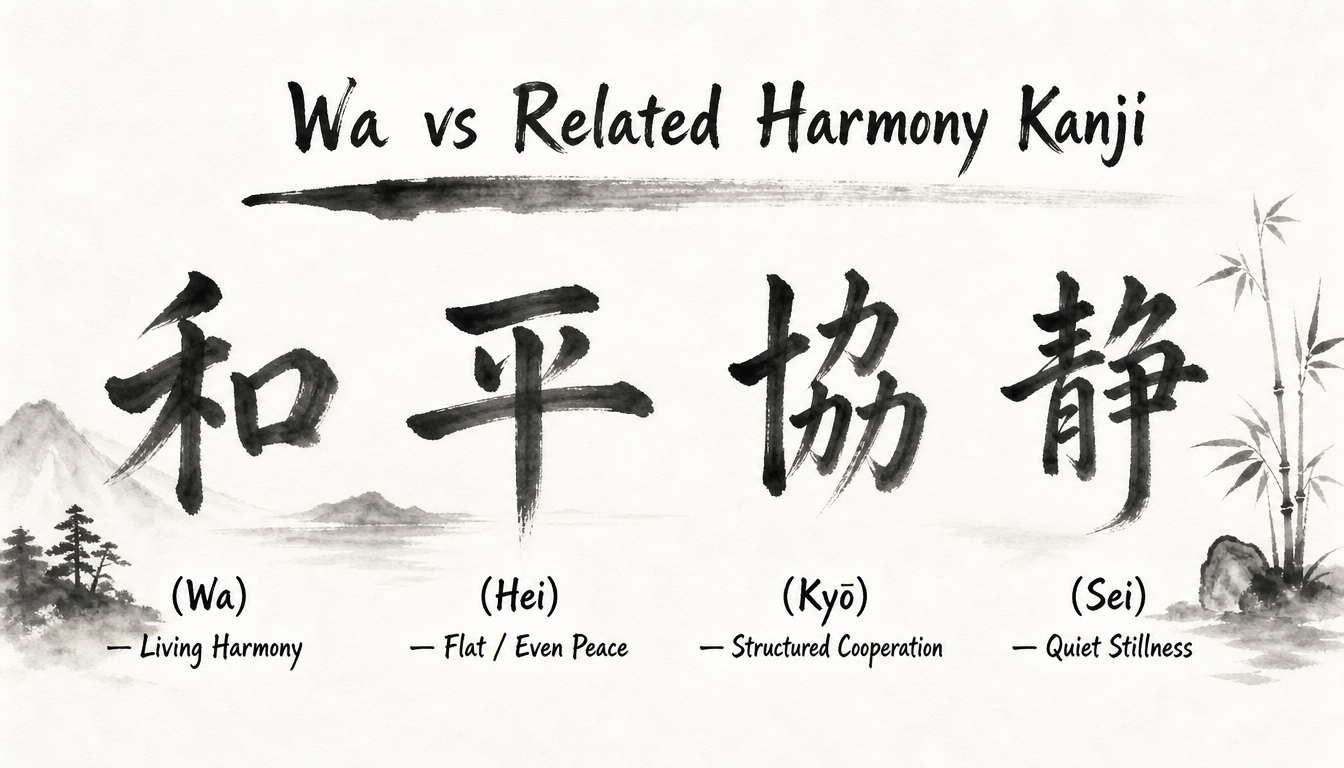
Related Kanji and How They Differ from 和
| Kanji | Meaning | How It Differs from 和 |
|---|---|---|
| 平 (hei / taira) | Flat, level, peaceful | Emphasizes evenness and the absence of disturbance, not active harmony between parts. |
| 合 (gō / a-u) | To join, to fit together | Focuses on the mechanical fit of two things; wa adds emotional and social warmth. |
| 協 (kyō) | Cooperation | Action-oriented and structured; wa is the underlying atmosphere that makes cooperation possible. |
| 静 (sei / shizu-ka) | Quiet, still | Describes silence and stillness; wa describes living motion that doesn't disturb others. |
The Kanji Wa as a Personal Symbol and Tattoo
Among non-Japanese choosing a kanji for a tattoo, jewelry engraving, or personal emblem, 和 is consistently popular — and for good reason. It is visually balanced, semantically rich, and culturally respectful. It does not boast. It does not shout. It simply settles on the skin like a quiet vow.
Who Tends to Choose 和
- People rebuilding after a season of conflict or chaos
- Practitioners of yoga, meditation, aikido, or tea ceremony
- Designers, musicians, and chefs who think in terms of balance
- Anyone who has visited Japan and felt something soften inside them
Design and Placement Notes
The kanji wa works beautifully in larger, slower brushstrokes where the breath of 禾 and 口 can be felt. Avoid overly thin, mechanical fonts — they strip the warmth out of the character. Common placements include the inner forearm, the back of the shoulder blade, and the side of the ribs. Pair 和 carefully: combining it with characters like 心 (heart) or 静 (quiet) deepens the meaning; combining it with aggressive characters undoes it.
Always confirm stroke order and orientation with a native Japanese reference before any permanent application. A mirrored or misordered 和 reads as a mistake, not a meaning.
Living the Philosophy of Wa
You don't need to live in Japan to practice wa. The kanji wa offers a quiet daily curriculum: listen before speaking, leave space in your schedule, soften before you respond, and notice when your presence raises or lowers the temperature of a room. These are small disciplines, but they accumulate into a life that other people instinctively want to be near.
This is why so many people who encounter the kanji wa end up choosing it — not as decoration, but as a reminder of who they are trying to become.
Discover the Kanji That Represents You
If 和 resonates but you sense there's a character that fits your essence even more precisely, that intuition is worth following. The Oracle Kanji Writer – Personalized Soul Kanji Diagnosis Tool takes your name, birthdate, and blood type and recommends a single kanji aligned with your inner qualities. Each result comes with readings, nuanced meanings, a personal message, and curated compounds — created by Japanese designers so the character truly resonates in Japan as beautiful and meaningful, not as a tourist cliché. It takes about two minutes and requires no credit card. Find Your Soul Kanji and let the right character find you.
Summary: What to Remember About the Kanji Wa
- 和 means harmony, softness, balance, and Japan itself — a single kanji holding all four.
- The character pictures grain (禾) meeting mouth (口): peace born from shared nourishment.
- Wa was enshrined as Japan's first social principle in the Seventeen Article Constitution of 604 CE.
- It has both a luminous side (mutual respect) and a shadow side (pressure to conform) — honor both.
- As a personal symbol, the kanji wa signals a quiet commitment to listening, balance, and connection.
If you've enjoyed this entry in Kanji of the Day, the next step is to meet the character that fits your own spirit. Whether it's the kanji wa or another character entirely, the right one is waiting — and it will feel less like a discovery and more like a homecoming.
Discover Your Soul Kanji
Experience the depth of Japanese characters: each kanji carries timeless meaning, guiding your life's path.
No credit card required • 2-minute process