Kanji of the Day Vol.43 | "Kanji 鶴 (Tsuru): The Crane Kanji Soaring with Longevity & Soul's Grace"

Meet 鶴 (tsuru), the Japanese kanji for the crane. Learn its 21-stroke structure and bird radical, why the crane symbolizes longevity, luck, and fidelity, and how it shapes origami and folklore. A grounded, culturally accurate guide for anyone considering the crane kanji as a personal symbol or tattoo.
Kanji of the Day Vol.43 | Kanji 鶴 (Tsuru): The Crane Kanji Soaring with Longevity & Soul's Grace
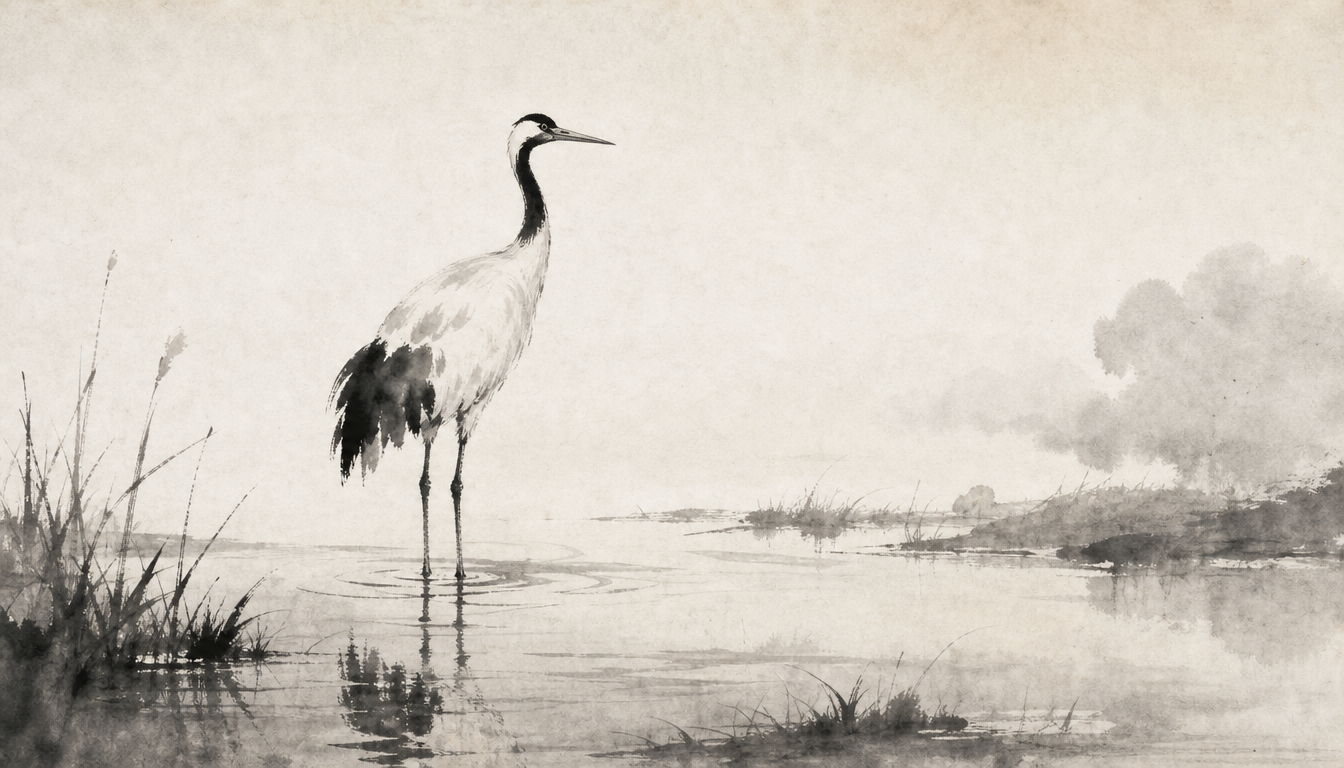
The tsuru crane kanji, written 鶴 and read tsuru, is the Japanese character for the crane, a bird revered across Japan as a living emblem of long life, good fortune, and unwavering fidelity. For anyone drawn to Japanese aesthetics, spiritual symbolism, or a culturally accurate tattoo, this single character carries centuries of poetry, folklore, and quiet devotion. It is elegant, complex, and deeply auspicious.
In this Vol.43 entry of our Kanji of the Day series, we explore what 鶴 means, how it is built, why the crane sits at the heart of Japanese blessings, and how you might carry it as a personal symbol.
Discover Your Soul Kanji
Experience the depth of Japanese characters: each kanji carries timeless meaning, guiding your life's path.
No credit card required • 2-minute process
What the Tsuru Crane Kanji Means
At its core, 鶴 names a bird: the crane, and by extension the stork in some contexts. According to the Japanese Bestiary, tsuru means "crane" in English, referring most often to the tall, elegant wading birds seen in wetlands and winter fields. Among Japan's cranes, the red-crowned crane (tancho) is the most celebrated, its white body and crimson crown appearing in scroll paintings, screens, and family crests for generations.
The character sits comfortably in three worlds at once. It is a plain word for a real animal, a personal name carried by many people over the centuries, and a symbol woven into the fabric of Japanese blessing. That layering is part of what makes it such a resonant choice for a soul kanji.
鶴 works on three levels: a literal bird, a human name, and an auspicious cultural symbol. When you choose it, you inherit all three at once.
Crane as a Symbol of Longevity and Good Fortune in Japanese Culture
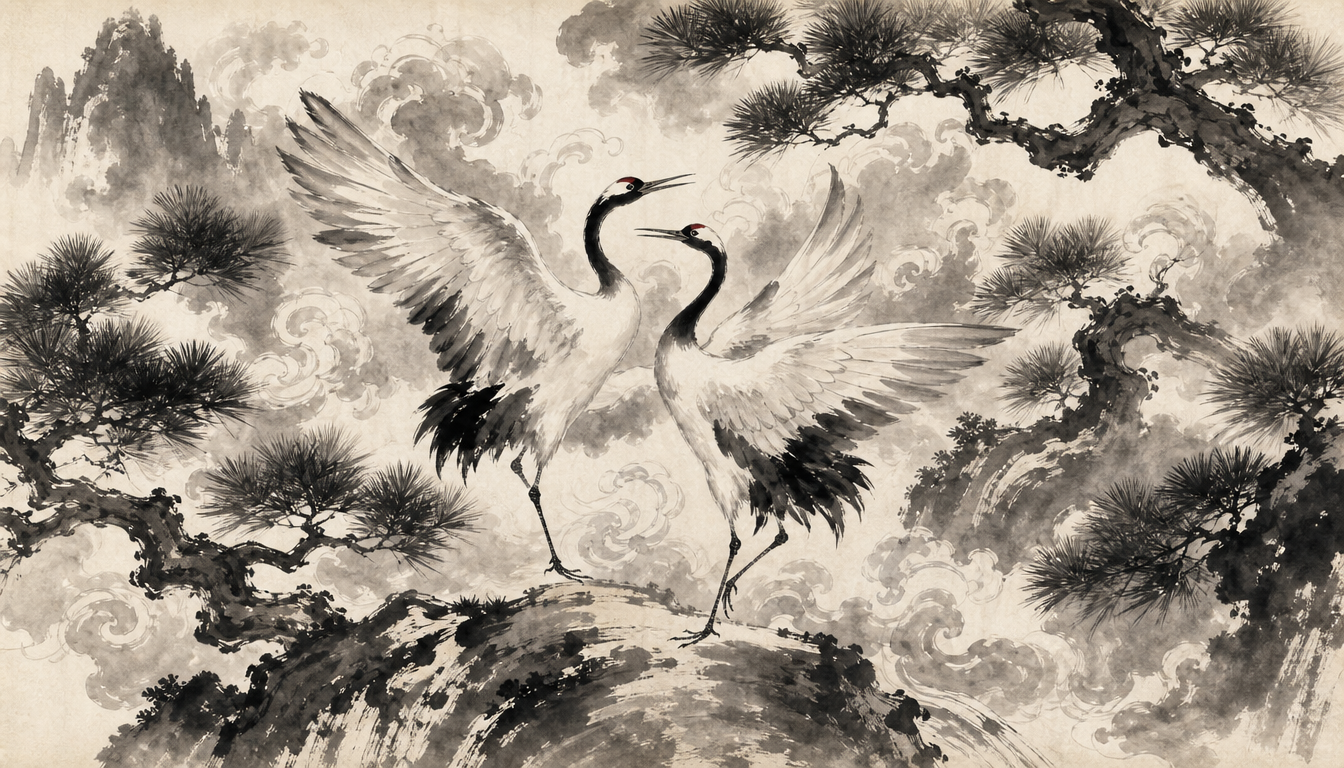
In Japan, the crane stands among the most auspicious of all creatures. The Los Angeles County Museum of Art notes that the crane symbolizes good fortune and longevity, and has played an integral role in Japanese art and literature for centuries. Where some Western and other world traditions read the crane through a darker lens, Japan has held steadily to its bright meanings, as the gallery Omakase Tokyo observes: prosperity, hope, and good luck.
The bird's association with long life crystallized into a famous proverb. As documented by More Than Tokyo, the saying tsuru wa sen-nen, kame wa man-nen means "the crane lives a thousand years, the turtle ten thousand." The pairing of crane and turtle became shorthand for a blessed, enduring life, and the two appear together at weddings, on New Year decorations, and in gifts wishing someone many more years.
Cranes also symbolize fidelity. They form long pair bonds, and their elaborate courtship dances, two birds bowing and leaping in unison, made them a natural emblem of loyalty and marital harmony. This is why crane imagery is so common on wedding kimono and celebratory envelopes. The crane blesses a life that is long, fortunate, and faithful.
The Crane in Origami and Folklore
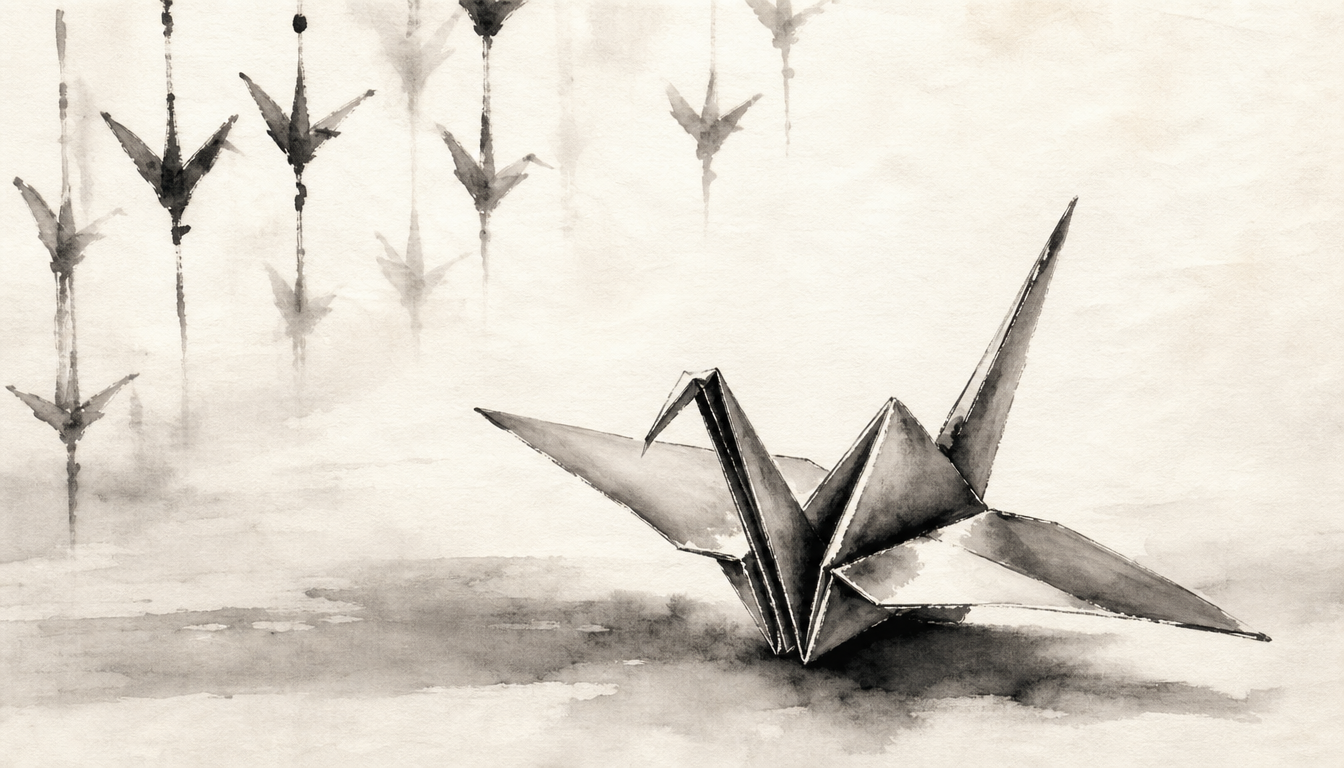
No object carries the crane's meaning more widely than the orizuru (折鶴), the folded paper crane. According to Omakase Tokyo, the tradition of folding paper cranes is one of Japan's most enduring, tied to a history of paper folding stretching back centuries. A popular legend, recorded in the Japanese Bestiary, holds that folding one thousand cranes (senbazuru) earns a wish, often a wish for healing or peace. Strings of colorful paper cranes still hang at shrines, hospitals, and memorials, each fold a small act of hope.
Folklore deepens the picture. The tale of the grateful crane, in which a rescued bird returns disguised as a woman to repay a kind act, casts the crane as a being of gratitude and quiet self-sacrifice. Across these stories the crane is never trivial. It arrives as a messenger of blessing.
Kanji Structure: Strokes, Radical, and Components
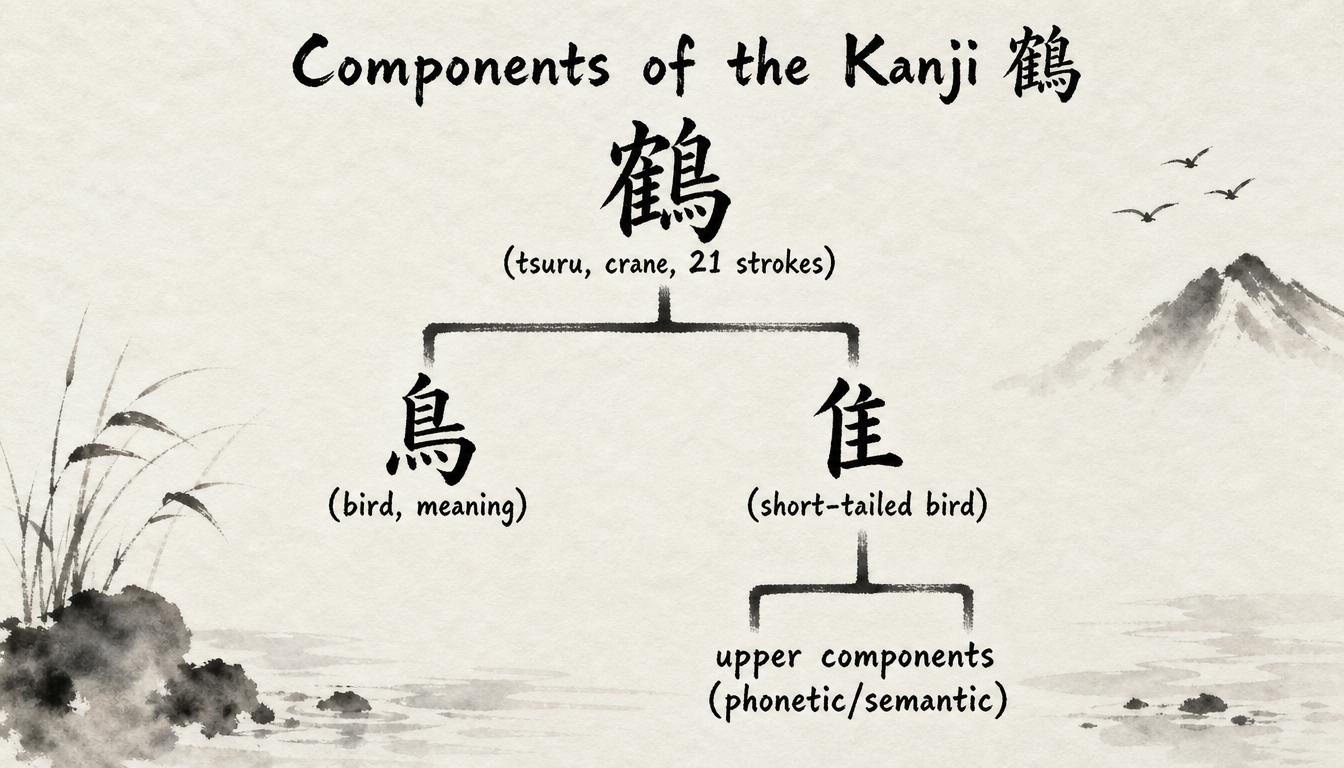
The tsuru crane kanji is one of the more intricate characters a learner or tattoo planner will meet. According to Jitenon, 鶴 has 21 strokes and uses the radical 鳥 (tori / torihen), the "bird" radical. That radical placement is the first clue to its meaning: whatever else the character holds, it belongs to the family of birds.
The character breaks into two visual halves. On the right sits 鳥, the bird radical, contributing the sense. On the left is a phonetic and semantic element built from parts including 隹 (a short-tailed bird) topped by additional strokes. The diagram below maps how the tsuru crane kanji's components fit together.
| Property | Detail |
|---|---|
| Kanji | 鶴 |
| Reading (Kun) | つる (tsuru) |
| Meaning | crane |
| Strokes | 21 |
| Radical | 鳥 (tori / torihen) |
For a tattoo or a piece of framed art, that 21-stroke density is a feature, not a flaw. The character has weight and presence on the page. It also means precision matters: a sloppy rendering of so many strokes reads as clearly wrong to a Japanese eye, which is why getting the balance right is worth the care.
Readings and Everyday Usage
The everyday reading of 鶴 is the kun-reading つる (tsuru), confirmed by Jitenon. This is the reading you hear when someone names the bird, and the one carried by the personal name Tsuru. As Wikipedia notes, Tsuru is used as both a given name and a surname in Japan, worn by actors, athletes, and scholars alike.
The character also carries an on-reading, kaku, used in some compound words. In practice, the kun-reading dominates daily life and folklore, while the on-reading surfaces in more formal or literary vocabulary. The table below shows how 鶴 shifts between readings depending on context.
| Context | Reading | Example |
|---|---|---|
| The bird / name | つる (tsuru) | 鶴 (tsuru), a crane |
| Folded paper crane | づる (-zuru) | 折鶴 (orizuru) |
| Thousand cranes | ばづる (-bazuru) | 千羽鶴 (senbazuru) |
Notice how the reading softens from tsuru to -zuru inside compounds. This sound shift, called rendaku, is normal in Japanese and signals that the word has fused into a single unit rather than two separate ideas.
Common Compound Words with 鶴
A handful of real compounds show how the crane travels through the language:
- 折鶴 (orizuru) — a folded paper crane. The single most iconic use of the character, tied to hope, healing, and prayer.
- 千羽鶴 (senbazuru) — a thousand paper cranes strung together, folded as a wish for recovery or peace.
- 鶴亀 (tsurukame) — literally "crane and turtle," a set phrase for longevity and good fortune, drawn from the famous proverb.
Each of these carries the same warm undertone. When 鶴 appears, blessing is rarely far behind.
The Crane as a Personal Symbol and Tattoo
Choosing 鶴 as a personal kanji says something specific about how you want to move through life. The crane is patient, graceful, and loyal. It suggests a person who values endurance over haste, and depth of bond over fleeting connection. For those drawn to mindfulness and Eastern philosophy, the crane's stillness in the marsh, alert but unhurried, offers a fitting image of composure.
As a tattoo, the tsuru crane kanji rewards careful placement. Its 21 strokes need room to breathe, so larger placements on the forearm, upper back, or calf preserve legibility better than a small wrist design where the strokes can blur together. Pairing the character with a brushed crane silhouette or a single paper-crane motif can reinforce the meaning without crowding it.
Before committing 鶴 to skin, confirm the stroke order and proportions with a reliable source, and never mirror or rotate the character. A reversed or distorted kanji reads as a mistake to anyone literate in Japanese.
This is where meaning-first curation matters. Oracle Kanji Writer exists to help people outside Japan discover a personal "Soul Kanji" that genuinely resonates in Japanese, not a machine-translated cliché. Enter your name, birthdate, and blood type, and the tool recommends a character aligned with your inner qualities, complete with pronunciation, layered meanings, and hand-picked compounds so you understand the cultural weight before you wear it or frame it.
FAQ
What is the kanji for tsuru?
The kanji for tsuru is 鶴. According to Jitenon, it has 21 strokes, uses the bird radical 鳥, and takes the kun-reading つる (tsuru). It names the crane and appears in words like 折鶴 (orizuru), the folded paper crane.
What is the kanji for crane?
The crane is written 鶴 in Japanese. It is built on the "bird" radical 鳥, which places it firmly among characters for winged creatures, and it carries strong cultural associations with longevity, good fortune, and fidelity.
What does 都 mean in Japanese?
都 means "capital" or "metropolis" and appears in words like 都市 (toshi, city). It is unrelated in meaning to 鶴, though it shares the tsuru sound in the place name Tsuru, Yamanashi (都留市), a city near Mount Fuji whose name uses different characters.
What does 小 mean in Japanese?
小 means "small" or "little" and is one of the most basic characters in Japanese. It has no direct connection to 鶴, but the two can combine in names and phrases where a "small crane" image is desired.
Conclusion
The crane earns its place among Japan's most beloved symbols, and 鶴 captures all of it in a single elegant character. A few points to carry away:
- 鶴 (tsuru) means crane and, by tradition, longevity, good fortune, and faithful love.
- According to Jitenon, the character has 21 strokes and uses the bird radical 鳥.
- The proverb tsuru wa sen-nen and the folded orizuru keep the crane's blessing alive in daily life.
- Its intricate form makes it a striking, meaning-rich choice for art and tattoos, provided the strokes are rendered correctly.
If the tsuru crane kanji speaks to your sense of grace, patience, and enduring loyalty, let Oracle Kanji Writer help you confirm whether 鶴, or a kindred character, truly reflects your soul before you carry it into the world.
Discover Your Soul Kanji
Experience the depth of Japanese characters: each kanji carries timeless meaning, guiding your life's path.
No credit card required • 2-minute process