Kanji of the Day Vol.70 | "Kanji 旅 (Tabi): The Journey Kanji Guiding Your Soul's Wandering Path"

旅 is the Japanese kanji for journey, read たび (tabi) alone and リョ (ryo) in compounds. This Vol.70 entry of Kanji of the Day traces the character from its ancient banner-and-people origin to modern words like 旅人 (traveler) and 旅立ち (departure), covers its 10-stroke order and 方 radical, separates 旅 from 旅行 and lookalike characters, and explains why expats, wanderers, and people in transition choose it as a personal emblem.
旅 (tabi) is the Japanese kanji for journey, travel, and the act of moving through unfamiliar places. It names both the physical trip and the inner passage that a trip becomes.
The kanji tabi journey character appeals to people who have already noticed something about themselves: that they measure life in departures rather than addresses. Expats, long-term travelers, people between careers, people between selves. 旅 carries all of that without a word of explanation.
Quick Facts About the Kanji Tabi Journey Character
| Item | Detail |
|---|---|
| Kanji | 旅 |
| Meaning | travel, trip, journey |
| On'yomi (Chinese-derived reading) | リョ (ryo) |
| Kun'yomi (native Japanese reading) | たび (tabi) |
| Stroke count | 10 strokes |
| Radical | 方 (hō / hōhen / katahen) |
| Level | JLPT N4; Kanji Kentei Level 8 (常用漢字, common-use kanji) |
| Related concepts | 旅人 (tabibito, traveler), 旅立ち (tabidachi, departure) |
| Contrast concept | 住 (dwelling, settling in one place) |
All of the above readings, the 10-stroke count, and the 方 radical are confirmed by Jiten Online, and the JLPT N4 classification comes from JLPT Sensei.
Discover Your Soul Kanji
Experience the depth of Japanese characters: each kanji carries timeless meaning, guiding your life's path.
No credit card required • 2-minute process
What 旅 Means, Layer by Layer
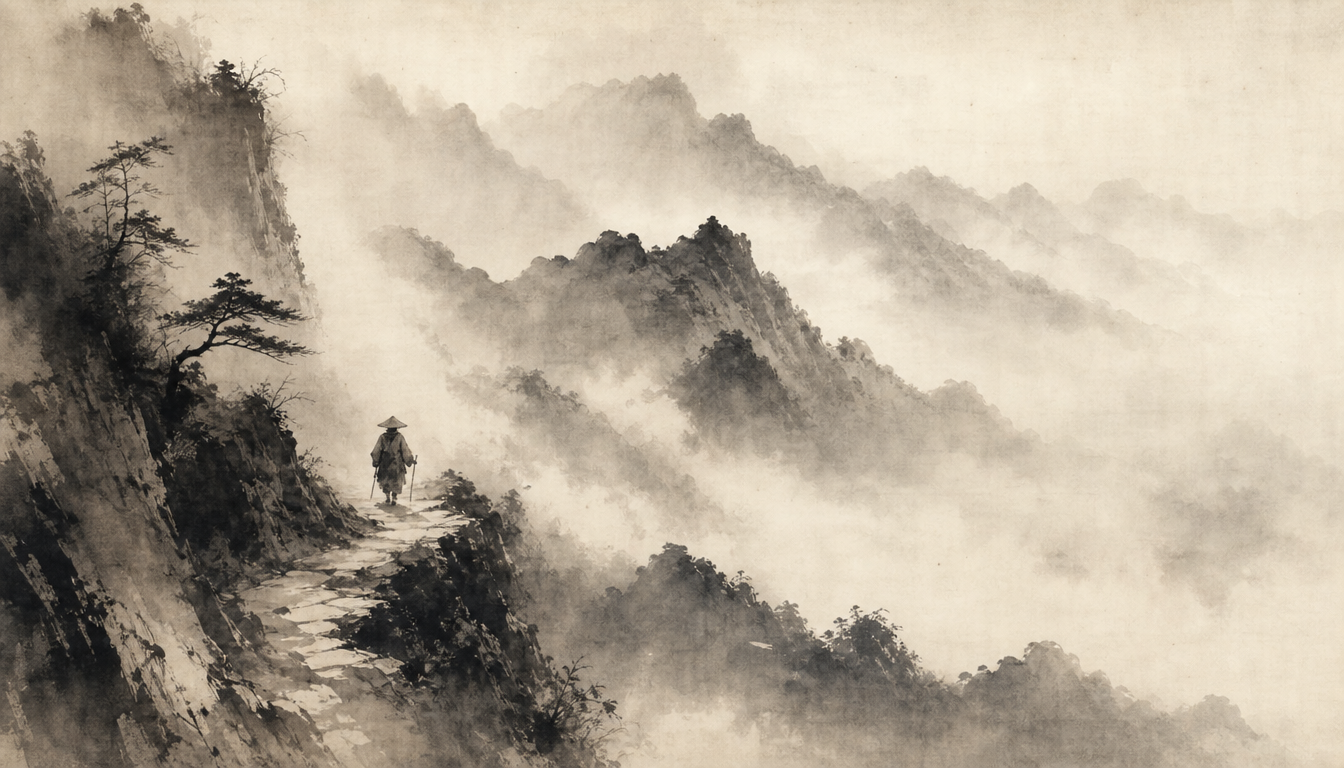
On the surface, 旅 means travel. Dictionaries give it as travel, trip, journey . But Japanese has more than one word in this space, and the difference matters if you plan to wear this character or use it as a personal emblem.
旅行 (ryokō) is the everyday word for a trip: booked, scheduled, itinerary in hand. 旅 (tabi) on its own feels older and more solitary. It suggests going without knowing exactly what you will find, the way a poet or a pilgrim went. When a Japanese speaker says 旅 rather than 旅行, they are usually reaching for something with weight to it.
That distinction is why 旅 works so well as a symbol of a life stage. 旅 describes the passage itself, not the destination. A person who has left a country, a marriage, a career, or an old identity is in 旅 whether or not they board a plane.
Why 旅 Feels Different From "Vacation"
English collapses tourism and pilgrimage into one word: travel. Japanese keeps them apart. A resort week is 旅行. A year of walking, doubting, and rearranging yourself is 旅. Choosing this kanji signals the second kind.
From Banner and People: The Origin of 旅
旅 is a compound character, and its parts explain its meaning better than any mnemonic.
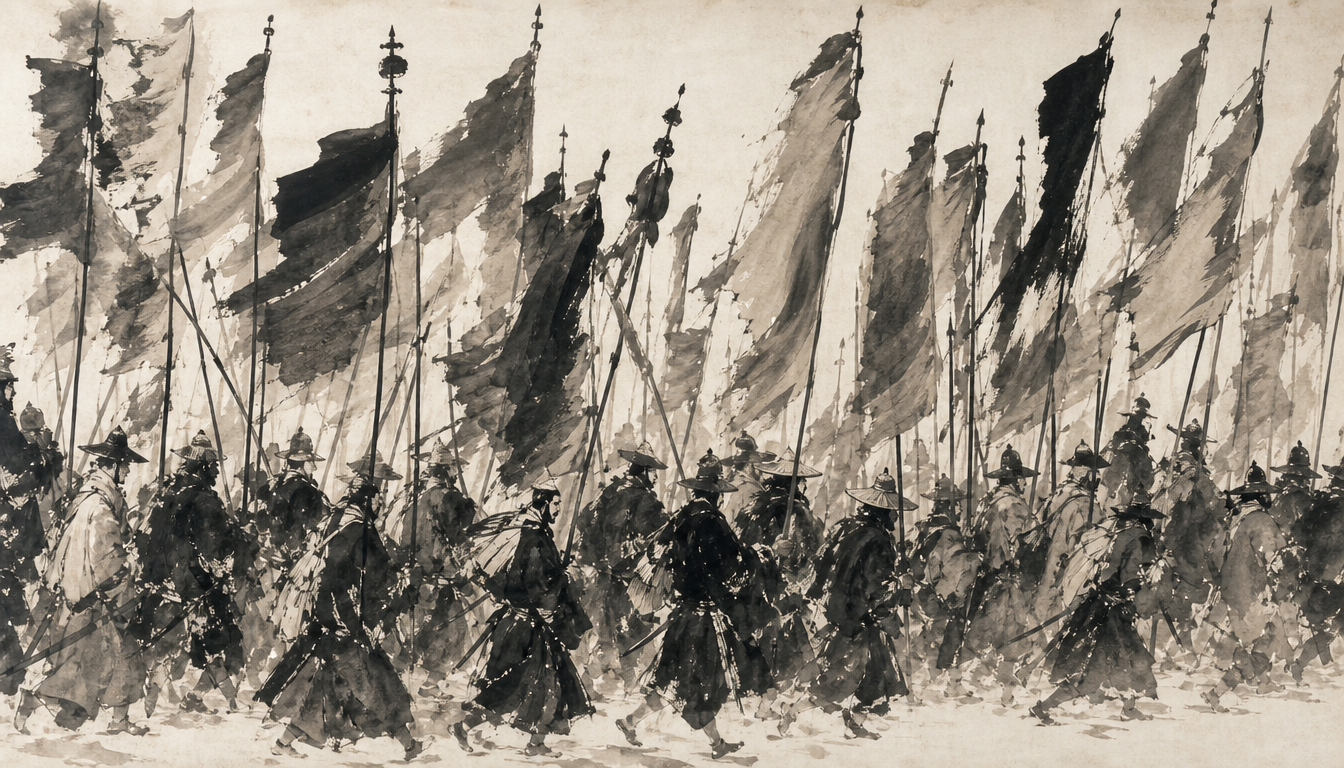
The left side is the element catalogued as 方 (hōhen / katahen) in modern dictionaries . In the ancient forms of this family of characters, that shape depicted a banner or standard hanging from a pole, a flag carried at the front of a group. The right side derives from a depiction of people following in a line. Put them together and you get the mainstream scholarly reading: a company of people marching behind a raised banner.
旅 began as a military image: a banner at the head of a column, and the people moving beneath it. The oldest sense was closer to "troop" or "marching unit" than to "holiday." Over centuries, the emphasis shifted from the formation to the movement itself, and 旅 came to mean the journey.
You can see the military layer surviving in modern Japanese: 旅団 (ryodan) still means a military brigade. That older meaning gives 旅 a backbone that "travel" in English lacks. This is not drifting. This is a body of people in motion under a shared sign, going somewhere on purpose.
The same 方 element appears in a whole cluster of related characters, including 族 (tribe) and 施 (to carry out), which is why the shape is grouped as one radical family in kanji learning tools such as WaniKani. Recognizing the family makes 旅 far easier to read and to write correctly.
Stroke Order and Writing System
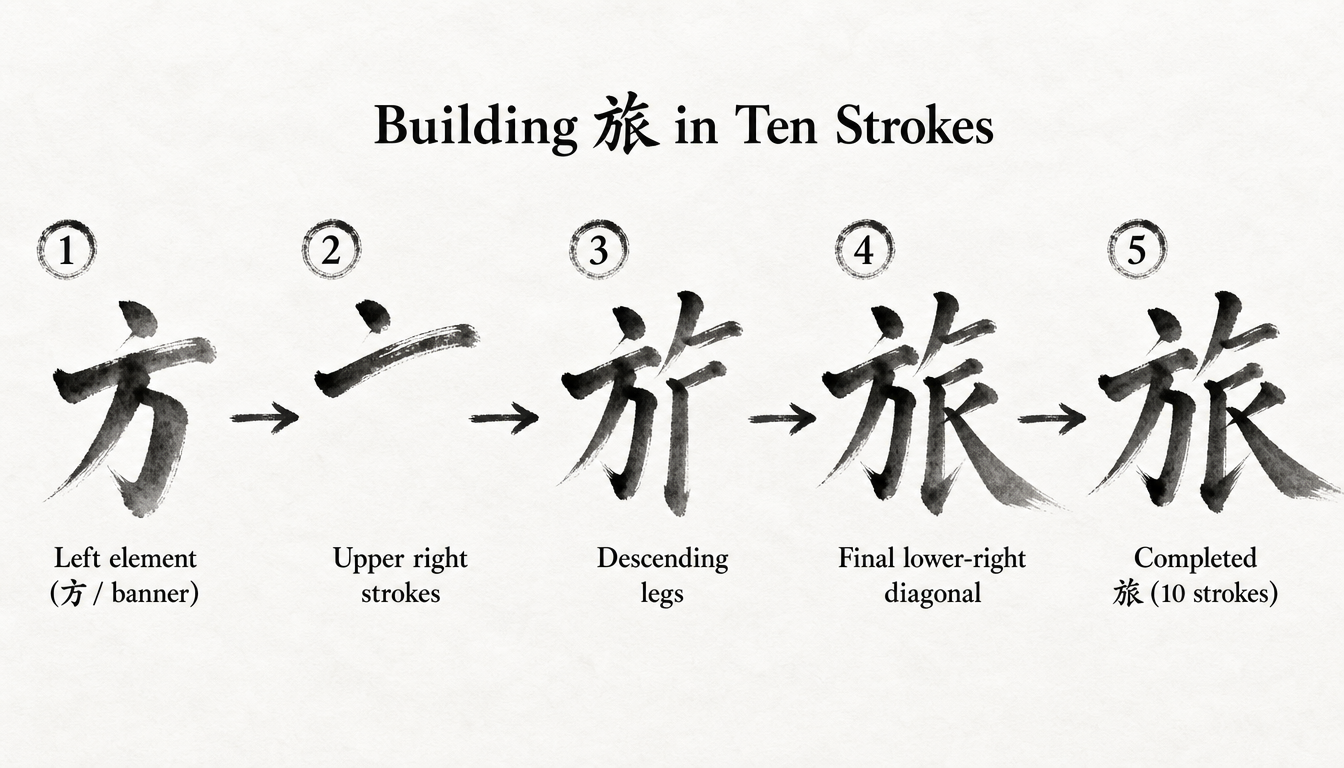
旅 is written in 10 strokes . It is a standard-use character taught at the elementary level in Japan, which places it at Kanji Kentei Level 8 and at JLPT N4 for learners.
The character splits cleanly into two halves, and correct stroke order follows the universal kanji principles: left component before right, top before bottom, horizontal before vertical.
- Write the left component (the 方-type element) first, completing all of its strokes before touching the right side.
- Move to the right component, working from its upper strokes down to the two descending legs at the bottom.
- Finish with the lower-right diagonal, which carries the character's momentum outward.
The diagram below shows how the two halves of 旅 combine, from banner to people to finished character.
If you plan to use 旅 as a tattoo, have a calligrapher or a native writer confirm the stroke order and proportions. A design copied from a font can look stiff, and a mirrored or flipped image reads as an error to anyone literate in Japanese. Never mirror kanji for symmetry.
On'yomi (リョ) and Kun'yomi (たび) Readings
旅 has one on'yomi and one kun'yomi, which makes it unusually tidy.
- On'yomi: リョ (ryo). The Chinese-derived reading, used inside compound words. 旅行 (ryokō), 旅館 (ryokan), 旅券 (ryoken).
- Kun'yomi: たび (tabi). The native Japanese reading, used when 旅 stands alone or heads a native compound. 旅 (tabi), 旅人 (tabibito), 旅立ち (tabidachi).
Both readings are recorded on Jiten Online, which also notes that several other kanji share the reading たび, including 度 (a counter for occurrences) and rare characters for socks. If you are shopping for a symbol, that ambiguity is worth knowing: the sound "tabi" alone does not identify the journey kanji. Only the written character 旅 does.
When to Use Which Reading
| Context | Reading | Example |
|---|---|---|
| Kanji alone as a noun | たび (tabi) | 旅 — a journey |
| Native Japanese compound | たび (tabi) | 旅人 (tabibito) — traveler |
| Sino-Japanese compound | リョ (ryo) | 旅行 (ryokō) — trip, travel |
| Formal or institutional terms | リョ (ryo) | 旅券 (ryoken) — passport |
Real Compound Words Built on 旅
Compounds are the fastest route to understanding how Japanese speakers feel about a character. These are all common and current.
- 旅人 (tabibito) — traveler, wayfarer. Listed as traveler on Jiten Online. It carries a touch of the poetic and the rootless, closer to "wanderer" than to "tourist."
- 旅立ち (tabidachi) — departure, setting off. The verb 旅立つ (tabidatsu) means to begin a trip, and by extension it also means to die, to depart this life . That double sense is one of the most moving things in the language: the last journey is still a journey.
- 旅行 (ryokō) — travel, trip, tour. The neutral everyday word. 海外旅行 (kaigai ryokō) means overseas travel .
- 旅館 (ryokan) — traditional Japanese inn. Literally a "journey building." A ryokan is accommodation built mainly with Japanese architectural elements and furnishings .
- 旅先 (tabisaki) — the place one is traveling to. Another entry in the Jiten Online word list, useful because Japanese needs a word for "wherever I currently am, temporarily."
Good and Bad Ways to Use 旅
Tattoo studios and print shops get this character wrong in predictable ways. The comparison below separates choices that read well in Japan from choices that read as a mistake.
| Aspect | Works well | Goes wrong |
|---|---|---|
| Character choice | 旅 for journey as a life passage | 度 chosen because it can also be read "tabi" but means "degree/times" |
| Form | Brush-written or calligraphic 旅 with correct stroke order | Mirrored, rotated, or font-stretched 旅 |
| Pairings | 旅 alone, or 旅人 as a complete word | 旅 plus an unrelated kanji stacked for aesthetics, forming nonsense |
| Understanding | Knowing it reads tabi alone and ryo in compounds | Assuming it is pronounced "ryo" in every context |
Common Misunderstandings About 旅
| Misunderstanding | The accurate picture |
|---|---|
| "旅 and 旅行 are interchangeable" | Both mean travel, but 旅行 is the everyday, planned trip while 旅 carries an older, more solitary and reflective tone |
| "旅 is pronounced ryo" | リョ is the compound reading; standing alone the character is read たび (tabi) |
| "The origin has something to do with roads" | The character's ancient form depicts a banner and people following it, a marching column, not a road |
| "Any kanji read tabi will do" | 度, 羈 and rare sock characters also carry the reading たび; only 旅 means journey |
旅 Versus Its Neighbors
The chart below compares 旅 with characters people often consider alongside it.
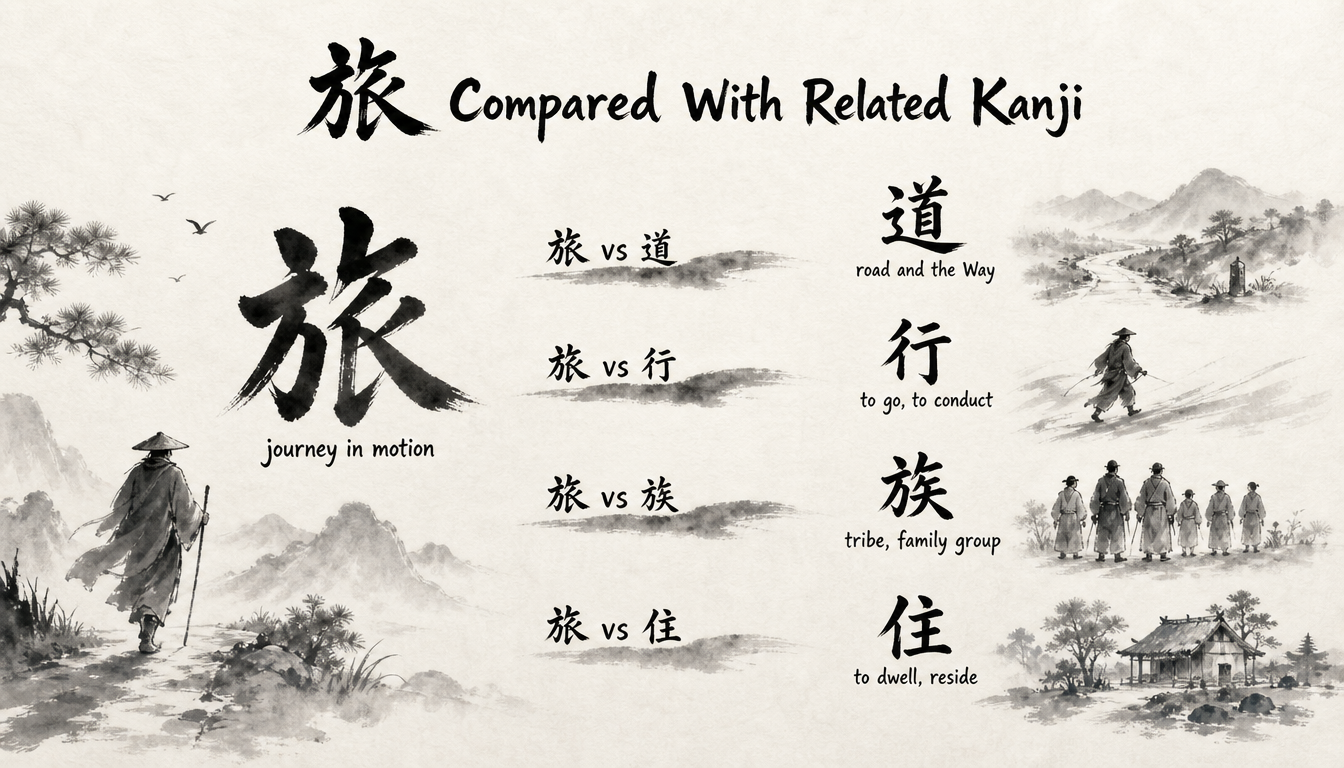
| Kanji | Core meaning | How it differs from 旅 |
|---|---|---|
| 道 (michi / dō) | road, path, the Way | The route and the discipline, not the act of moving along it |
| 行 (iku / kō) | to go, to conduct | Pure motion or execution, with no sense of being away from home |
| 族 (zoku) | tribe, family group | Shares the banner element but names the group, not its movement |
| 住 (sumu / jū) | to dwell, to reside | The conceptual opposite: staying put and putting down roots |
Symbolism: Who Chooses 旅 as a Personal Kanji
People gravitate to 旅 at hinge points. The year they leave home for good. The year a long chapter closes. The year they stop asking where they will settle and accept that movement is the point.
The character's banner origin adds something most people miss. 旅 was never a picture of a lone wanderer. It was a picture of people moving together under a shared sign. Choosing 旅 can mean independence, and it can equally mean you carry your people with you: the ones who shaped you, the ones walking the same road at a distance.
And then there is 旅立つ, which means both to set off and to pass away. Anyone who chooses 旅 is quietly accepting that the journey has an end and going anyway. That is a specific kind of courage, and Japanese folded it into a single word.
Putting 旅 to Use in Your Own Practice
A kanji stops being decoration once you use it deliberately. A few ways to do that:
- Write it by hand. Ten strokes, left half first. Repeating the stroke order builds an intuition for the character's balance that no image search can give you.
- Learn one compound properly. 旅立ち (tabidachi) is the most useful for anyone marking a transition. Say it, write it, know both of its meanings.
- Check it before you commit it to skin. Confirm the form with someone literate in Japanese, and insist on brushwork rather than a stretched font.
- Test whether 旅 is actually your character. Journey is a broad theme. Someone in transition might be better represented by a kanji for endurance, change, or beginning.
That last point is where a guided approach helps. The Oracle Kanji Writer Soul Kanji diagnosis takes your name, birthdate, and blood type and recommends a character matched to your inner qualities, complete with pronunciation, layered meanings, a personal message, and carefully chosen compounds that show how the character behaves in real Japanese. It is curated by Japanese creators, so the result reads as beautiful and meaningful in Japan rather than as a mistranslation. You can download the kanji art for a wallpaper, a keepsake, or tattoo planning.
FAQ
What is the Japanese kanji for "journey"?
旅. It is read たび (tabi) on its own and リョ (ryo) inside compounds, and dictionaries define it as travel, trip, journey . Written in 10 strokes with the 方 radical, it appears in 旅人 (tabibito, traveler) and 旅行 (ryokō, trip).
Is 旅 difficult for Japanese people to write?
No. 旅 is a common-use kanji taught in Japanese elementary school, placed at Kanji Kentei Level 8, and it is studied by learners around JLPT N4 . Its ten strokes and clear two-part structure make it one of the more approachable characters in its family.
What are the main types of kanji?
Traditional Chinese character analysis sorts kanji into categories including pictographs that draw an object, simple indicatives that diagram an idea, compound ideographs that join two meaning elements, and phono-semantic compounds that pair a meaning element with a sound element. 旅 belongs with the compound characters: a banner element joined to a depiction of people following it.
Is 旅 a good choice for a tattoo?
It is one of the safer single-character choices because its meaning is unambiguous in Japanese and it needs no second character to make sense. Keep it as a brush-written single character, verify the stroke order, and never mirror or rotate it.
Key Takeaways
- 旅 means travel, trip, and journey, written in 10 strokes under the 方 radical .
- It reads たび (tabi) alone and リョ (ryo) in compounds such as 旅行 (ryokō) and 旅館 (ryokan).
- Its ancient form shows a banner with people following, a marching column, which is why 旅 still carries a sense of purposeful shared movement.
- 旅立つ (tabidatsu) means both to set off and to pass away, giving the character a quiet awareness of endings .
- The kanji tabi journey character suits people in transition, but journey is broad, so it is worth testing whether a character for change, endurance, or beginning fits you better.
If 旅 speaks to where you stand right now, the next step is to see whether the kanji tabi journey character truly belongs to you or whether another character carries your particular passage more precisely. A guided Soul Kanji diagnosis from Oracle Kanji Writer matches you to a character Japanese readers recognize as authentic, so the symbol you carry means exactly what you intend it to mean.
Discover Your Soul Kanji
Experience the depth of Japanese characters: each kanji carries timeless meaning, guiding your life's path.
No credit card required • 2-minute process