Kanji of the Day Vol.6 | "Kanji 心 (Kokoro): The Heart-Mind Kanji Revealing Your True Spirit"

The kanji kokoro (心) holds heart, mind, spirit, and feeling in a single shape. In Vol.6 of Kanji of the Day, we unpack the layered kokoro meaning, the heart kanji's pictographic origin, its place in Natsume Sōseki's 1914 novel, common compounds like 安心 and 決心, and what choosing 心 says about you — plus what to know before turning it into a tattoo or personal symbol.
Kanji 心 (Kokoro): The Heart-Mind Kanji Revealing Your True Spirit

The kanji kokoro (心) is one of the most beloved characters in the Japanese language — a single, flowing shape that captures heart, mind, spirit, and feeling all at once. If you've ever searched for the heart kanji to wear as a tattoo, hang on your wall, or simply understand more deeply, the kokoro meaning runs further than any one English word. It's where ancient pictograph, daily emotion, and personal philosophy meet.
This is Vol.6 of our Kanji of the Day series, and today we slow down with the character that, in many ways, holds all the others together.
Discover Your Soul Kanji
Experience the depth of Japanese characters: each kanji carries timeless meaning, guiding your life's path.
No credit card required • 2-minute process
Quick Facts: The Heart Kanji 心 at a Glance
Before we explore the layers of the kokoro meaning, here is a snapshot of the kanji itself.
| Item | Detail |
|---|---|
| Kanji | 心 |
| Kun'yomi (Japanese reading) | こころ (kokoro) |
| On'yomi (Sino-Japanese reading) | シン (shin) |
| Core meanings | Heart, mind, spirit, feeling |
| Radical | 心 (heart radical) |
| Category | Pictograph derived from the shape of a heart |
The character is small — just a few strokes — yet it appears inside dozens of other kanji that touch emotion, thought, and will. When you learn 心, you're really learning the door into half of Japan's emotional vocabulary.
In Japanese, 心 doesn't separate the heart from the mind. One character carries both — which is why translating it as only "heart" or only "mind" always feels slightly incomplete.
The Core Meanings of Kokoro: Heart, Mind, Spirit, and Emotion
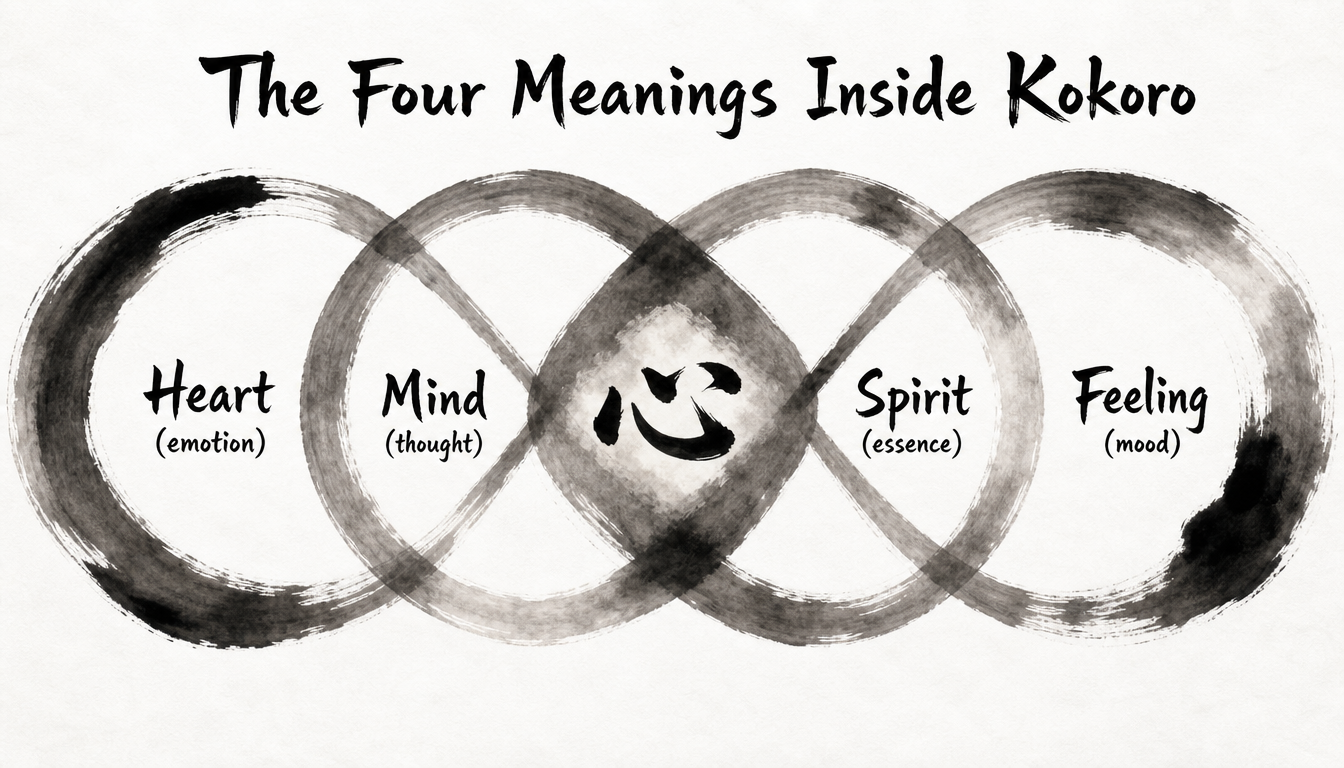
English forces us to choose between organs and ideas. Japanese does not. The kanji kokoro gathers four overlapping meanings into one quiet shape, and which one applies depends entirely on context.
1. Heart — the seat of feeling
At its most intuitive, 心 is the heart in the emotional sense: where love, kindness, sorrow, and warmth live. When a Japanese speaker says someone has a warm kokoro, they mean a generous inner life, not a working organ. It's closer to what English calls "heart" in phrases like "she has a big heart."
2. Mind — the seat of thought
心 also covers the thinking self. According to EJable's overview of the kanji for heart, 心 can refer to a person's mental and emotional faculties together — what we'd describe as the inner workings of someone's mind. Decisions, intentions, and attention all sit inside this meaning.
3. Spirit — the seat of essence
One layer deeper, 心 means spirit: the irreducible "you" beneath thoughts and feelings. This is the kokoro of martial arts and meditation, the inner core that practice is meant to refine. It's the meaning behind dojo phrases about training the spirit, not just the body.
4. Feeling — the texture of experience
Finally, 心 can simply mean a feeling, a mood, the emotional flavor of a moment. A poem can have kokoro. A gift can carry kokoro. A bowl of ramen, lovingly made, can taste of kokoro — which is exactly why Japanese restaurants and craftspeople invoke the word so often when describing their work.
How the four meanings fit together
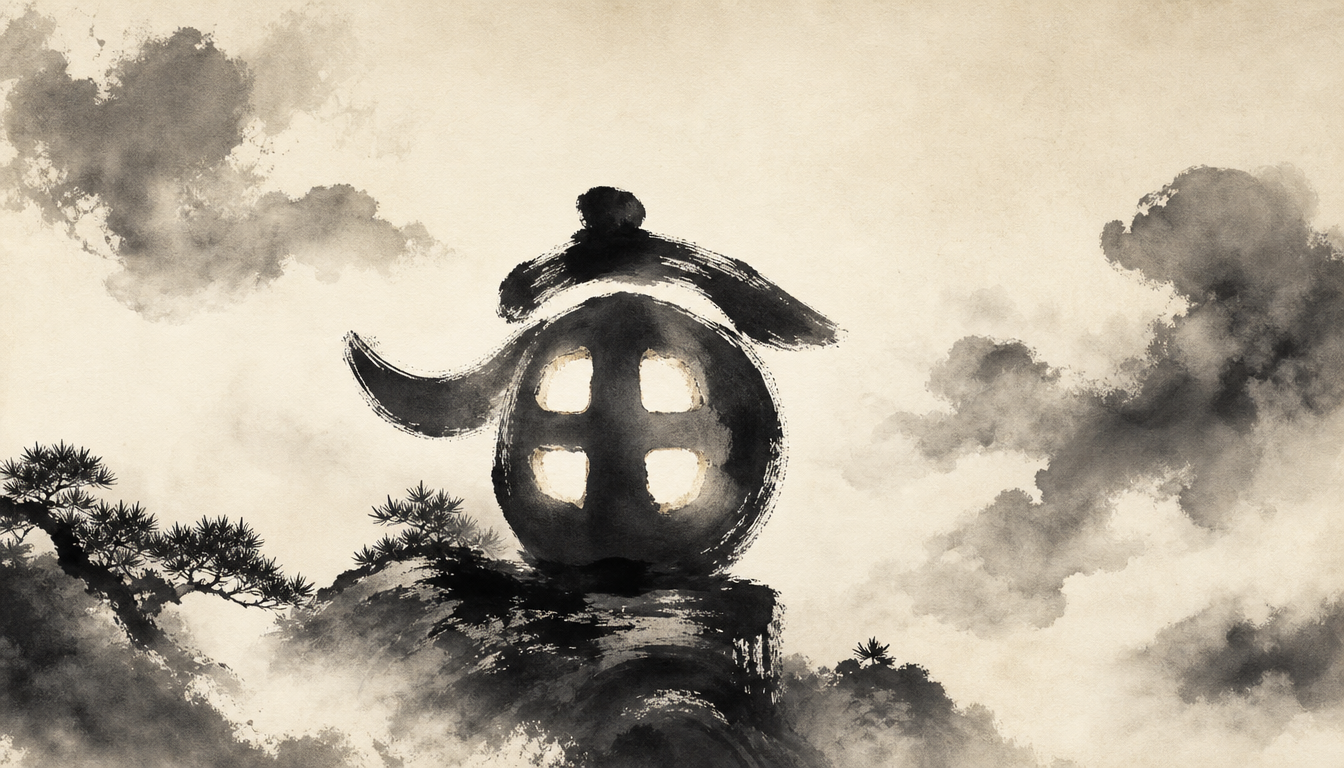
Rather than four separate definitions, think of kokoro as one inner space with four windows. Depending on the sentence, light comes through a different window — but it's the same room.
From Pictograph to Philosophy: The Origin of 心
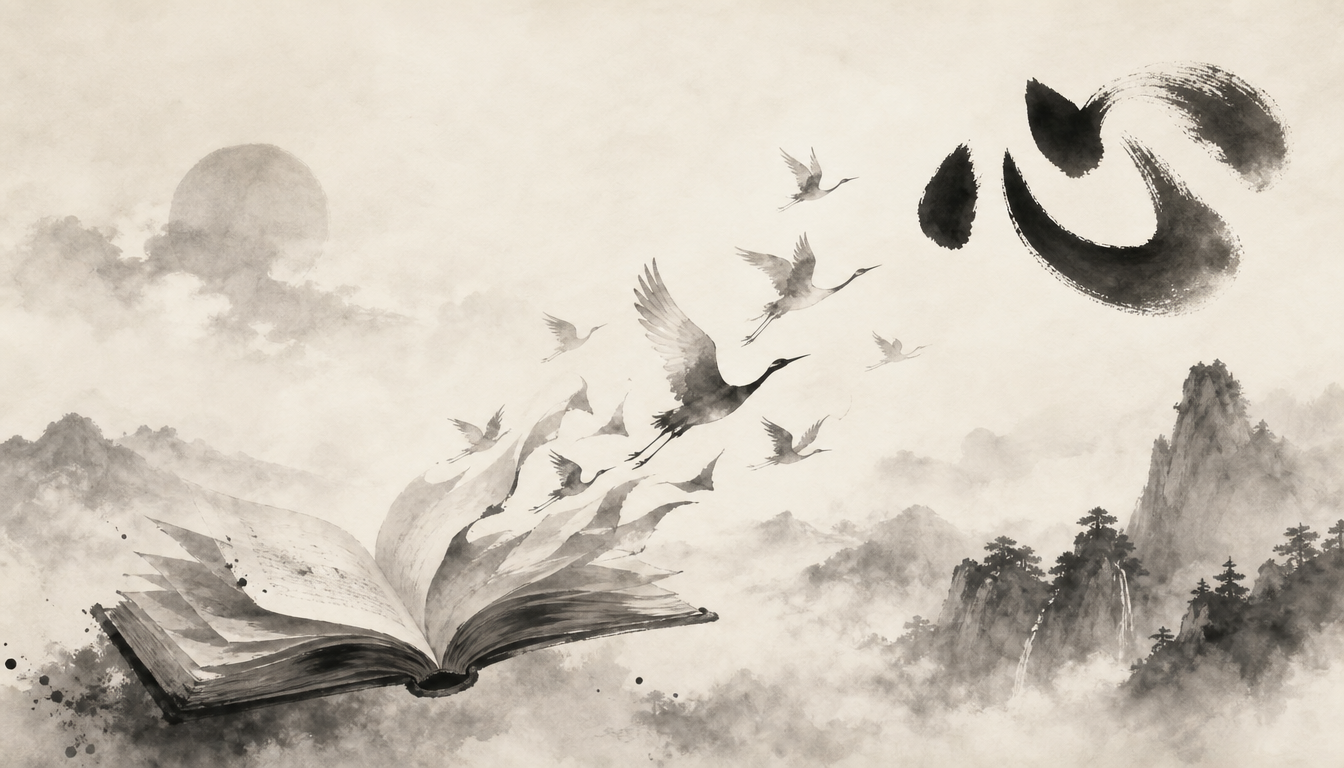
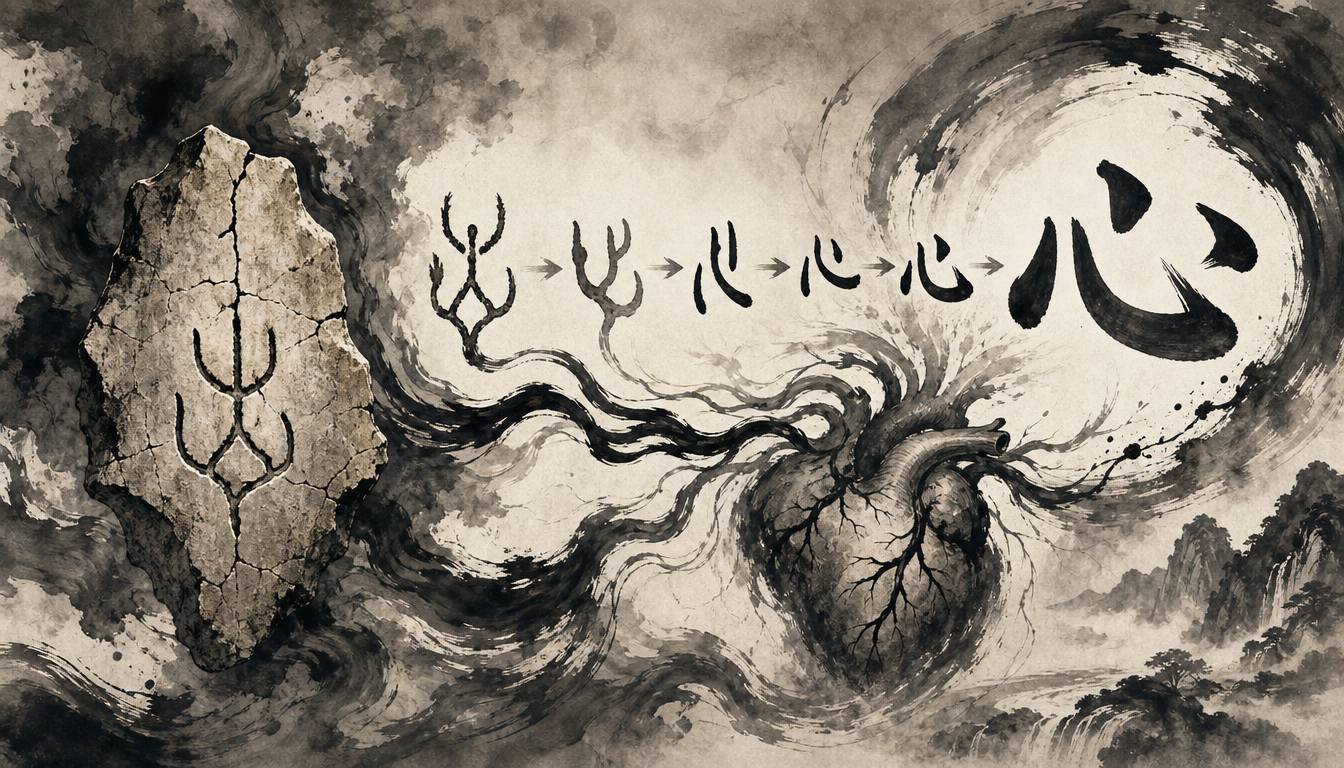
The kanji 心 began as a pictograph of an actual human heart, with its chambers and outflowing vessels stylized into a few flowing strokes. Over centuries the shape simplified, but the curving lines you write today still echo that original anatomical sketch.
That origin matters. Many cultures placed thought and feeling in the heart before they placed them in the brain, and Chinese (and later Japanese) writing preserved that worldview in script. As the heart radical guide from Written Chinese notes, characters containing 心 (or its compressed forms 忄 and 㣺) tend to relate to emotions, thoughts, and inner states. Once you see it, you see it everywhere: 思 (to think), 想 (to imagine), 愛 (love), 忘 (to forget), 念 (to wish or yearn).
So 心 isn't just one kanji — it's a kind of emotional grammar embedded inside hundreds of others.
Kokoro in Japanese Literature and Culture
No discussion of the kokoro meaning is complete without the novel that made the word famous worldwide.
Natsume Sōseki's Kokoro
The novel Kokoro was written by Natsume Sōseki (1867–1916), one of the towering figures of modern Japanese literature. According to Wikipedia's entry on the novel, Kokoro was first published in serial form in the Asahi Shimbun newspaper from 20 April to 11 August 1914. It tells the story of a young man and an older mentor he calls "Sensei," who carries a secret from his past — and the novel becomes a slow excavation of guilt, loneliness, and the unknowable depths of another person's inner life.
Sōseki chose this title deliberately. The whole book is an argument that another human being's kokoro — heart, mind, spirit, feeling — can never be fully shared, only glimpsed. More than a century later, that ache still translates.
Kokoro beyond the novel
The word has become a cultural shorthand:
- In tea ceremony and martial arts, masters speak of doing things with kokoro — with full presence and sincerity.
- In Zen and mindfulness, kokoro is the inner ground you observe in meditation.
- In everyday Japanese, gifts, letters, and even cooking are described as having kokoro when they carry genuine care.
- In popular culture, kokoro is a common given name and appears across music, anime, and games as a symbol of sincerity.
That cultural weight is why the heart kanji is one of the most requested characters for tattoos, calligraphy art, and personal symbols among non-Japanese fans.
Common Compounds: How 心 Lives Inside Other Words
One of the joys of learning 心 is watching it appear inside daily vocabulary. Here are a few common compounds where the kanji kokoro carries its weight.
| Compound | Reading | Meaning |
|---|---|---|
| 安心 | anshin | Peace of mind, reassurance |
| 心配 | shinpai | Worry, concern |
| 本心 | honshin | True feelings, real intention |
| 決心 | kesshin | Determination, resolve |
| 中心 | chūshin | Center, core |
Notice how 心 slides between literal and metaphorical: it's the center of a city, the resolve of a person, and the peace inside a calm mind. The compound 安心 (anshin), meaning to feel easy, is one of the first you'll hear in everyday conversation.
Common Misunderstandings About the Heart Kanji
Because 心 looks simple and shows up on so many T-shirts and tattoos, it gathers more than its share of misconceptions.
| Misunderstanding | A more accurate view |
|---|---|
| "心 just means heart, like the organ." | The organ is usually 心臓 (shinzō). On its own, 心 leans toward heart-as-feeling and heart-as-mind, not the physical pump. |
| "It's the same as 愛 (love)." | 愛 names a specific emotion. 心 names the whole inner space where 愛 — and every other feeling — happens. |
| "Kokoro is purely emotional." | It also covers thought, intention, and willpower. Japanese doesn't split heart and mind the way English does. |
| "Any stylized 心 tattoo looks fine." | Stroke order and proportion matter. A poorly balanced 心 reads as clumsy handwriting to a native eye, even if the meaning is correct. |
Related Kanji: Words That Live Near Kokoro
If 心 resonates with you, these neighboring characters are worth exploring next.
| Kanji | Meaning | How it differs from 心 |
|---|---|---|
| 愛 | Love | A specific feeling; 心 is the whole inner space where love arises. |
| 魂 (tamashii) | Soul | Closer to an eternal essence; 心 is more present-tense and emotional. |
| 気 (ki) | Energy, spirit, mood | Energetic flow and atmosphere; 心 is the seat where that flow is felt. |
| 念 (nen) | Wish, attention, sustained thought | A focused mental act; 心 is the broader inner ground beneath it. |
Choosing 心 as a Personal Symbol
For tattoo enthusiasts, calligraphy collectors, and anyone drawn to mindful living, the heart kanji is a strong, honest choice — but only if it genuinely fits you.
What 心 says about a person
People who feel called to 心 often value sincerity over performance, depth over speed, and presence over noise. The character suggests an inner life that's tended, not neglected — someone who pays attention to feelings (their own and others') and treats kindness as a practice, not an accident.
If you're planning a tattoo
Always confirm the character with a native reader or qualified calligrapher. Check stroke direction, avoid mirrored designs, and ask whether a brushed (calligraphic) or printed style suits your placement. A small mistake in 心 is instantly visible to anyone who reads Japanese.
心 also pairs gracefully with other kanji — 無心 (mushin, "no-mind"), 一心 (isshin, "wholehearted"), and 真心 (magokoro, "true heart") are all popular, meaningful combinations rooted in classical Japanese thought.
When 心 might not be the right kanji for you
If the quality you want to honor is more like courage, discipline, freedom, or strength, another character will serve you better. Choosing the heart kanji because it's pretty is fine; choosing it because it actually reflects who you are is what makes the symbol last.
This is exactly where a tool like Oracle Kanji Writer earns its keep. Instead of guessing, you enter your name, birthdate, and blood type, and the platform — curated by Japanese creators who care about how a character reads inside Japan — suggests a personalized Soul Kanji with pronunciation, layered meanings, and compound words. If 心 is genuinely yours, it will surface. If something closer fits, you'll meet that character instead, before the needle ever touches skin.
FAQ
What does kokoro symbolize?
Kokoro symbolizes the whole inner life of a person — heart, mind, spirit, and feeling treated as one. It stands for sincerity, presence, and the part of you that loves, thinks, decides, and remembers. In Japanese culture it also carries the idea of doing things with full, honest care, which is why craftspeople, teachers, and writers invoke the word so often.
Is kokoro a heart?
Yes and no. Kokoro means "heart" in the emotional and metaphorical sense — the heart you give, the heart you break, the heart you train. The physical organ is usually written 心臓 (shinzō). So when you see 心 on its own, think of the heart as an inner space rather than a muscle in the chest.
Why did Natsume Sōseki name his novel Kokoro?
Sōseki chose the title because his novel is about the unreachable depths of another person's inner life — their guilt, their loneliness, their unspoken loyalties. No English word captures all of that at once, but kokoro does. Calling the book Kokoro tells the reader, from the very first page, that what's at stake is the entire inner self.
Conclusion: Why 心 Still Matters
The kanji kokoro endures because it refuses to be small. In four strokes it holds heart, mind, spirit, and feeling — the entire interior of a human being — and invites you to take that interior seriously.
- 心 means heart, mind, spirit, and feeling, treated as one inner space.
- It began as a pictograph of an actual heart and still shapes hundreds of other emotional kanji.
- Natsume Sōseki's 1914 novel Kokoro gave the word global recognition as a symbol of the unreachable inner self.
- Common compounds like 安心, 決心, and 本心 show how naturally kokoro moves between feeling, thought, and intention.
- As a personal symbol, the heart kanji suits people who value sincerity, presence, and a tended inner life.
If today's character resonated, the next step is simple: find out which kanji actually mirrors you. Whether your soul kanji turns out to be the heart kanji 心, something fierier, or something quieter, what matters is choosing it with the same care that the kokoro meaning itself describes.
Discover Your Soul Kanji
Experience the depth of Japanese characters: each kanji carries timeless meaning, guiding your life's path.
No credit card required • 2-minute process