Kanji of the Day Vol.2 | Kanji 縁 (En): The Fate & Connection Kanji Linking Souls"

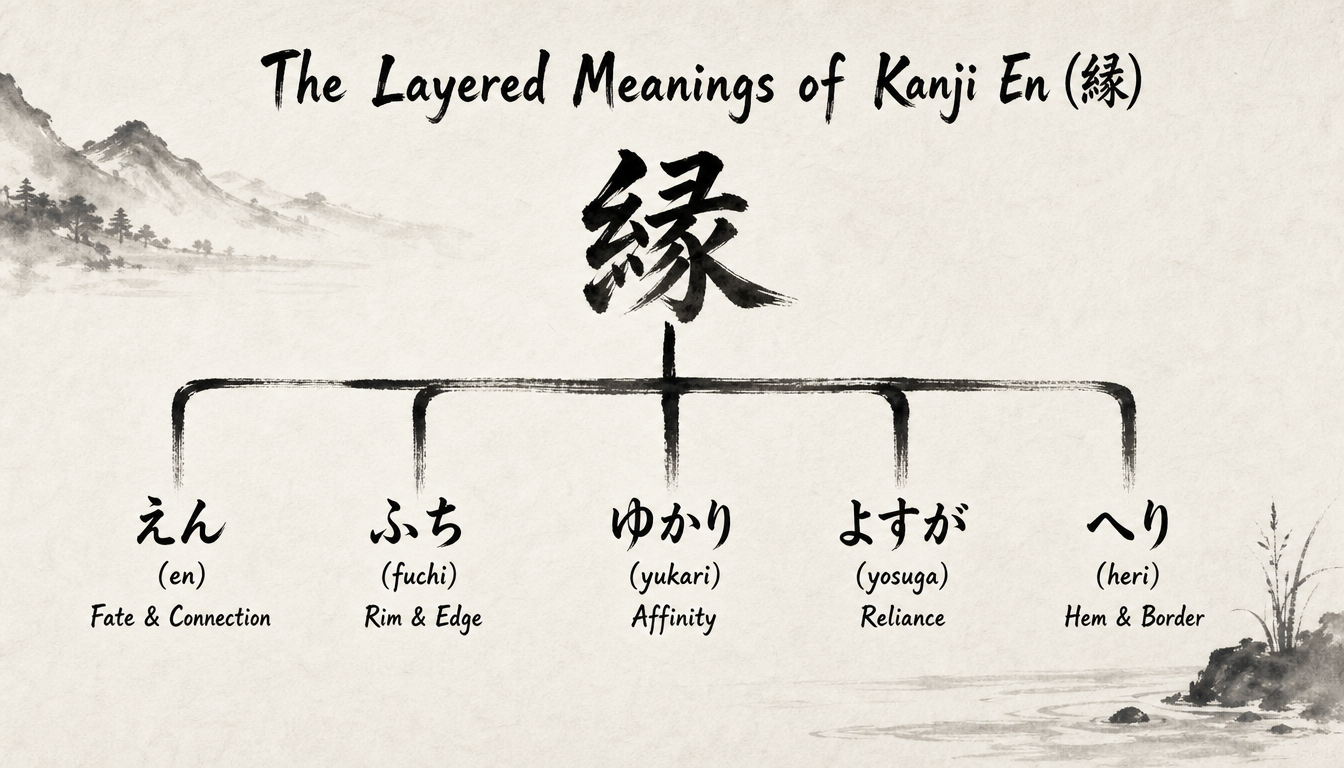
The kanji en (縁) is one of the most poetic characters in the Japanese language, holding meanings that span fate, destiny, soul-deep connection, and even the physical edge of a teacup. In this second volume of our Kanji of the Day series, we explore its multiple readings — en, fuchi, yukari, yosuga, heri — its Buddhist roots, and how it continues to shape Japanese ideas about relationships, chance encounters, and the unseen threads linking us all.
Kanji of the Day Vol.2 | Kanji 縁 (En): The Fate & Connection Kanji Linking Souls
The kanji en (縁) is one of those rare Japanese characters that carries an entire philosophy inside a single brushstroke. At its simplest, the kanji en means fate, destiny, or the invisible bond that draws two people together — yet it also describes something as physical as the edge of a tatami mat or the rim of a bowl. Few characters span the spiritual and the material so gracefully, which is why 縁 has become a favorite among tattoo seekers, mindfulness practitioners, and anyone drawn to the poetry of Japanese culture.
In this second volume of our Kanji of the Day series, we explore the layered meanings of 縁, its multiple readings, and how it continues to shape Japanese thinking about relationships, chance encounters, and the unseen threads connecting us all.
Discover Your Soul Kanji
Experience the depth of Japanese characters: each kanji carries timeless meaning, guiding your life's path.
No credit card required • 2-minute process
One-Line Definition of 縁
縁 (en) is a Japanese kanji meaning a mysterious bond or connection between people, things, or places — often translated as fate, destiny, affinity, or, in its physical sense, an edge or border.
Quick Overview of Kanji 縁
| Item | Detail |
|---|---|
| Character | 縁 |
| Traditional form (kyūjitai) | 緣 |
| Category | Jōyō kanji (regular-use) |
| Radical | 糸 (thread) |
| Strokes | 15 |
| Main on'yomi | エン (en) |
| Main kun'yomi | ふち (fuchi), ゆかり (yukari), よすが (yosuga), へり (heri) |
| JLPT level | N3 |
| Related concepts | 因縁 (innen), 血縁 (ketsuen), 縁起 (engi) |
縁 belongs to the standardized jōyō kanji list of 2,136 characters issued in 2010 by the Japanese Ministry of Education, meaning it appears in everyday newspapers, contracts, novels, and conversation.
The Multiple Readings of 縁: En, Fuchi, Yukari, Yosuga, Heri
One of the most fascinating features of the kanji en is that it carries at least five distinct readings, each unlocking a different shade of meaning. This kind of polysemy — where one character holds multiple native Japanese (kun'yomi) and Sino-Japanese (on'yomi) readings — is exactly what makes Japanese so layered.
えん (en) — The Sino-Japanese Reading
The most common reading is えん, the on'yomi inherited from Chinese. According to Kanjikana, 縁 read as en means "fate, destiny (especially as a mysterious force that binds two people together), relationship, bond, link, connection, family ties, affinity, opportunity, chance to meet someone." This is the reading you will hear in everyday phrases like go-en ga aru ("to have a connection") or en ga nai ("to have no fate together").
ふち (fuchi) — The Physical Edge
Read as ふち, the same kanji shifts entirely into the physical world. It refers to the edge of a river, the rim of a cup, the brim of a hat, or the border of a tatami mat. The thread radical (糸) becomes a literal outline — the line that defines where something ends.
ゆかり (yukari) — Affinity with a Place or Person
ゆかり expresses a softer, more poetic kind of connection — an affinity or relation with a particular person, place, or memory. A town might be described as yukari no chi, a place tied to someone's history or heart.
よすが (yosuga) — Something to Rely On
よすが is an older, literary reading. It evokes the sense of a person or thing one depends on — a kin, a clue, or an emotional anchor. You will most often encounter it in classical literature and poetry.
へり (heri) — Border or Hem
へり overlaps with ふち but leans toward fabric and textiles — the hem of a garment, the selvage of a cloth, the edging of a tatami mat. It is the most tactile reading of all.
These multiple readings aren't redundancy — they are layers. The kanji en literally contains both the metaphysical bond between souls and the physical border of a teacup, reminding us that connection and boundary are two sides of the same line.
The Core Meanings: Fate, Destiny, Connection, and Physical Edge

To truly appreciate the kanji en, it helps to see how its meanings cluster into two great families: the invisible and the visible.
Fate and Destiny (縁 = en)
In Japanese thought, en is not the dramatic, predestined fate of Greek tragedy. It is gentler, more ambient — a quiet acknowledgment that certain meetings, relationships, and opportunities were somehow meant to occur. When two strangers strike up a lifelong friendship after a chance encounter on a train, Japanese speakers might smile and say kore mo nani ka no en desu ne — "this too must be some kind of en."
This concept has deep Buddhist roots. In Buddhist philosophy, en corresponds to pratyaya — the indirect conditions that, alongside direct causes (因, in), shape every event in the universe. Nothing happens in isolation; every meeting is the fruit of countless invisible threads.
Connection and Relationship
Beyond fate, 縁 describes ongoing bonds: family ties, romantic relationships, professional partnerships, and even the connection one feels to an art form, a hometown, or a spiritual practice. The compound ketsuen (血縁) means "blood relation," while innen (因縁) carries the weight of karmic ties spanning lifetimes.
The Physical Edge
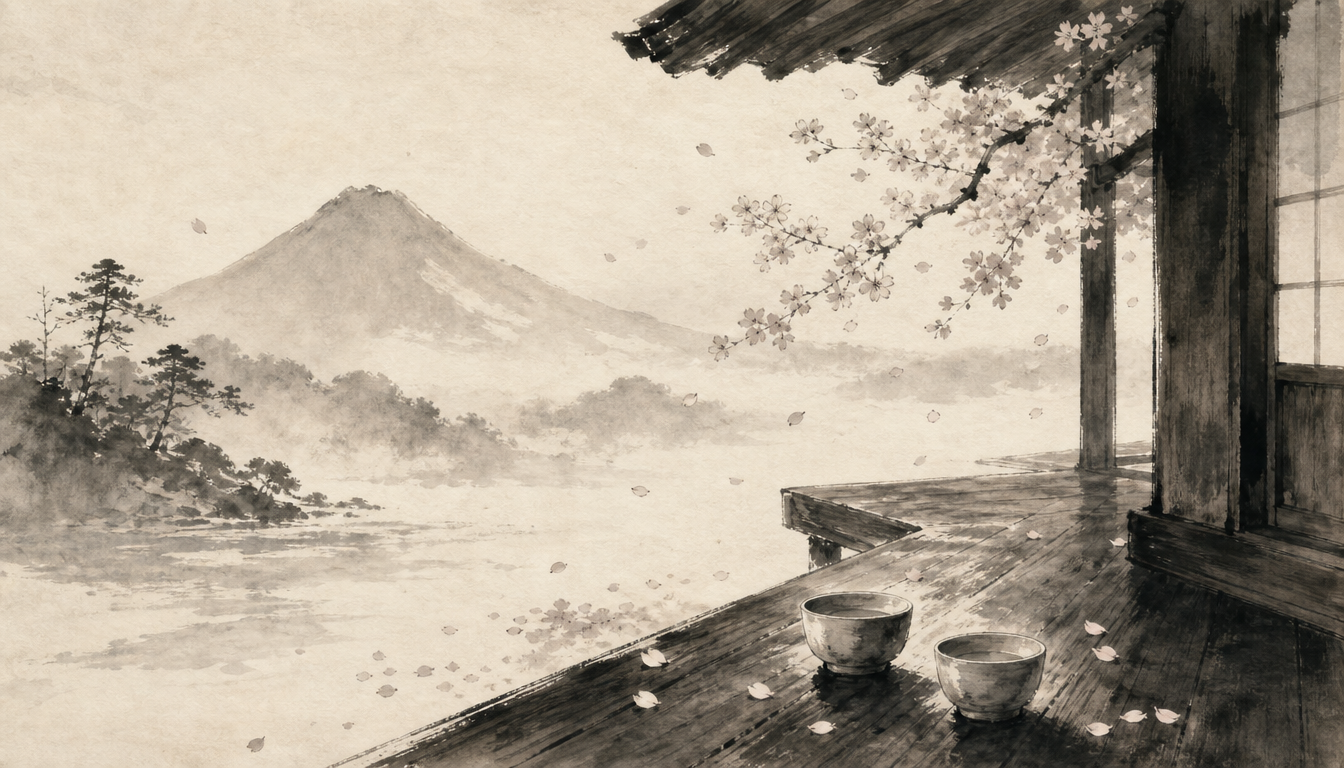
And then there is the grounded, tactile meaning — the edge, rim, border, or veranda. The engawa (縁側) is the famous wooden veranda of traditional Japanese homes, a liminal space between inside and outside where neighbors stop to chat. Even here, 縁 implies connection: the engawa is literally a threshold where relationships form.
This duality is part of what makes the kanji en such a profound choice for personal symbolism. It honors both the seen and the unseen — the boundaries we live within and the bonds that transcend them.
Etymology and Visual Structure
The character 縁 is built from two main components: the radical 糸 (thread, silk) on the left, and a phonetic-semantic element on the right. The thread radical is no accident. Across East Asian cultures, threads have long symbolized connection, lineage, and fate — think of the East Asian legend of the "red thread of fate" tying destined lovers together.
The right-hand component originally suggested a hem or edge in classical Chinese, which is why the character carries both "thread/connection" and "border/edge" meanings simultaneously. The traditional form, 緣 (kyūjitai), is still seen in older texts, calligraphy, and Chinese writing, while 縁 is the modern shinjitai form standardized for postwar Japanese use.
Common Compound Words Using 縁
Compounds reveal how deeply the kanji en is woven into Japanese vocabulary. Here are some of the most evocative:
- 縁起 (engi) — Origin, omen, or auspiciousness. Often used in phrases like engi ga ii ("a good omen").
- 因縁 (innen) — Karma, destiny, deep connection. Carries Buddhist weight.
- 血縁 (ketsuen) — Blood relation, kinship.
- 縁側 (engawa) — The wooden veranda of a traditional Japanese house.
- 縁談 (endan) — A marriage proposal or matchmaking discussion.
- 縁日 (ennichi) — A festival day at a Shinto shrine or Buddhist temple, considered a day of special spiritual connection.
- 無縁 (muen) — Without connection, unrelated, or unaffiliated.
- 縁起物 (engimono) — Lucky charms or auspicious objects.
Concrete Examples of 縁 in Daily Life
To anchor these abstract meanings, here are everyday situations where 縁 appears naturally:
- Meeting a future spouse at a small café — Japanese speakers might describe this as fushigi na en ("a mysterious en").
- Reconnecting with a childhood friend after twenty years — en ga aru ("we have en together").
- The wooden engawa where grandparents sip tea and watch the rain — a physical en that frames the home.
- Choosing a tattoo of 縁 to honor a soulmate or spiritual journey — using the character's symbolic depth as a personal anchor.
| Context | Appropriate use of 縁 | Misuse to avoid |
|---|---|---|
| Describing a chance meeting | "これも何かの縁ですね" (This must be some kind of en.) | Using it to mean simple coincidence with no emotional weight |
| Tattoo or personal symbol | Choosing 縁 to represent meaningful bonds or spiritual fate | Pairing it with characters that contradict its gentle nuance |
| Physical description | "コップの縁" (the rim of a cup) | Confusing 縁 (fuchi) with 隅 (sumi, "corner") |
Common Misunderstandings About the Kanji En
| Misconception | Accurate Understanding |
|---|---|
| "縁 means the same as 運命 (unmei, destiny)." | 運命 implies a fixed, almost deterministic fate. 縁 is softer — a network of conditions and affinities that make connection possible, but never forced. |
| "縁 only refers to romantic relationships." | 縁 covers all kinds of bonds: family, friends, mentors, places, even objects. Romance is only one expression of it. |
| "縁 is purely spiritual and has no concrete meaning." | The same kanji also means a literal edge, rim, or border — a tangible boundary line. |
| "All readings of 縁 are interchangeable." | えん, ふち, ゆかり, よすが, and へり each carry distinct nuances and appear in different contexts. |
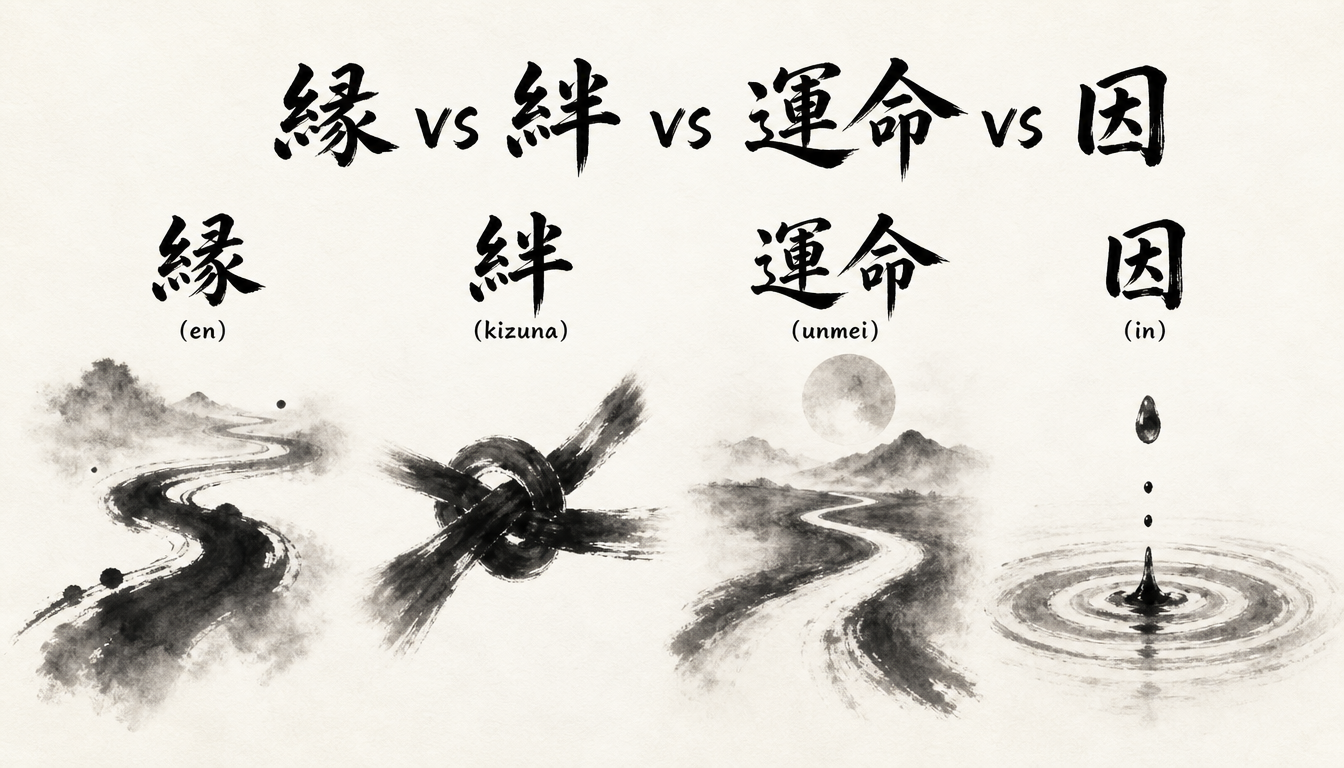
Related Terms and How They Differ from 縁
| Term | Meaning | Difference from 縁 |
|---|---|---|
| 運命 (unmei) | Fate, destiny | Stronger, more deterministic; lacks the warm, relational nuance of en. |
| 絆 (kizuna) | Bond, emotional tie | Emphasizes the strength of an existing bond; en emphasizes how the bond came to be. |
| 因 (in) | Direct cause | In Buddhist thought, 因 is the seed; 縁 is the surrounding conditions that allow the seed to grow. |
| 関係 (kankei) | Relationship, relation | A neutral, descriptive term. En adds a sense of mystery and meaning. |
| 絆 vs 縁 | — | 絆 is the rope; 縁 is the reason the rope exists at all. |
How to Use 縁 in Personal Symbolism and Self-Expression
For those drawn to Japanese aesthetics — whether you're planning a meaningful tattoo, choosing a kanji for calligraphy practice, or seeking a daily mantra — 縁 offers extraordinary depth. It is a character that doesn't shout. It whispers about the invisible threads connecting your life to the people, places, and moments that shape you.
If you're searching for a kanji that genuinely reflects your inner story, generic picks like 愛 (love) or 力 (strength) often miss the nuance you actually want to express. This is exactly where a tool like Oracle Kanji Writer, a personalized Soul Kanji diagnosis service, becomes valuable. By analyzing your name, birthdate, and personal qualities, it recommends a kanji that resonates with your spiritual essence — complete with pronunciation, layered meanings, and cultural context curated by Japanese creators. For someone resonating with the philosophy of en, the tool can surface characters that honor connection, fate, and authenticity without falling into cliché.
Practical ways to live with the kanji en:
- Use it as a journaling prompt — reflect weekly on the en (connections) that shaped your week.
- Place a calligraphy print of 縁 in your home to honor the unseen threads of your life.
- Choose it as a tattoo only after understanding all its readings, so the meaning aligns with your intention.
- Gift a 縁-themed keepsake to someone you share a meaningful bond with.
FAQ
Do Japanese say yen or en?
In Japanese, the currency and the kanji 円 (and 縁) are both pronounced en — not yen. The "y" in "yen" comes from older romanization systems used by Western traders centuries ago, when the sound was closer to "yen." Today, Japanese speakers say "en" in daily conversation, though "yen" remains the standard English spelling for the currency.
Is the kanji 縁 a jōyō kanji?
Yes. 縁 is included in the 2010 jōyō kanji list of 2,136 characters, meaning it is part of the standardized set taught in Japanese schools and used in official documents, newspapers, and general publications.
What is the difference between 縁 and 絆?
縁 (en) refers to the mysterious circumstances or fate that brought a connection into being. 絆 (kizuna) refers to the strength and emotional weight of a bond once it exists. En is the origin story; kizuna is the rope itself.
Can 縁 be used as a name in Japanese?
Yes. 縁 appears in given names, often read as ゆかり (yukari) or えん (en), expressing a wish for the child to be blessed with meaningful connections throughout life.
Conclusion: Why the Kanji En Endures
The kanji en (縁) endures because it captures something universal yet deeply Japanese — the quiet truth that every meaningful relationship, every chance encounter, every doorway in our lives exists because of threads we cannot see. From the rim of a teacup to the bond between soulmates, 縁 reminds us that boundaries and connections are inseparable.
Key takeaways:
- The kanji en (縁) carries multiple readings — えん, ふち, ゆかり, よすが, へり — each unlocking different shades of meaning.
- Its core meanings span fate, destiny, connection, and the physical edge or border.
- 縁 has deep Buddhist roots, referring to the indirect conditions that shape every event.
- It differs subtly but importantly from related concepts like 運命, 絆, and 因.
- For personal symbolism, 縁 is among the most poetic and culturally rich kanji you can choose.
If 縁 resonates with you, consider exploring other connection-themed characters like 結 (musubi, "to tie"), 絆 (kizuna), or 和 (wa, "harmony") — or let a personalized tool guide you toward the kanji that mirrors your own soul's threads.
Discover Your Soul Kanji
Experience the depth of Japanese characters: each kanji carries timeless meaning, guiding your life's path.
No credit card required • 2-minute process