Kanji of the Day Vol.13 | "Kanji 力 (Chikara): The Strength & Power Kanji Awakening Your Inner Force"

Explore 力 (chikara), the Japanese strength kanji and power kanji that anchors an entire vocabulary of effort, ability, and resilience. In this Kanji of the Day issue, we unpack its two-stroke structure, its kun'yomi and on'yomi readings, its oracle-bone origins, and what choosing this powerful character says about you — whether as a tattoo, a personal symbol, or a daily reminder of your inner force.
Kanji of the Day Vol.13 | Kanji 力 (Chikara): The Strength & Power Kanji Awakening Your Inner Force
Few characters in Japanese carry as much raw, immediate energy as 力. Pronounced chikara, this is the kanji chikara that anchors the entire vocabulary of strength, force, and capability in the Japanese language. Whether you're drawn to it as a tattoo, a personal mantra, or a symbol of resilience during a hard chapter of life, the strength kanji 力 speaks across cultures with elegant simplicity. In this Kanji of the Day issue, we unpack the power kanji from every angle — its shape, sound, soul, and symbolism.
Discover Your Soul Kanji
Experience the depth of Japanese characters: each kanji carries timeless meaning, guiding your life's path.
No credit card required • 2-minute process
Quick Snapshot: What 力 (Chikara) Means
At its core, 力 means power, strength, force, or ability. It is one of the most foundational characters a learner encounters, and one of the most spiritually loaded for those choosing kanji as personal symbols. The shape is minimal, almost primal — yet it forms the backbone of dozens of compound words related to effort, energy, and capability.
| Item | Detail |
|---|---|
| Kanji | 力 |
| Primary Meaning | Power, strength, force, ability |
| Category | Jōyō kanji (elementary level) |
| Radical | 力 (chikara / power) |
| Related Concepts | Effort, vitality, capability, influence |
| Contrast Concepts | 弱 (weakness), 静 (stillness) |
| Frequency | Extremely high — daily-use kanji |
Stroke Count and Structure of 力 (Chikara)
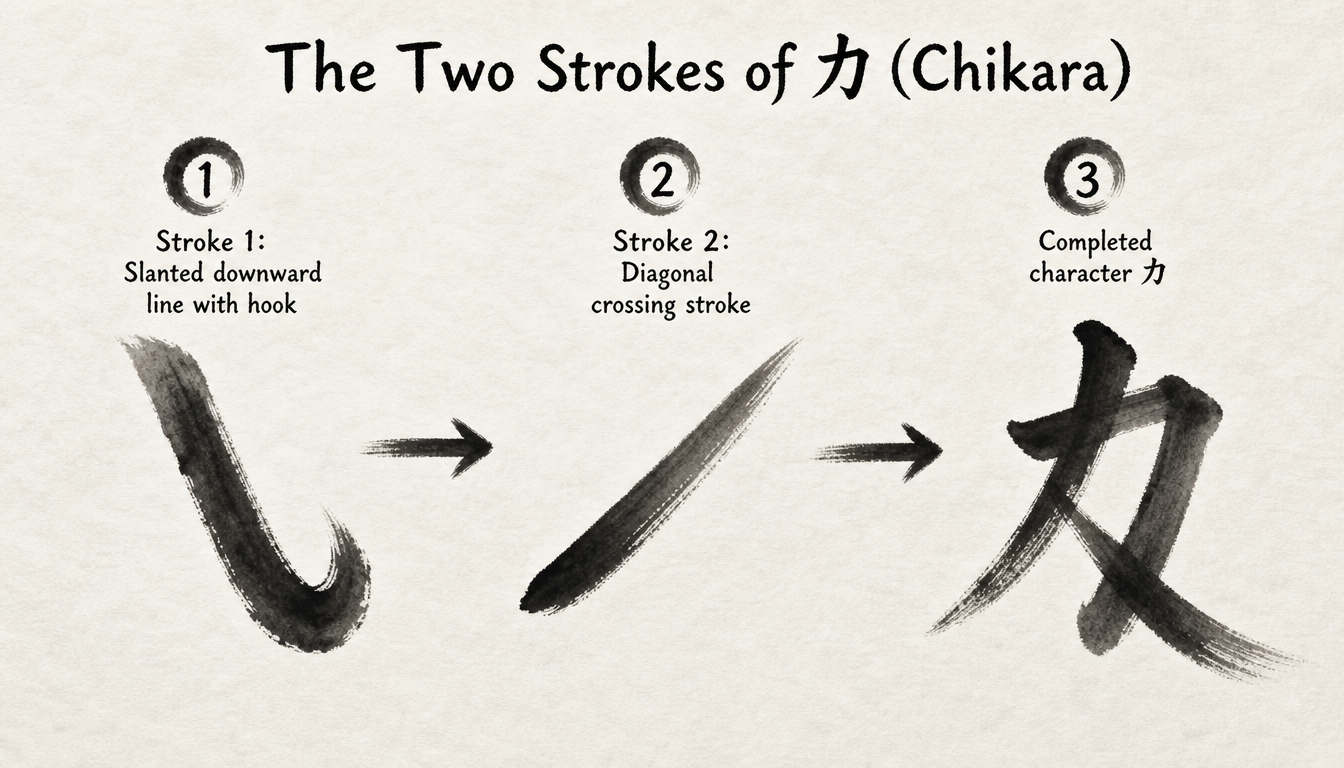
One of the reasons 力 captivates learners and tattoo enthusiasts alike is its astonishing economy. According to Jiten Online, the kanji 力 has just 2 strokes, making it one of the simplest characters in the entire Japanese writing system. Yet that simplicity is precisely its power — every stroke must carry weight.
The diagram below illustrates how the two strokes build the character from start to finish.
How the Two Strokes Flow
The first stroke is a downward, slightly slanted line that sweeps from upper left to lower right, ending in a small hook. The second stroke crosses through it diagonally, suggesting a flexed arm or a bent bow ready to release. Calligraphers often describe writing 力 as a single breath: tension gathers, then snaps outward.
力 is also a radical in its own right — meaning it acts as a building block in many other kanji related to effort or capability, such as 助 (help), 努 (endeavor), 勉 (diligence), and 動 (movement). Wherever you see 力 tucked inside another character, you're seeing a hint of muscle or motion at work.
Because 力 has only two strokes, every millimeter shows. Practitioners of shodō (Japanese calligraphy) treat it as a deceptively hard character: the angle, balance, and hook of each line must be perfect, or the character looks weak rather than strong.
Readings and Pronunciations: On'yomi and Kun'yomi of the Power Kanji
Like most Japanese kanji, 力 has multiple readings depending on context. According to Self-Taught Japanese, the kun-reading is ちから (chikara), and the on-readings are りょく (ryoku) and りき (riki).
Kun'yomi: ちから (chikara)
The kun'yomi — the native Japanese reading — is chikara. This is the form you'll hear when 力 stands alone as a word meaning "strength" or "power." It's the reading that carries the most emotional weight in everyday speech. When a Japanese parent tells a child "chikara wo dashite!" (give it your strength!), this is the word being used.
On'yomi: りょく (ryoku) and りき (riki)
The on'yomi readings — derived from ancient Chinese pronunciations — appear when 力 is part of a compound word. Ryoku is the more common of the two, showing up in words like 努力 (doryoku, effort) and 体力 (tairyoku, physical stamina). Riki appears in slightly older or more dramatic compounds like 馬力 (bariki, horsepower) and 力士 (rikishi, sumo wrestler).
| Reading | Type | When It's Used | Example |
|---|---|---|---|
| ちから (chikara) | Kun'yomi | Standalone word for strength | 力を込める (chikara wo komeru) — to put power into |
| りょく (ryoku) | On'yomi | Common compounds | 努力 (doryoku) — effort |
| りき (riki) | On'yomi | Traditional / dramatic compounds | 力士 (rikishi) — sumo wrestler |
From Oracle Bone to Modern Kanji: The Origin of 力
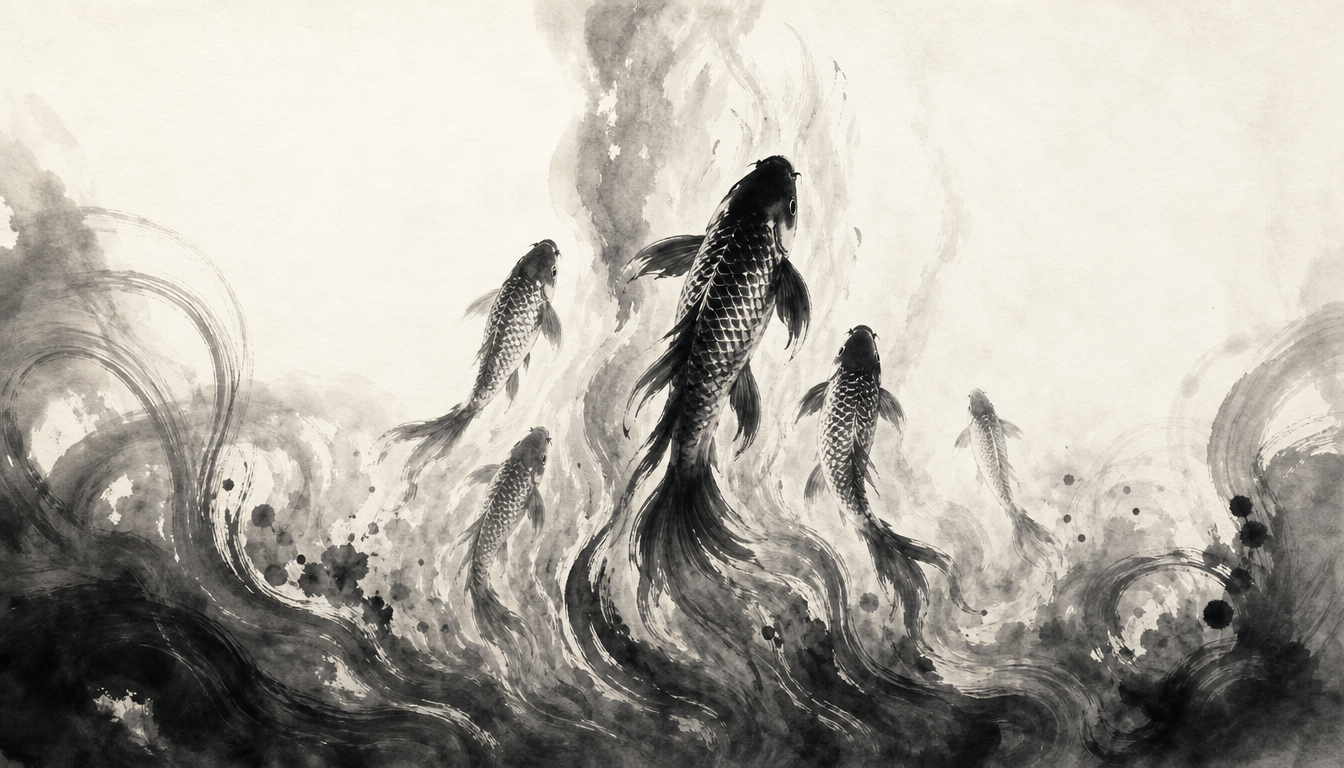
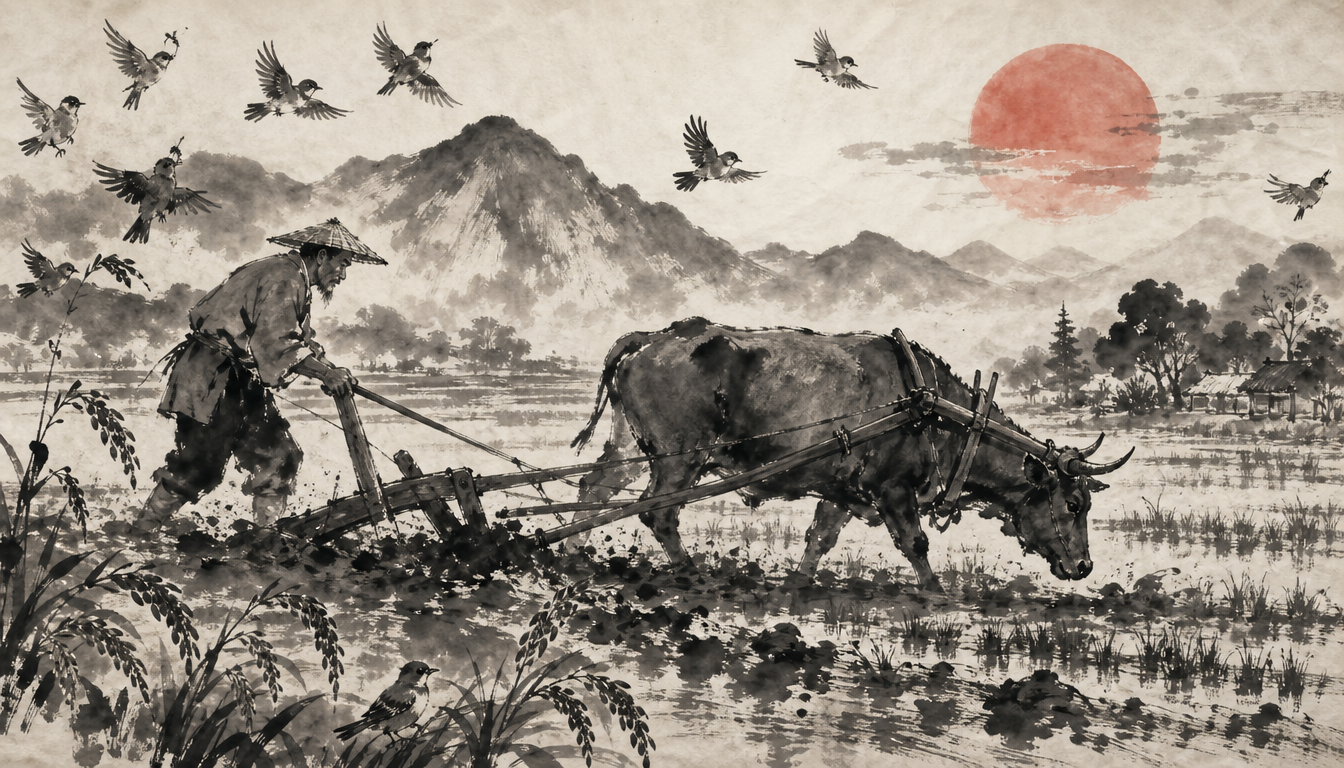
The visual story of 力 is one of the most evocative in the Japanese writing system. Most scholars trace its earliest form back to ancient Chinese oracle bone script, where it depicted a plough — a wooden tool used to break up earth for farming. To push a plough through hard soil required muscle, persistence, and bodily force. Over centuries, that image became abstracted into the two clean strokes we know today.
Some interpretations also see in 力 the silhouette of a flexed human arm, with the bicep curved and tension held. Whether plough or arm, the meaning is consistent: physical exertion translated into useful force. This is why the strength kanji feels grounded rather than abstract — it was born from the body, not from theory.
In agrarian East Asia, strength wasn't admired as raw aggression — it was admired as the capacity to feed a family, build a home, and endure hardship. The kanji 力 still carries that quiet, productive sense of power: not domination, but doing what needs to be done.
Compound Words: How 力 Appears in Daily Japanese
Because 力 is such a fundamental concept, it forms an enormous family of compound words. Each compound shades the basic meaning of "power" in a slightly different direction — physical, mental, social, or spiritual.
- 努力 (doryoku) — Effort, diligence. The image is of strength applied steadily over time, not in a single burst.
- 体力 (tairyoku) — Physical stamina, bodily strength. Used when talking about fitness, endurance, or recovery.
- 能力 (nōryoku) — Ability, capability. Strength in the sense of what one is capable of doing.
- 権力 (kenryoku) — Authority, political power. The social form of force.
- 魅力 (miryoku) — Charm, allure. Yes — even charisma is a kind of "power" in Japanese.
- 協力 (kyōryoku) — Cooperation. Strength shared between people.
Notice how 力 stretches from the most physical (体力) to the most intangible (魅力). The kanji doesn't moralize about what kind of power is good or bad — it simply names the capacity to act and influence.
Symbolism, Philosophy, and Choosing 力 as a Personal Kanji
For those drawn to Japanese characters as personal symbols — whether for a tattoo, a piece of art, or a quiet daily reminder — 力 is one of the most resonant choices. It's bold without being aggressive, simple without being shallow.
What Choosing 力 Says About You
People who connect with the power kanji often describe themselves as resilient, action-oriented, or in a season of life that demands grit. 力 isn't about being the loudest or the most dominant — it's about the quiet certainty of being able to act when action is required. It resonates strongly with:
- Athletes and martial artists who train the body
- Entrepreneurs and creators building something from nothing
- People recovering from illness, grief, or burnout
- Anyone embracing a season of personal transformation
As a Tattoo or Wearable Symbol
Visually, 力 is one of the cleanest kanji you can wear. Its two strokes balance well in almost any placement — wrist, forearm, ribs, behind the ear, or as a small accent within a larger design. It pairs beautifully with other single-character kanji like 心 (heart), 道 (way), or 静 (stillness) to create layered meaning.
Before getting any kanji tattoo, double-check stroke direction and orientation with a native source. Mirrored or rotated kanji are one of the most common mistakes in Western tattoo studios — and 力, with only two strokes, is especially unforgiving when drawn incorrectly.
Common Misunderstandings About the Strength Kanji
| Misunderstanding | The Reality |
|---|---|
| "力 only means physical strength." | It covers physical, mental, social, and even emotional power — including charm and influence. |
| "力 is always read as chikara." | Alone it's chikara, but in compounds it shifts to ryoku or riki. |
| "力 implies aggression or domination." | Its agricultural origin points toward productive, sustaining strength — not violence. |
| "力 and 強 mean the same thing." | 力 is the noun "power" itself; 強 (tsuyoi) is the adjective "strong." |
Related Kanji in the Same Family of Meaning
If 力 resonates with you, you may also feel drawn to neighboring characters in the same emotional family:
- 強 (kyō / tsuyoi) — Strong. More about the quality of being strong than the noun of power.
- 勇 (yū) — Courage, bravery. The willingness to use one's strength.
- 努 (do) — Endeavor, striving. Strength applied through patience.
- 動 (dō) — Movement, motion. Strength turned into action.
FAQ
What is the kanji for power and strength?
The most common kanji for power and strength is 力, read as chikara when it stands alone. It's a two-stroke character that anchors a huge family of compound words related to effort, ability, and capability, from 努力 (effort) to 体力 (stamina) to 能力 (ability).
Is 力 a good kanji for a tattoo?
Yes — 力 is one of the most visually balanced and culturally clear kanji for a tattoo. Its meaning is unambiguous, its shape is elegantly minimal, and it carries no negative connotations in Japanese. Just be sure your artist replicates the stroke direction faithfully so it reads correctly to a native eye.
What is the hardest kanji of all time?
While 力 is among the simplest kanji with only two strokes, Japanese also contains famously complex characters with dozens of strokes — some rare ceremonial or noodle-shop kanji exceed 50 strokes. 力 sits at the opposite extreme: maximum meaning, minimum ink.
Discover the Kanji That Represents You
The kanji chikara is just one of thousands of characters that can mirror a person's inner world. If 力 speaks to your current chapter — strength, effort, the will to act — that's a powerful sign. But your Soul Kanji may be something subtler, something you haven't met yet. Oracle Kanji Writer takes your name, birthdate, and blood type and pairs you with a personalized kanji curated by Japanese creators — complete with readings, nuanced meanings, and a personal message. It takes two minutes, no credit card required, and the strength kanji you discover might just be the one that's been waiting for you.
Summary
- 力 (chikara) is the foundational Japanese kanji for power, strength, force, and ability.
- It has only 2 strokes, making it one of the simplest yet most expressive characters.
- Its kun'yomi is ちから (chikara); its on'yomi readings are りょく (ryoku) and りき (riki).
- The character likely originated from images of a plough or a flexed arm — strength as productive capacity.
- As a personal symbol, 力 represents resilience, action, and the quiet certainty of being able to act when it matters most.
Discover Your Soul Kanji
Experience the depth of Japanese characters: each kanji carries timeless meaning, guiding your life's path.
No credit card required • 2-minute process