Kanji of the Day Vol.11 | "Kanji 水 (Mizu): The Water Kanji Flowing with Life & Soul's Wisdom"

The kanji 水 (mizu) means far more than water. With just 4 strokes, this JLPT N5 character holds centuries of meaning — purity, flow, adaptability, and life itself. Explore the readings, symbolism, common compounds, and why the water kanji resonates so deeply as a personal or tattoo symbol in Japanese culture.
Kanji 水 (Mizu): The Water Kanji Flowing with Life & Soul's Wisdom
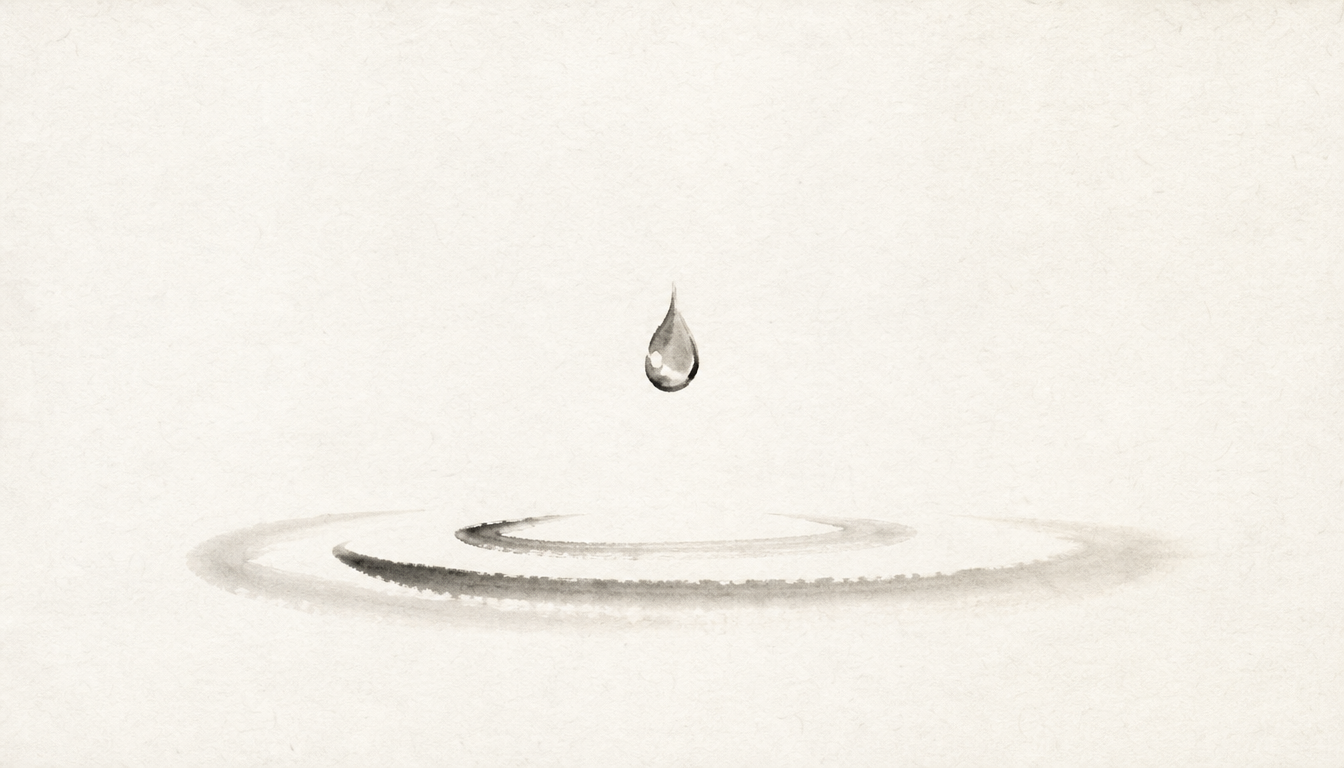
The kanji mizu (水) is one of the first characters every Japanese learner meets — yet its depth runs far beyond a simple translation. As the water kanji, 水 carries the rhythm of rivers, the patience of rain, and a quietly powerful philosophy of adaptability. Understanding the true mizu meaning opens a doorway into Japanese aesthetics, Zen thought, and the way a single brushstroke can hold an entire worldview. This is Vol.11 of our Kanji of the Day series — one character, one soul, every day.
Discover Your Soul Kanji
Experience the depth of Japanese characters: each kanji carries timeless meaning, guiding your life's path.
No credit card required • 2-minute process
The Essence of 水: A One-Line Definition
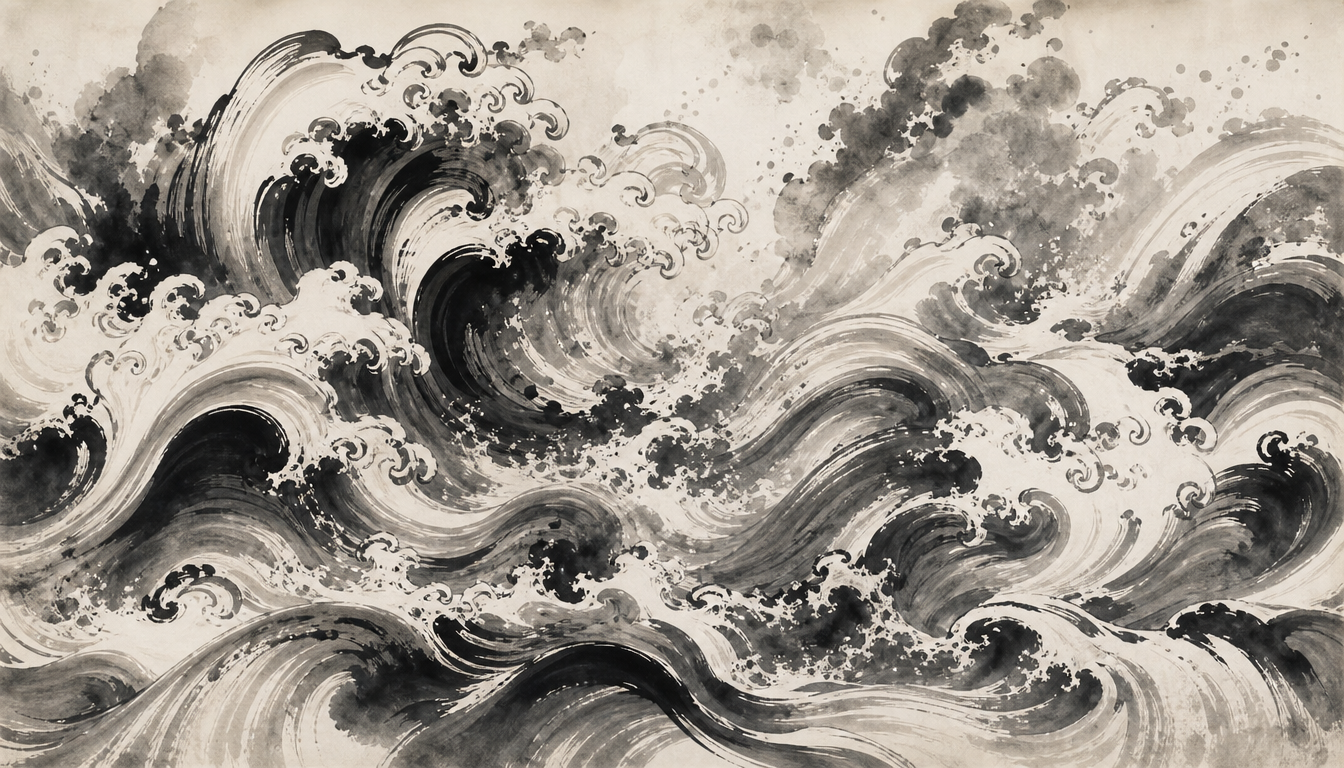
水 (mizu) is the Japanese kanji meaning water — both the literal liquid and the broader symbol of flow, purity, and life itself.
It belongs to the foundational set of nature kanji (alongside 火 fire, 木 tree, 金 metal, 土 earth) that form the elemental vocabulary of East Asian thought. When Japanese people see 水, they don't just read "water" — they feel coolness, cleanliness, and the soft, unstoppable motion of a stream.
Quick Facts About the Water Kanji
| Attribute | Details |
|---|---|
| Kanji | 水 |
| Kun'yomi (Japanese reading) | みず (mizu) |
| On'yomi (Sino-Japanese reading) | スイ (sui) |
| Primary meaning | Water |
| Stroke count | 4 strokes |
| JLPT level | N5 (entry level) |
| School grade | Taught in Grade 1 |
| Category | Nature / Elemental kanji |
| Related concepts | 火 (fire), 氷 (ice), 海 (sea), 川 (river) |
The readings are confirmed by the Wikipedia list of kanji radicals: kun-reading みず and on-reading スイ. Its status as a Grade 1, JLPT N5 character comes from the Kyōiku kanji standard.
Detailed Breakdown: Reading 水 the Right Way
The kanji mizu has two distinct reading systems, and knowing when to use each is the difference between sounding natural and sounding like a translation app.
Kun'yomi: みず (mizu)
This is the native Japanese reading, used when 水 stands alone or appears with hiragana okurigana. When you ask for a glass of water in a restaurant — mizu o kudasai (水をください) — this is the reading you'll hear. It's intimate, everyday, and warm.
On'yomi: スイ (sui)
The Sino-Japanese reading, derived from the original Chinese pronunciation. It appears almost exclusively in compound words (jukugo) — think 水道 (suidō, "water supply"), 水曜日 (suiyōbi, "Wednesday"), or 水泳 (suiei, "swimming"). When 水 joins another kanji, it usually puts on its formal "sui" attire.
A simple rule of thumb: 水 alone = mizu. 水 + another kanji = usually sui. Native speakers internalize this naturally, but for learners it's a reliable shortcut.
Stroke Count and Visual Form
With just 4 strokes, 水 is deceptively simple. The central vertical stroke represents the main current, while the flowing strokes on either side evoke smaller streams branching off — a pictographic memory of flowing water captured in oracle bone script over three thousand years ago.
The Symbolism of Mizu: Why Water Means More Than Water
To understand the true mizu meaning, you have to step outside Western dictionaries and into Japanese cultural sensibility. Water is not merely a substance — it is a teacher.
Purity and Cleansing
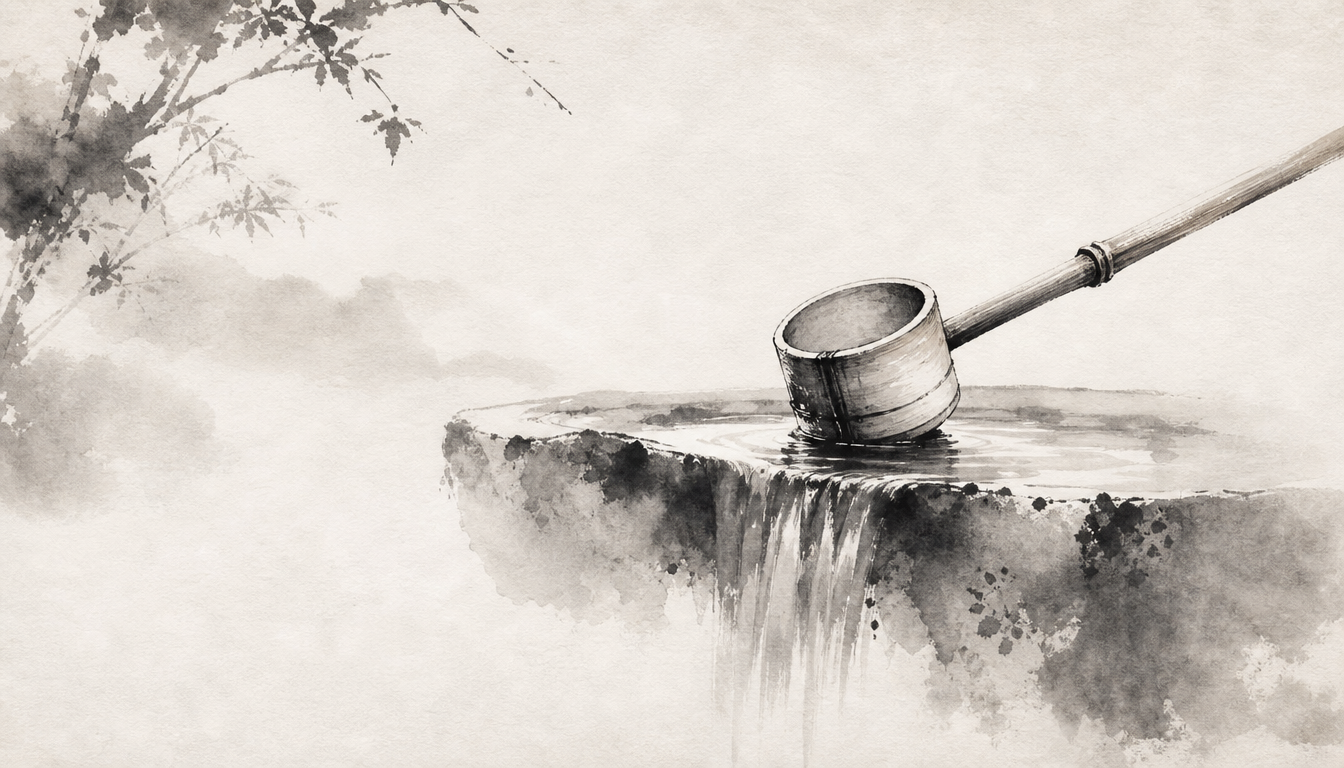
In Shinto practice, water purifies. Before entering a shrine, visitors rinse their hands and mouth at a chōzuya (water pavilion). The act resets the spirit. This is why 水 carries an aura of freshness, sincerity, and starting anew — qualities many tattoo seekers find deeply personal.
Flow and Adaptability
Water has no fixed shape. It takes the form of whatever holds it, yet it can carve canyons through stone. This paradox — softness with unstoppable power — is one of the most quoted images in Zen and Taoist thought. People who choose 水 as a soul kanji often value flexibility, resilience, and the wisdom of yielding without breaking.
Life and Renewal
Rice paddies, rain festivals, sacred springs — Japanese civilization is built on water. The kanji therefore symbolizes the source of all life, sustenance, and continuity.
水 in Everyday Japanese: Real Examples
Abstract symbolism is beautiful, but the water kanji earns its keep through everyday use. Here are common compounds that bring 水 to life:
- 水道 (suidō) — water supply, tap water. The infrastructure of modern life.
- 水泳 (suiei) — swimming. A hobby, a sport, a summer memory.
- 水曜日 (suiyōbi) — Wednesday. Yes, the middle of the week is literally "water day" in Japanese.
- 水素 (suiso) — hydrogen. Modern science still leans on this ancient character.
- 水分 (suibun) — moisture, hydration. What your skincare bottle promises.
- 香水 (kōsui) — perfume, literally "fragrant water."
Notice the range: from plumbing to perfume, from chemistry to calendars. 水 quietly threads through daily Japanese life.
Good Example vs. Awkward Example
| Context | Natural Use | Awkward Use |
|---|---|---|
| Ordering water at a café | 水をください (mizu o kudasai) | 水道をください (suidō o kudasai — "give me plumbing") |
| Tattoo with single character | 水 alone, brushed in sumi-e style | 水 stretched or mirrored (loses meaning) |
| Describing a calm personality | 水のような人 ("a person like water") | Literal translation forcing English idioms |
Common Misunderstandings About the Kanji Mizu
Because 水 looks simple, learners and tattoo enthusiasts often underestimate its nuances. The diagram below illustrates how a few key misconceptions map against the cultural reality.
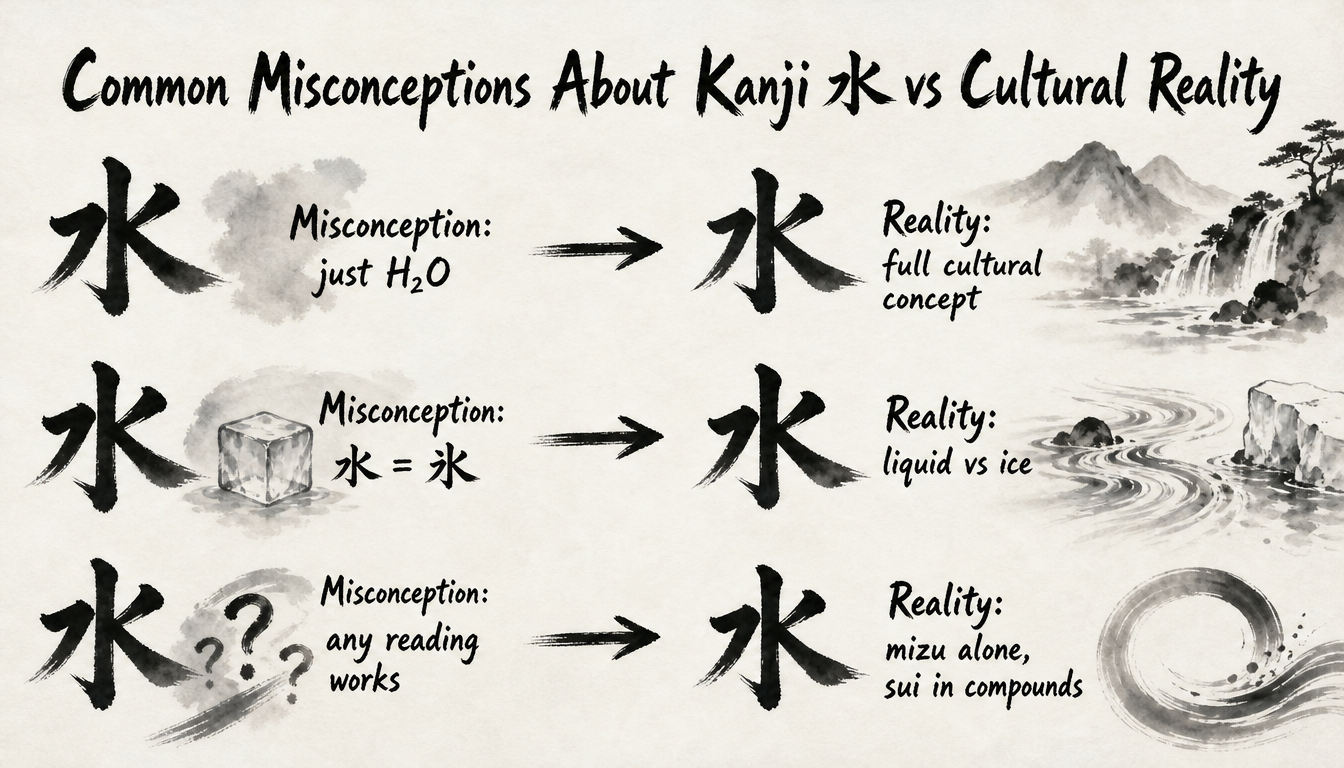
| Misconception | The Reality |
|---|---|
| "水 just means H₂O." | It also evokes purity, flow, adaptability, and life force — a full cultural concept. |
| "水 and 氷 (ice) are interchangeable." | 氷 specifically means ice, a frozen state. 水 is the liquid and the broader symbol. |
| "Any reading works in any context." | Solo use takes mizu; compounds almost always take sui. |
| "More strokes equals more meaning." | 水's power lies in its simplicity — only 4 strokes hold an entire philosophy. |
Related Kanji: The Water Family
水 doesn't live alone. It belongs to a network of water-themed characters, and many of them include the radical form 氵 (called sanzui, the "three drops of water" radical) on their left side.
| Kanji | Meaning | How It Differs from 水 |
|---|---|---|
| 氷 (kōri) | Ice | Frozen water — adds a single stroke to suggest crystallization |
| 海 (umi) | Sea, ocean | Vast saltwater body; uses the 氵 radical |
| 川 (kawa) | River | Flowing water in a specific channel; pictographic three lines |
| 泉 (izumi) | Spring, fountain | Water emerging from the earth — origin and source |
| 湖 (mizuumi) | Lake | Still, contained water; uses both 水 imagery and 氵 |
Each member of the family expresses a different mood of water. Choosing among them — for a tattoo, a journal title, or a personal motto — is a way of choosing which face of water resonates most with your spirit.
Choosing 水 as a Personal or Soul Kanji
If 水 feels like it's calling to you, you're in good company. The water kanji is often chosen by people who identify with calm strength, emotional intelligence, or a life philosophy of going with the flow rather than forcing outcomes.
People drawn to 水 tend to value adaptability over rigidity, listening over speaking, and quiet persistence over loud effort. Ask yourself: do you bend around obstacles, or break against them? Water teaches the first path.
For Tattoo Designs
水 is visually balanced and translates beautifully into sumi-e brushwork. A few practical considerations:
- Confirm stroke order with a native source before inking. The flow of strokes is part of the meaning.
- Avoid mirroring or rotating the character. A reversed 水 is meaningless to a Japanese reader.
- Consider placement: forearm, shoulder blade, and ribcage work well for the character's vertical balance.
- Pair carefully: 水 + 心 (heart) suggests a peaceful spirit; 水 + 道 (way) evokes "the way of water," a Zen-flavored phrase.
For Mindfulness and Personal Symbolism
You don't need a tattoo to live with 水. Many people write the character in a journal, set it as a phone wallpaper, or hang a calligraphy print at home as a daily reminder to stay fluid in difficult moments.
FAQ
What does water Mizu mean in Japanese?
In Japanese, 水 (mizu) literally means water — the liquid you drink, the rain that falls, the rivers that flow. But culturally it carries a much wider meaning: purity, life, adaptability, and the calm strength of something that yields yet endures. It is also one of the classical elements in East Asian cosmology, ranking alongside fire, wood, earth, and metal.
What does "mizu" mean spiritually?
Spiritually, mizu represents purification, renewal, and the wisdom of flow. In Shinto, water cleanses both body and spirit before approaching the sacred. In Zen and Taoist-influenced thought, water is the ultimate teacher — soft enough to take any shape, yet patient enough to wear down stone. Choosing 水 as a personal symbol often reflects a values system centered on flexibility, emotional clarity, and quiet inner strength.
Is 水 a good kanji for a tattoo?
Yes — 水 is one of the most culturally authentic and visually elegant kanji for a tattoo. Its four strokes are balanced, it reads instantly to any Japanese viewer, and its symbolism (flow, purity, adaptability) is universally respected. Just confirm the stroke order with a reliable source and never mirror or stylize it beyond recognition.
Summary: Living with the Water Kanji
The kanji mizu (水) is a small character with an ocean of meaning. To recap what makes the water kanji so enduring:
- Readings: mizu (kun'yomi) when alone, sui (on'yomi) in compounds.
- Structure: 4 strokes, JLPT N5, taught in Grade 1 — foundational yet profound.
- Mizu meaning: not just water, but purity, flow, life, and adaptability.
- Cultural weight: central to Shinto purification, Zen philosophy, and daily Japanese vocabulary.
- Personal symbol: ideal for those who value flexibility, calm strength, and emotional clarity.
If 水 resonates but you're curious whether another character might fit your inner essence even more precisely, consider exploring a personalized diagnosis. Oracle Kanji Writer uses your name, birthdate, and blood type to recommend a Soul Kanji aligned with your spirit — complete with readings, nuanced meanings, and culturally accurate context. Whether your character turns out to be the flowing kanji mizu or something entirely unexpected, the journey of discovery itself is part of the gift.
Discover Your Soul Kanji
Experience the depth of Japanese characters: each kanji carries timeless meaning, guiding your life's path.
No credit card required • 2-minute process