Japanese Symbol for Strength or Symbol of Softness? Why Gentle Kanji Age Better

Most people searching for the Japanese symbol for strength land on 強 or 力 and stop there. Both are accurate, yet they mean different things: one describes resilience, the other raw power. This guide breaks down their origins, stroke counts, and connotations, clears up common mix-ups like 元気, and explains why softer characters such as 柔 (pliancy) and 和 (harmony) often carry strength more durably over a lifetime, especially for tattoos and personal symbols.
The Japanese symbol for strength is usually 強 (tsuyoi/kyō), meaning resilient, tough, or hard to overcome, or 力 (chikara), meaning power, force, and physical ability. Both are accurate. Neither is the only kanji that expresses strength, and for many people a gentler character like 和 or 柔 carries the same idea with more staying power.
Quick Reference: The Japanese Symbol for Strength at a Glance
| Item | Details |
|---|---|
| Primary kanji | 強 (resilient strength), 力 (power, force, ability) |
| Readings | 強: tsuyoi (kun), kyō / gō (on) · 力: chikara (kun), riki / ryoku (on) |
| Stroke count | 強: 11 strokes · 力: 2 strokes |
| Category | Kanji, Japanese writing and symbolism |
| Related concepts | 勇 (courage), 勝 (victory), 柔 (softness, pliancy), 和 (harmony) |
| Antonym | 弱 (weak) is the listed antonym of 強 |
| Common uses | Tattoos, calligraphy, personal mottos, gifts, design work |
According to My Kanji, 強 is the clearest single-character answer when you mean resilient strength, while 力 fits raw power or capability. Wiktionary lists 弱 (weak) as its direct antonym and notes it as a second-grade kyōiku kanji, so Japanese children learn it early.
Discover Your Soul Kanji
Experience the depth of Japanese characters: each kanji carries timeless meaning, guiding your life's path.
No credit card required • 2-minute process
What 強 and 力 Actually Mean to a Japanese Reader
Kanji are logographic, so each character drags a cloud of associations with it rather than a single dictionary line. That is where most foreign choices go sideways: the translation is correct, the connotation is off.
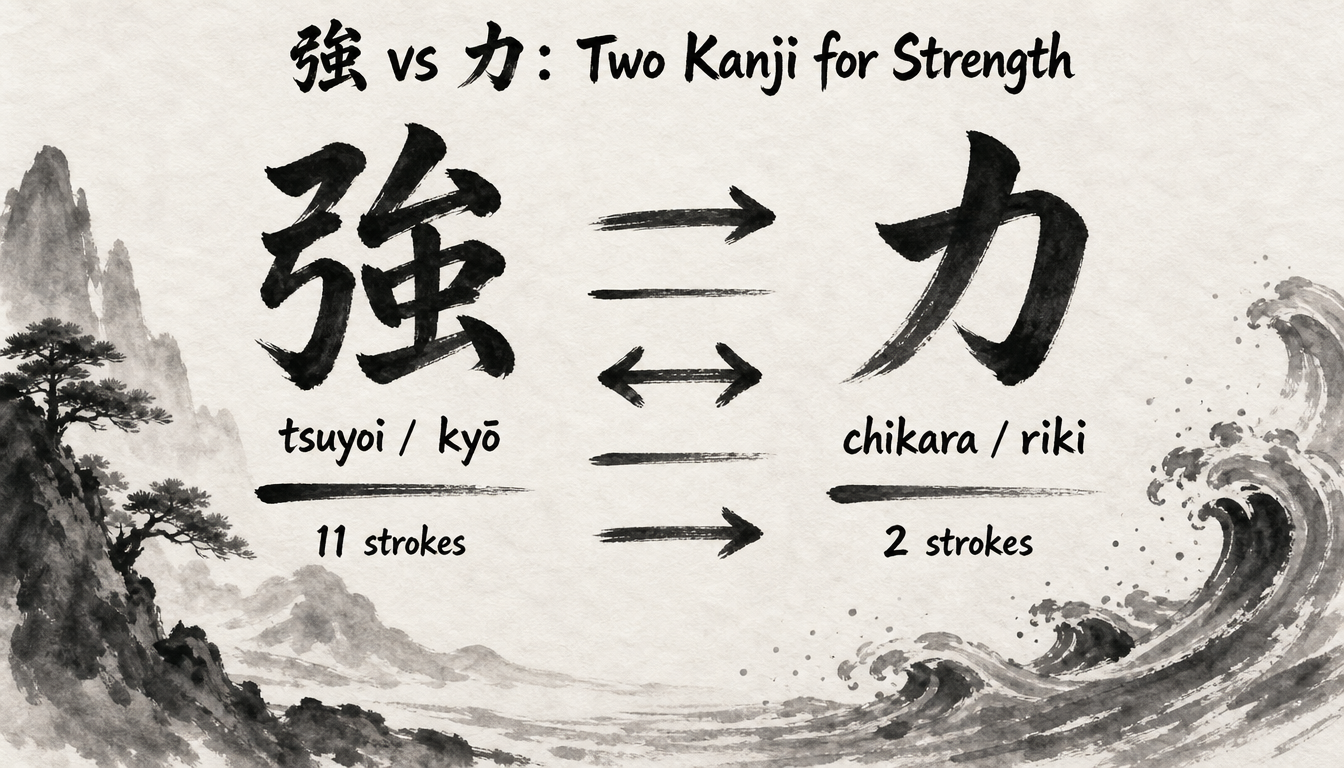
力 (chikara): force you can measure
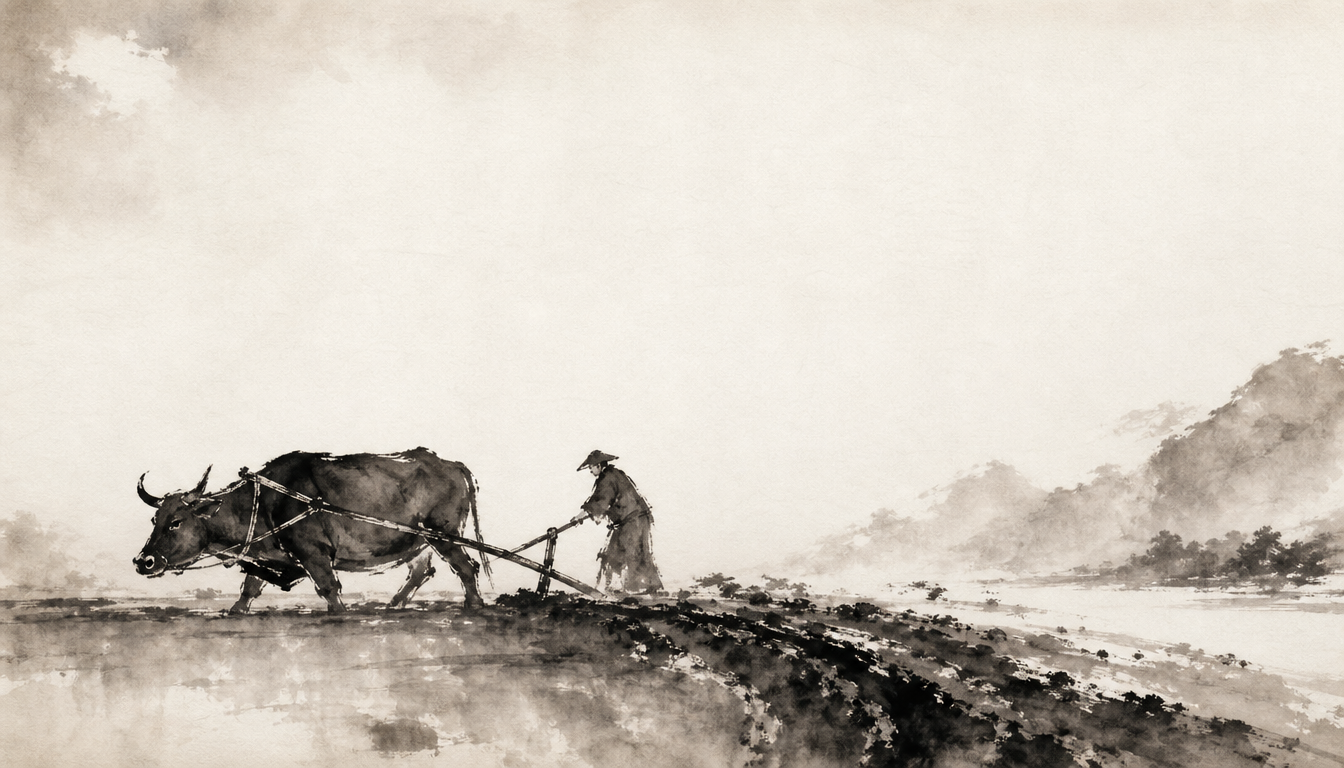
力 is two strokes, and Kamicrew traces its origin to a pictograph of a plow, tied to the physical labor of tilling land. That agricultural root still shapes how it reads. 力 suggests output, capability, applied effort. It also works as a masculine given name, Chikara, which Wikipedia notes carries meanings of strength, power, and authority.
強 (tsuyoi): the quality of not breaking
強 describes a state rather than an action. A person is 強い. A wind is 強い. A resolve is 強い. My Kanji explains its structure as a phono-semantic compound built on 弓 (bow), which is why it reads closer to tension held under load than to muscle. If you want a character about surviving something, 強 is the better fit.
The comparison below lays out how the two main candidates for the japanese symbol for strength differ in feel and best use.
Why Gentle Kanji Often Age Better Than a Hard One
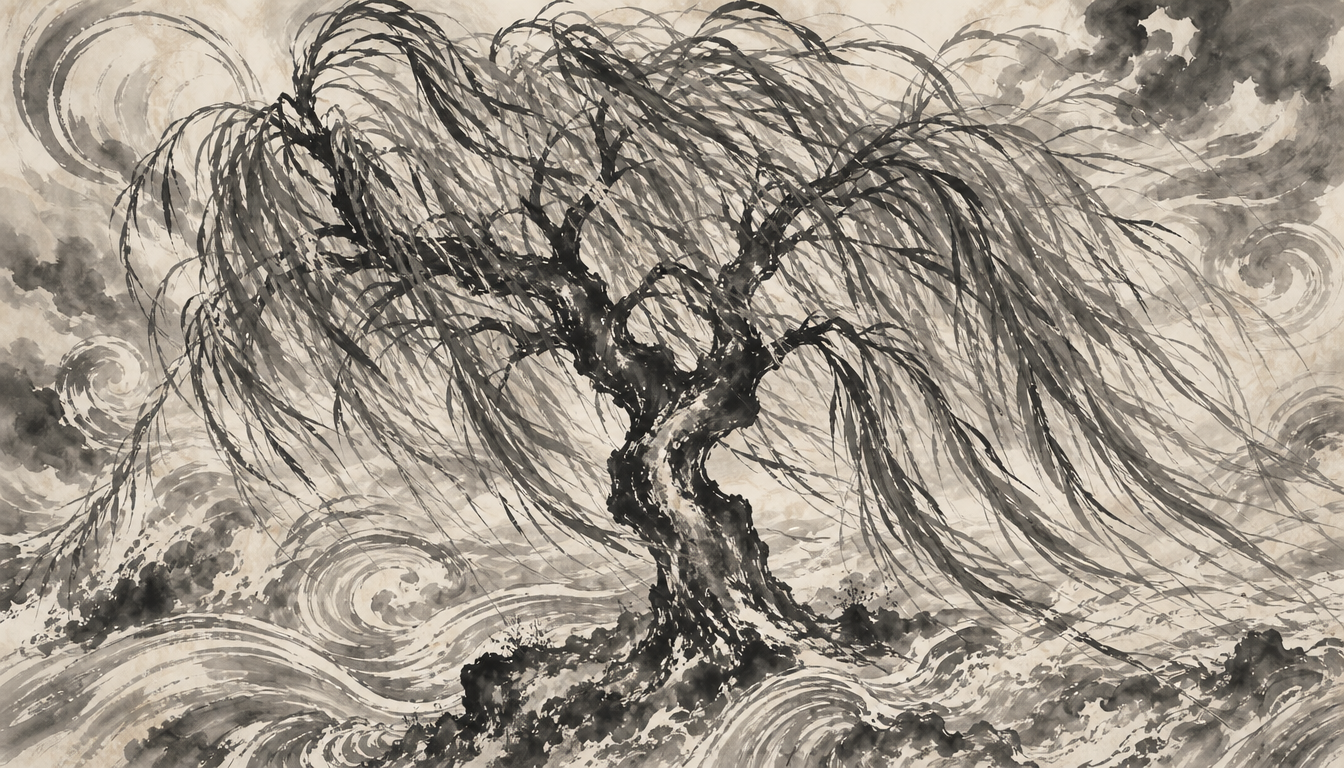
Here is the part most kanji lists skip. A character you wear for decades has to keep meaning something as you change. 強 is a strong statement in both senses, and strong statements can calcify.
Japanese culture itself does not treat strength and softness as opposites. 柔軟性 (jūnansei) translates as flexibility, pliability, softness, and elasticity, and it functions as praise, per Bunpro. Judo, 柔道, literally builds the gentle way into its name. The philosophy assumes that yielding is a form of power, not its absence.
和 sits in similar territory. My Kanji glosses it as harmony, peace, softening, and fitting together, with readings including yawaragu and nagomu. It carries calm balance and relationships at ease. Wear 和 at twenty-five and it still fits at fifty-five, because harmony is a lifelong practice rather than a peak state.
Photographers at 37 Frames describe Japan as having taught them to soften, slow down, and show up with gentleness, and call that the most powerful thing of all. That is a fair summary of why gentle kanji tend to outlast declarative ones.
Concrete Examples: Matching the Kanji to the Meaning

Three situations, three different answers.
- An athlete honoring physical capability. 力 works cleanly. Short, ancient, unambiguous about applied power.
- Someone marking recovery from illness or loss. 強 fits the resilience reading, though 柔 may land closer if the lesson was learning to bend.
- Someone who leads by steadying the room. 和 expresses that better than any character containing the 力 radical.
| Consideration | Thoughtful choice | Choice that misfires |
|---|---|---|
| Meaning match | Picking 柔 because flexibility is the actual lesson learned | Picking 強 because it appeared first in a search result |
| Cultural reading | Checking how the character feels to a native reader | Assuming a dictionary gloss equals the full connotation |
| Form | One well-set character, or a proper compound like 勝利 | Stacking unrelated kanji into a phrase no one says |
| Longevity | A character that stays true as you change | A character locked to one chapter of your life |
Common Misunderstandings About the Japanese Symbol for Strength
| Misconception | What's accurate |
|---|---|
| "There is one official kanji for strength" | 強 and 力 are both standard, and they mean different things |
| "元気 means strength" | Kamicrew notes 元気 (genki) means energy or vigor, and is easy to confuse with both kanji when browsing designs |
| "Softer kanji mean weakness" | 柔軟性 (flexibility, pliability) is a compliment in Japanese, and 弱 is the actual antonym of 強 |
| "Any kanji works as long as it's translated right" | Connotation, stroke balance, and combination matter as much as the gloss |
Related Kanji and How They Differ
| Kanji | Meaning | Difference from 強 |
|---|---|---|
| 力 (chikara) | Power, force, ability | Force itself, not the quality of being hard to defeat |
| 勇 (yū) | Bravery, brave action | My Kanji recommends 勇 for courage in action and 強 for resilient strength; 勇気 is the full word for courage |
| 勝 (shō / katsu) | Winning, prevailing | About outcome; 勝利 is the noun "victory". Its radical is 力 |
| 柔 (yawa) | Softness, pliancy | Strength through yielding rather than resisting |
| 和 (wa) | Harmony, peace, softening | Relational calm rather than individual toughness |
Notice how many of these share the 力 radical. 勝 and 勇 both sit on it, which tells you something about how the writing system files courage and victory under power.
How to Choose a Character You Won't Outgrow
Work from the inside out. Start with the quality, then find the character, never the reverse.
The steps below outline a practical process.
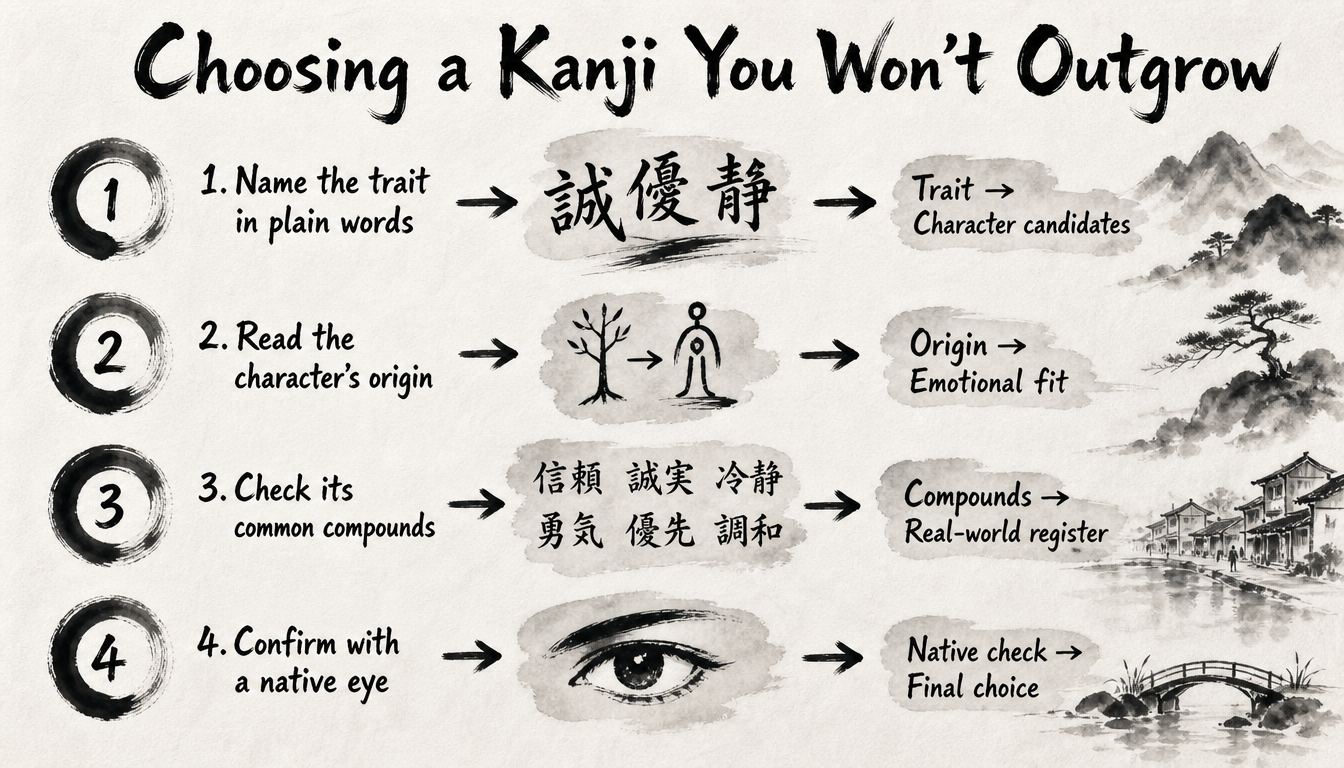
- Name the trait in plain words. "I recover fast" points to 強. "I adapt" points to 柔. "I keep people together" points to 和.
- Read the character's origin. Knowing 力 began as a plow changes how you feel about it.
- Check the compounds. A character's real-world companions reveal its register. 勝 living inside 勝利 tells you more than the gloss alone.
- Confirm with a native eye. Aesthetic balance matters in Japan as much as semantics, particularly for calligraphy and ink work.
This is the gap Oracle Kanji Writer was built to close. Instead of scanning a list of hard-sounding characters, you enter your name, birthdate, and blood type, and the tool recommends a Soul Kanji matched to your inner qualities. Each result comes with pronunciation, primary and nuanced meanings, a personal message, and curated compound words that show the character in real use. Because Japanese creators curate it, the suggestions read as beautiful and meaningful in Japan rather than as a cliché import, and you can download the kanji art for wallpapers, keepsakes, or tattoo planning.
Personalization matters most where the stock answers cluster. Search any virtue in English and you land on the same three or four characters. A diagnosis based on your own details opens the door to quieter choices you would not have found alone.
Key Takeaways
- The japanese symbol for strength is 強 for resilience and toughness, or 力 for power and physical capability.
- 強 has 11 strokes and 弱 as its antonym; 力 has two strokes and origins in a plow pictograph.
- 元気 (genki) means energy or vigor, not strength, and often gets mixed in by mistake.
- Gentle characters such as 柔 and 和 express strength through flexibility and harmony, and tend to stay meaningful longer.
- Choose the trait first, then the character, and verify how it reads to a native speaker before committing it to skin or paper.
Next, look into 勇気 (courage), the philosophy behind 柔道, and Japanese naming aesthetics, where nature kanji like 空, 雪, and 波 carry strength without ever saying the word. If you would rather be matched than guess, a Soul Kanji diagnosis is a reasonable place to begin.
Discover Your Soul Kanji
Experience the depth of Japanese characters: each kanji carries timeless meaning, guiding your life's path.
No credit card required • 2-minute process