Hikari Name Meaning: A Guide to Light, Kanji, and Culture
Discover the true meaning of Hikari (光) — the Japanese name for light. Explore kanji variations, cultural symbolism, tattoo tips, and spiritual depth.
What Does the Name Hikari Really Mean?
Hikari (ひかり) is a Japanese name that translates simply, and beautifully, as "light." Yet that one-word translation barely scratches the surface. In Japanese, light is never just a physical phenomenon — it's a poetic, spiritual, and cultural concept woven into centuries of literature, Buddhist philosophy, and everyday speech.
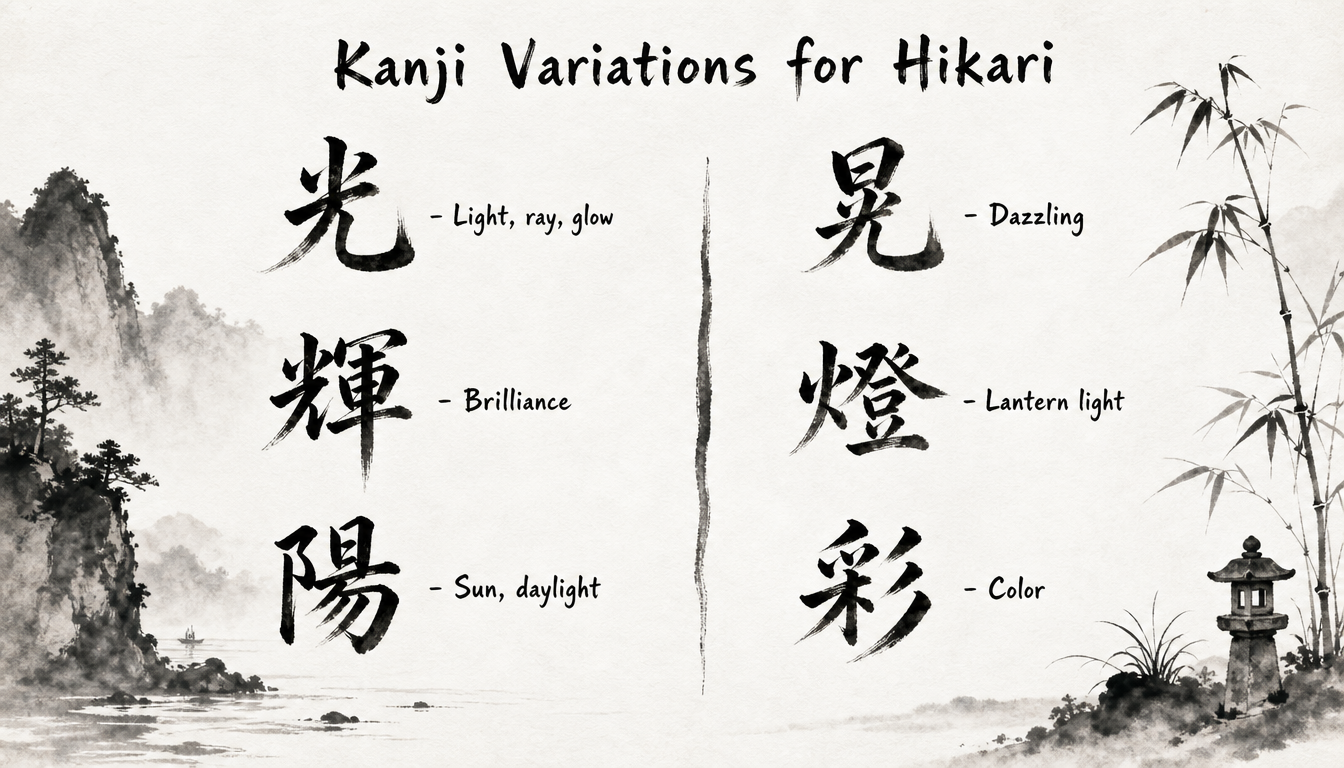
The most common kanji used to write Hikari is 光, which carries meanings of light, ray, beam, and glow. It's a Common word listed at JLPT N4 level — meaning it's part of the foundational vocabulary every Japanese speaker knows. The same character appears in phrases like 光を放つ (hikari o hanatsu), "to shed light," suggesting active radiance rather than passive brightness.
As a given name, Hikari is predominantly feminine but functions as a unisex option. Its three soft morae (hi-ka-ri) give it a gentle, melodic rhythm that has made it a favorite in modern Japan. Notable bearers include actress Hikari Mitsushima and model Hikari Mori, both of whom embody the name's associations with grace and presence.
For globally minded readers exploring Japanese names — whether for a child, a tattoo, a character, or a personal symbol — Hikari sits at a rare intersection: deeply traditional, universally understood, and emotionally resonant across cultures.
Discover Your Soul Kanji
Experience the depth of Japanese characters: each kanji carries timeless meaning, guiding your life's path.
No credit card required • 2-minute process
The Kanji of Hikari: 光 and Its Variations
One of the most fascinating aspects of Japanese names is that the same sound can be written with different kanji, each shifting the meaning. Hikari is a perfect example. While 光 is the dominant choice, parents and writers have long used alternative characters to give the name a more personal nuance.
The Primary Kanji: 光
The character 光 is composed of elements historically interpreted as fire above a kneeling person — light emanating from a source. It appears in foundational compound words such as:
- 光明 (kōmyō) — "bright light," often used in Buddhist contexts to mean spiritual illumination or hope
- 光線 (kōsen) — "ray" or "beam"
- 観光 (kankō) — "sightseeing," literally "observing the light"
- 栄光 (eikō) — "glory"
This breadth is why 光 feels both humble and majestic. It can describe sunlight filtering through bamboo or the inner light of a person's spirit.
Alternative Kanji for Hikari
When parents want to layer additional meaning onto the name, they may choose other kanji or kanji combinations that can be read as "Hikari":
KanjiMeaningNuance光Light, ray, glowClassic, balanced, most common輝Brightness, brillianceSparkling, radiant energy陽Sun, daylight, yangWarm, optimistic, outgoing晃 / 煌Dazzling, sparklingVivid, attention-catching燈Lamp, lantern lightIntimate, guiding, traditional彩Color, hueArtistic, varied, expressive
Many modern parents also write Hikari purely in hiragana (ひかり) — a softer, more visually feminine choice that avoids fixing the name to a single kanji meaning. This is especially popular for girls' names.
Hikari vs. Other Japanese Words for Light
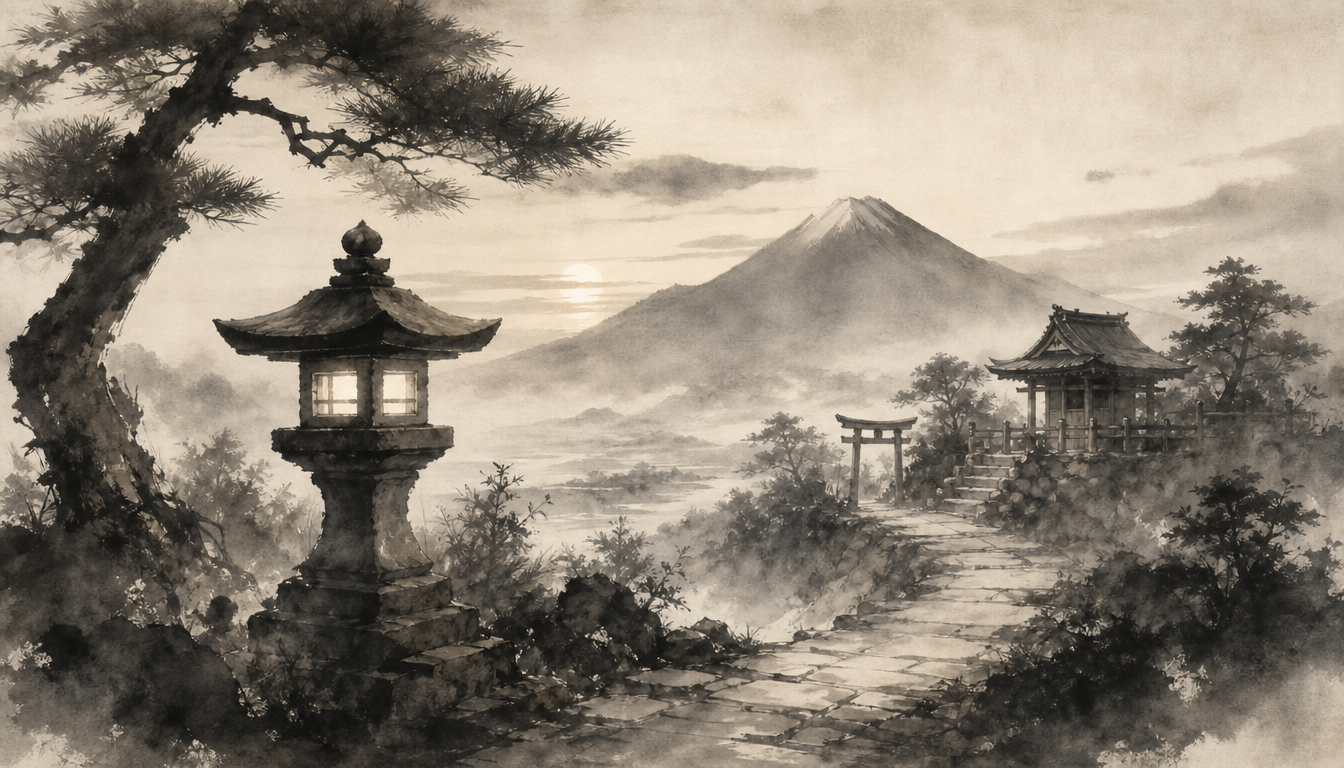
Japanese has several words for "light," and each carries distinct emotional and cultural weight. Understanding the differences helps you appreciate why Hikari feels the way it does — and why you wouldn't, for example, name a child Akari and expect the same nuance.
WordKanjiType of LightEmotional ToneHikari光Natural, spiritual, sunlight, hopePoetic, expansive, upliftingAkari明かり / 灯Warm, human-made (lamps, lanterns)Intimate, cozy, gentleHi日 / 陽Sunlight, the sun itselfBold, life-giving, elementalTeru照The act of shiningDynamic, verb-likeHikaru光 / 輝To shine (verb form)Active, often masculine
Notice that Hikari and Hikaru share the kanji 光 but differ in form: Hikari is the noun ("light"), Hikaru is the verb ("to shine"). Hikaru tends to lean masculine or unisex, while Hikari leans feminine or unisex. Both are beautiful, but they communicate different energies — a state of being versus an action.
Cultural and Spiritual Symbolism of Light in Japan
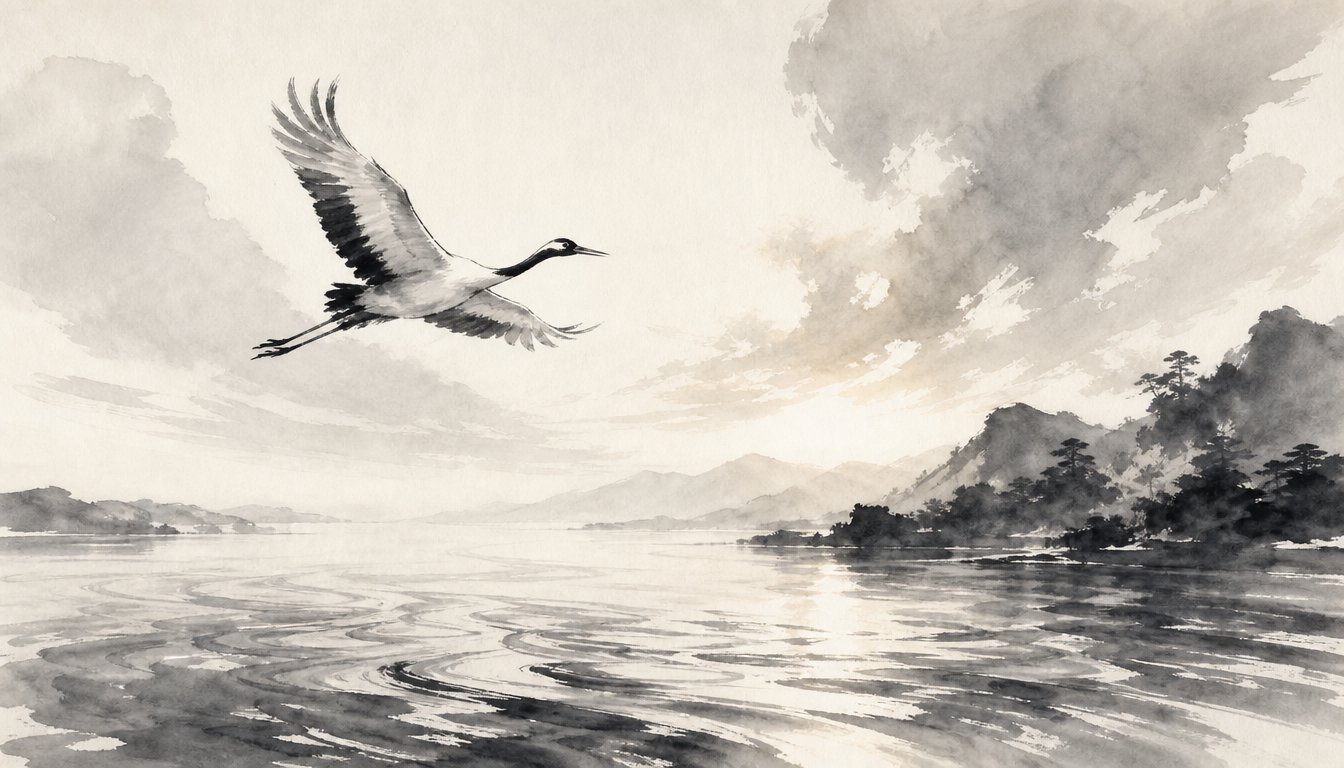
To truly understand why Hikari resonates so deeply, you have to understand how light functions in Japanese culture. It's not merely an aesthetic — it's a recurring spiritual metaphor.
Light in Shinto and Buddhism
In Shinto, Japan's indigenous belief system, the sun goddess Amaterasu Ōmikami is the most revered deity. Her name literally means "shining in heaven," and she represents life, order, and divine presence. Light, in this tradition, is sacred — it's what makes existence possible.
In Japanese Buddhism, particularly Pure Land schools, the term 光明 (kōmyō) refers to the boundless light of Amida Buddha, said to reach every corner of the universe to guide sentient beings toward enlightenment. To be named "Hikari" is to carry a quiet echo of this idea: that one's presence might illuminate the path for others.
Light in Japanese Aesthetics
Japanese aesthetics treat light with extraordinary subtlety. The author Jun'ichirō Tanizaki famously celebrated shadow and dim light in In Praise of Shadows, arguing that Japanese beauty emerges not from brilliance but from gentle gradations of light. Hikari, then, isn't a harsh, blinding light — it's the soft glow of a paper lantern, sunlight through shoji screens, moonlight on still water.
Light as Personal Quality
Naming a child Hikari traditionally expresses hopes that the child will:
- Bring brightness and joy into others' lives
- Possess clarity of mind and purpose
- Guide others through difficult times
- Embody warmth, hope, and positivity
- Carry a quiet but unmistakable inner radiance
This is why Hikari has aged so gracefully as a name — it isn't tied to a trend. It speaks to timeless human values.
Hikari for Tattoos, Personal Symbols, and Self-Expression
For non-Japanese audiences, Hikari — especially the kanji 光 — has become a popular choice for tattoos, jewelry engravings, and personal logos. The reasons are easy to see: it's visually elegant, semantically rich, and culturally respectful when used thoughtfully.
Why 光 Works as a Single-Character Tattoo
Single-character kanji tattoos are projected to remain a leading minimalist design trend in 2026. 光 fits this aesthetic perfectly because:
- Its structure is balanced and visually stable
- The meaning is universally positive and unambiguous
- It doesn't rely on culturally complex compounds
- It looks striking in multiple calligraphy scripts (kaisho, gyōsho, sōsho)
Avoiding Common Pitfalls
The kanji tattoo world is full of cautionary tales — characters chosen for sound rather than meaning, mistranslations from sketchy databases, or designs flipped, simplified incorrectly, or rendered in awkward fonts. With Hikari, the risks are lower because the kanji 光 is genuinely a name and a word in Japanese. But you still want to ensure:
- The character is written in a calligraphy style, not a generic computer font
- The stroke order is correct (visible in well-executed brushwork)
- You understand the layered meanings, not just the dictionary gloss
Going Beyond the Obvious Choice
If you're drawn to the concept of Hikari but want something more uniquely yours, this is where personalized tools become valuable. Rather than defaulting to 光 because it's the most popular, you might discover that 輝 (radiant brilliance), 晃 (dazzling), or even a less obvious kanji captures your essence more accurately.
This is exactly the gap that Oracle Kanji Writer – Personalized Soul Kanji Diagnosis Tool addresses. Instead of offering a phonetic transliteration of your name (which most "name in Japanese" tools do), it generates a Soul Kanji based on your name, birthdate, and blood type. The result includes calligraphy art, layered meanings, compound words, and a personal fortune message — designed by Japanese creators who understand the cultural weight of each character. For anyone considering a kanji tattoo, a meaningful gift, or simply a symbol of self-discovery, it's a way to move beyond surface-level translation and into authentic personal symbolism.
Choosing Hikari — or Discovering Your Own Light
Hikari is more than a pretty name. It's a 1,000-year-old idea about presence, hope, and the quiet power of illumination. Whether you're drawn to it for a child, a creative project, a tattoo, or as a personal mantra, understanding the kanji, the variations, and the cultural backdrop transforms it from decorative script into living meaning.
If Hikari speaks to you but you want to find the specific kanji — common or rare — that truly reflects who you are, the journey is worth taking. Light, in Japanese tradition, is not one-size-fits-all. It can be the bright noon sun, the steady flame of a lantern, the shimmer on a river, or the spark of insight in a quiet mind. Your own kanji might be 光, or it might be something you've never encountered before.
Either way, the lesson Hikari leaves us with is this: meaning matters more than sound. A name written with intention carries weight that a phonetic shortcut never can.
Discover Your Soul Kanji
Experience the depth of Japanese characters: each kanji carries timeless meaning, guiding your life's path.
No credit card required • 2-minute process